
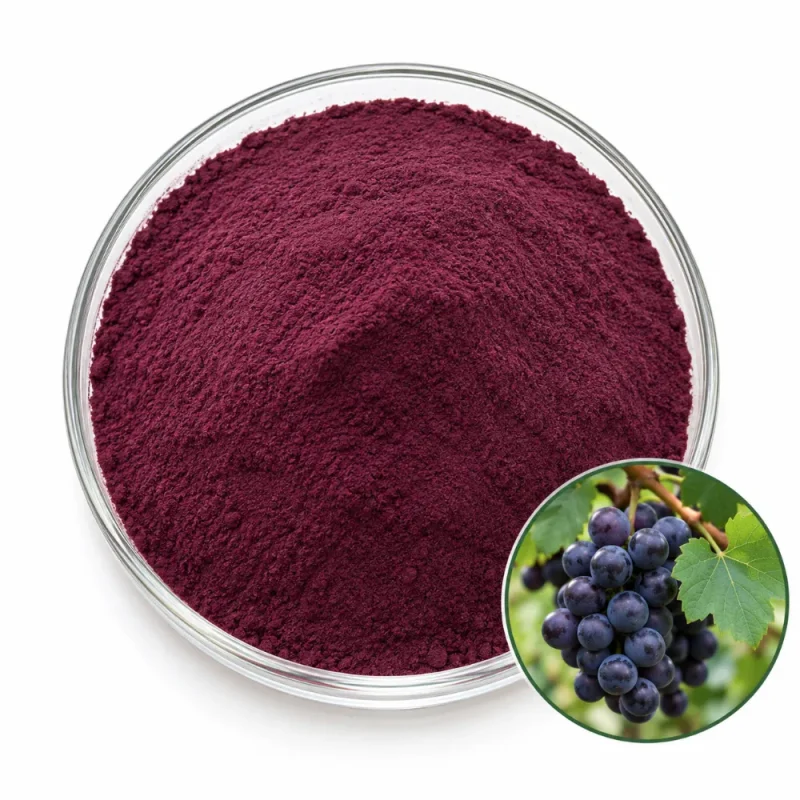
Anthocyanin Standardization & Grades
Anthocyanins are the red, purple and blue pigments of grape skin, and in Vitis vinifera the main one is malvidin-3-glucoside, together with the 3-glucosides of peonidin, delphinidin, petunidin and cyanidin and their acylated forms. A UV pH differential assay adds them into one number. The botanical entity is Vitis vinifera L., and the grape skin extract is standardized to anthocyanins because they are the defining, colored phenolic class of the skin, in contrast to the seed, whose extracts are standardized to proanthocyanidins.
| Grade | Assay & Method | Where It Fits |
|---|---|---|
| 10% Anthocyanins | UV (pH differential) | Drink powders and colored blends |
| 25% Anthocyanins | UV (pH differential) | Capsules and tablets, small fill weight |
Grade choice follows dose, color and fill weight. The 25% grade carries two and a half times the anthocyanin load of the 10% grade per gram and a more intense color, so a capsule reaches its target with less powder, while the 10% grade is bulkier, lighter in shade and easier to blend. Grape is also supplied as a 10:1 ratio extract of the skin with no marker figure, the Grape Skin Extract Powder, and as other grape extracts: Grape Seed Extract 95% OPC / Proanthocyanidins from the seed and Red Wine Extract 30–50% Polyphenols from the wine. The standardized extract is the row to use when an anthocyanin figure has to appear in the specification.


