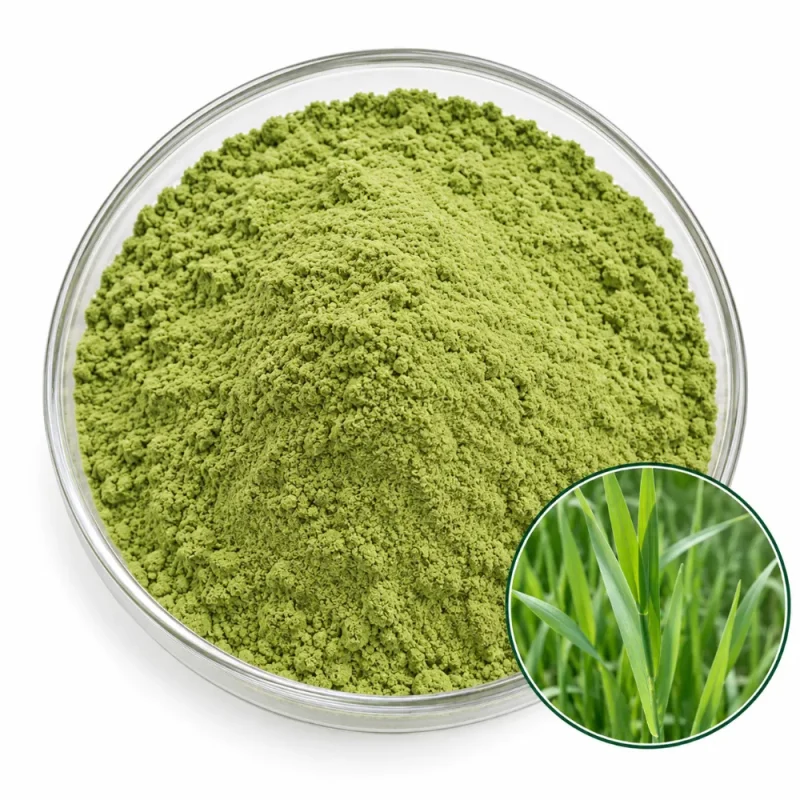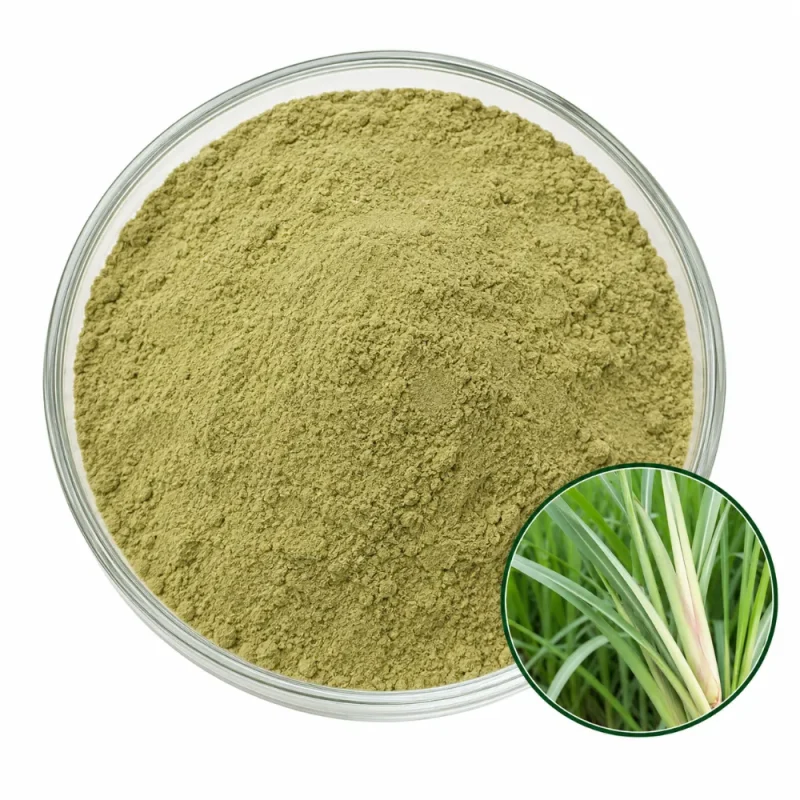
Lemongrass Powder

Lemongrass, the tall tropical grass Cymbopogon citratus, is cut, dried and milled from its long leaf blades into this light green powder, which carries a bright lemon scent and a sharp, citrusy taste. The leaf is the part used, so the thick basal stalk and the root of the grass are not the focus of the powder.

Lemongrass powder is supplied at 80 mesh, with 40, 60 and 100 mesh optional, and has a strong, fresh lemon-like odor with a citrusy, slightly grassy taste. It is raw milled leaf rather than an extract, so inclusion rates are higher and the citrus aroma is stronger than in the extract form.

Cymbopogon citratus Raw Material & Plant Part

The botanical name is Cymbopogon citratus (DC.) Stapf, family Poaceae, known as lemongrass or West Indian lemongrass. The raw material is the dried leaf blade, cut from mature clumps, dried and milled. Roots and the lower white stalk, which is the part used fresh in Southeast Asian cooking, are not the focus of this powder.

Lemongrass has look-alikes. Cymbopogon flexuosus is the East Indian lemongrass, a related species grown for its oil with a different citral profile, and Cymbopogon nardus, citronella, has a different, more perfume-like smell. Lemon balm, lemon verbena and lemon thyme are different plants that smell of lemon for similar chemical reasons. The species name defines lemongrass.

The lemon scent comes from citral, a mixture of the isomers geranial and neral, found in the essential oil of the leaf. The leaf also contains flavonoids, including luteolin glycosides, and phenolic acids.

Citral is volatile and easily lost, which is why drying temperature and storage determine how lemony the powder smells. Fast drying at moderate temperature keeps the bright aroma, while hot or slow drying produces a flat, hay-like powder.

Lemongrass is a clumping perennial that is cut several times a year. The green upper blades are the part dried for powder, while the lower sheath is tougher and carries less aroma. The dried leaf is light green with a slightly yellow cast, and the milled powder keeps that tint.
Lemongrass Powder vs Extract

FormWhat It IsChoose It When
Lemongrass PowderMilled dried leaf with its oil and fiberCitrus aroma and whole-leaf fiber in dry blends
Lemongrass Extract PowderWater-extracted leaf with the fiber removedA soluble format with a mild citrus note

The leaf powder keeps the volatile oil, the fiber and the chlorophyll together, so the lemon aroma comes through in dry blends, teas and doughs. Inclusion rates are higher than for an extract, and the powder only disperses in liquids.

A water extract of lemongrass retains little citral, because the oil is only slightly soluble in water and partly evaporates during processing. The extract powder is therefore mild in smell and suits soluble drink bases where a restrained citrus note is wanted, while lemongrass leaf powder is the form chosen for a clear lemon character.

Taste confirms the difference. A pinch of the powder tastes sharply of lemon and slightly of grass, and it carries into hot water as a pale, cloudy infusion, whereas the extract powder gives a clear liquid with a weak herbal flavor.

Lemongrass powder is therefore a flavoring ingredient first and a botanical second. The extract powder is easier to dissolve but carries a much softer lemon note, so lemongrass powder is the form used when the lemon character has to be tasted.

Typical Specifications

Specification ItemProduct Information
Latin NameCymbopogon citratus
Plant PartLeaf & Herb
ProcessingMilled
Common NameLemongrass, West Indian lemongrass
Raw MaterialDried leaf
Ingredient TypeMilled Powder
AppearanceLight Green powder (natural color of the dried material)
Odor & TasteFresh lemon-like odor; citrusy, slightly grassy taste
Solubility / DispersibilityWater Dispersible
Quality Parameters
Moisture (LOD)≤8.0%
Particle Size80 mesh (40 / 60 / 100 mesh optional)
Heavy MetalsLead ≤2 ppm · Arsenic ≤1 ppm · Cadmium ≤1 ppm · Mercury ≤0.1 ppm
MicrobiologyTPC ≤10,000 cfu/g · Yeast & Mold ≤1,000 cfu/g · E. coli Negative · Salmonella Negative/25 g
Shelf Life24 months in unopened original packaging, cool and dry storage

Application Areas

Citrus-herbal tea blends

Lemongrass powder is a standard base for herbal tea blends with ginger, mint or hibiscus. Coarse 40 and 60 mesh grades hold up in the bag and release the oil slowly in hot water, so the cup stays bright and lemony.

Asian-style spice and curry mixes

Dry curry pastes, soup mixes and marinades use the powder for a lemony top note. The citral fades with long heating, so lemongrass is added late in cooking or in the final seasoning, and the color is a faint green-brown.

Cookie and snack flavoring

Cookies, shortbread and seasoned snacks accept the powder as a citrus accent. The aroma survives short baking better than most citrus peels, but it is reduced in long bakes, and a finer mesh spreads the flavor evenly.

Dry drink sticks and capsule blends

Drink sticks pair the powder with lemon, ginger or honey powders for a hot, fragrant drink. Capsule blends use it as a light, aromatic leaf material, and the bulk density limits the weight per shell.

Handling & Blending Notes

Lemongrass leaf is fibrous and rich in silica-like tissue, so the milled powder is a coarse, stringy material with a considerable amount of fines. It dusts at open scoops and hoppers, and the fine dust irritates the nose. Covered transfer, local extraction and anti-static tools keep the dust under control.

The citral scent is the quality marker and the weak point. It fades with warmth, light and air, so a fresh pack smells strongly of lemon, while an old or poorly stored pack smells flat and hay-like. Sealed barrier packs, a cool store and short working periods after opening protect the aroma, and the scent is checked at each opening.

Moisture uptake is moderate. Lumps form in open bags in humid rooms, and chlorophyll fades under light, so opaque packs are used. Mesh follows the format, with 80 mesh for dry blends and capsules, 40 and 60 mesh for infusions and visible green flecks, and 100 mesh for sticks. Opened containers are resealed at once and stored away from strong odors, because the citrus aroma is easily masked.

Lemongrass powder is stored apart from other aromatic materials, because its lemon note is easily masked by stronger neighbors and easily lost to the air. Opened packs are resealed and used within a few weeks, and a dry, cool cabinet extends the life of the powder.

Packaging & Commercial Supply

Essencefield supports product evaluation, formulation trials, commercial orders, and ongoing ingredient supply. Packaging, storage, and shipping arrangements are determined by product characteristics, order quantity, stability requirements, and destination-market needs.

Supply ItemGeneral Information
SampleAvailable upon request for formulation, testing, and supplier evaluation
Order Quantities100 g · 1 kg · 5 kg · 25 kg · 100 kg · 500 kg · Bulk
Sample Lead TimeTypically 5–7 days after sample confirmation
Production Lead TimeTypically 15–30 days after order and specification confirmation
PackagingSuitable protective inner packaging with bags, cartons, drums, or other appropriate outer packaging
StorageStore in tightly sealed, suitable protective packaging in a cool, dry environment. Protect from moisture, heat, and direct sunlight. Specific storage conditions follow the approved product specification.
DocumentationCOA · Product Specification · TDS · SDS · Applicable declarations (as applicable)

Final order quantities, lead times, packaging, documentation, and shipping arrangements are confirmed according to the selected product and commercial requirements.

Request Ingredient Specifications & Quote

Share your target specification, application, quantity, and documentation needs. We’ll help confirm suitable options, samples, and commercial supply details.