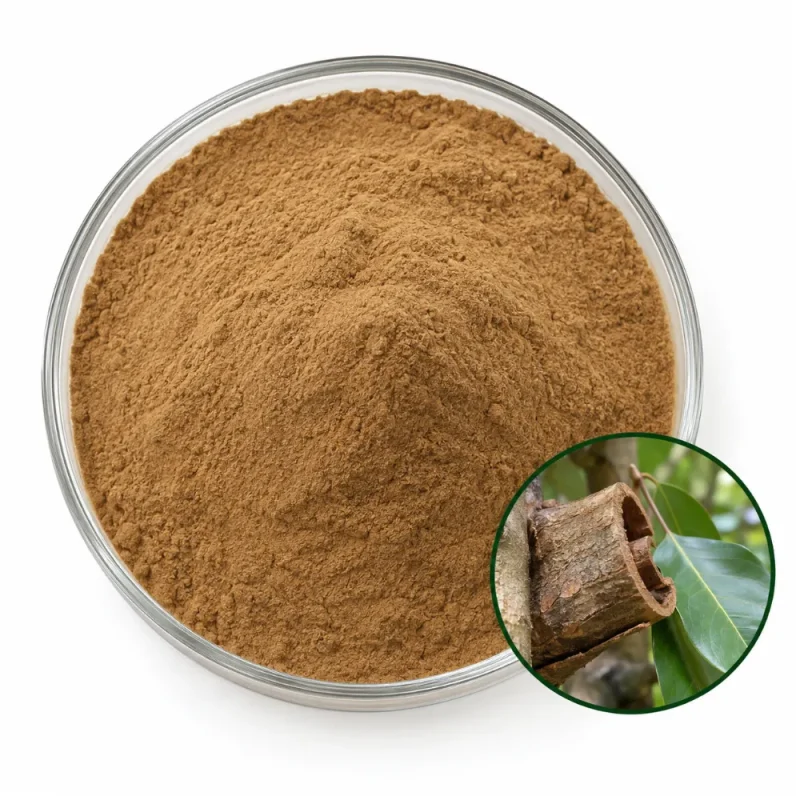
Magnolia Officinalis Extract Powder

Bark of Magnolia officinalis, the houpu magnolia, is the plant part behind this magnolia officinalis extract. Water extraction concentrates the soluble bark fraction, and the liquor is dried to a light brown powder at a 10:1 ratio. Flower buds, leaves and seeds are left out.

The 10:1 ratio carries no honokiol or magnolol percentage. The powder is light brown, ground to 80 mesh and water dispersible. A lignan-graded magnolia bark extract and the plain bark powder are separate products, and the flower is a different raw material from the bark.

Magnolia officinalis Bark Identity & Plant Part

The species is Magnolia officinalis Rehder & E.H.Wilson, a tree of the magnolia family, Magnoliaceae, with large leathery leaves. The part used is the bark, which is stripped from trunk and branches, sweated, dried and cut before extraction. Flower buds, leaves and seeds are not added to this magnolia officinalis extract.

The bark carries the neolignans magnolol and honokiol, which define the graded bark extracts, together with phenolic compounds and a small volatile oil. Because lignans are only sparingly soluble in water, a plain water extract holds them in much lower proportion than a solvent-extracted, enriched bark grade. The H1 does not state the part, so the bark is named here to avoid confusion with the flower.

Magnolia Extract vs Powder & Standardized Grades

FormWhat It IsChoose It When
10:1 Magnolia Bark ExtractWater-extracted, concentrated and dried M. officinalis barkA dispersible bark extract without a marker is wanted
Magnolia Bark Extract 10–95% total honokiol + magnolol / total phenolsBark extract with defined lignan or phenol gradesThe specification names a honokiol or magnolol figure
Magnolia Flower Extract Powder10:1 water extract of the flowerFlower, not bark, is the required source
Magnolia Bark PowderDried, milled barkBark fiber is wanted

In this Magnolia officinalis extract the 10:1 counts ten parts of magnolia bark against one part of powder. It gives no lignan figure, and the graded bark grades use a different extraction and assay basis.

A label that must declare honokiol or magnolol needs the graded extract. The ratio extract suits blends that want magnolia bark identity in a dispersible form. The flower extract has a different chemistry, and the milled bark brings fiber and a stronger bitterness.

Typical Specifications

Specification ItemProduct Information
Latin NameMagnolia officinalis
Plant PartBark & Stem
ProcessingWater Extraction
Common NameHoupu Magnolia, Magnolia Bark
Ingredient TypeRatio Extract
Extract Ratio10:1
AppearanceLight Brown powder
Solubility / DispersibilityWater Dispersible
Quality Parameters
Moisture (LOD)≤5.0%
Total Ash≤5.0%
Particle Size80 mesh
Heavy MetalsLead ≤2 ppm · Arsenic ≤1 ppm · Cadmium ≤1 ppm · Mercury ≤0.1 ppm
MicrobiologyTPC ≤1,000 cfu/g · Yeast & Mold ≤100 cfu/g · E. coli Negative · Salmonella Negative/25 g
Shelf Life24 months in unopened original packaging, cool and dry storage

Application Areas

Capsule Fills with Bark Extracts

Capsule fills combine the bark extract with other bark and root extracts. The light brown powder flows moderately well but dusts, so enclosed transfer helps. A trial run checks fill weight, and a small flow aid is considered where the hopper bridges on humid days.

Bitter-Masked Tablet Cores

Tablet cores take the extract with binders and a coating. The bark’s bitterness and faint resinous smell are hidden by the coat, which also blocks moisture. Hardness is checked after storage at raised humidity, since soluble bark solids soften.

Dark Herbal Stick Packs

Single-serve sticks pair magnolia bark extract with sweetener and a strong flavor. Cocoa, ginger and mint hide the bitter, slightly numbing taste better than fruit flavors do. The brown color blends into dark and amber drinks, but looks muddy in pale ones.

Caramel-Toned Chew Premixes

Chew premixes take the Magnolia officinalis extract once the cooked base has cooled. A caramel, coffee or spice flavor covers the bitterness, and the dose is limited by taste before it is limited by solubility. Trials in the actual base show the practical ceiling.

Formulation Notes

The powder is light brown with a faint woody-resinous aroma and a bitter, slightly pungent taste. In water it disperses to an amber, slightly hazy liquid. Because lignans are poorly water soluble, a fine haze and slight sedimentation are normal in cold, long-standing drinks.

Premix the Magnolia officinalis powder into part of the dry base before the final blend, which spreads the bitterness evenly and avoids streaks. Bark phenolics react with iron, so stainless equipment is used, and hot holds are kept short to limit darkening of the extract.

Opened packs are re-closed tightly because bark extracts pick up moisture. Magnolia bark extract powder is stored away from aromatic ingredients, and a sensory check of the sealed sample after storage confirms that the taste has not drifted. Formulators should compare magnolia officinalis extract against the lignan-graded bark extract in the same base, because the plain water extract is milder and less bitter, yet it will not reach the same lignan level on analysis.

Packaging & Commercial Supply

Essencefield supports product evaluation, formulation trials, commercial orders, and ongoing ingredient supply. Packaging, storage, and shipping arrangements are determined by product characteristics, order quantity, stability requirements, and destination-market needs.

Supply ItemGeneral Information
SampleAvailable upon request for formulation, testing, and supplier evaluation
Order Quantities100 g · 1 kg · 5 kg · 25 kg · 100 kg · 500 kg · Bulk
Sample Lead TimeTypically 5–7 days after sample confirmation
Production Lead TimeTypically 15–30 days after order and specification confirmation
PackagingSuitable protective inner packaging with bags, cartons, drums, or other appropriate outer packaging
StorageStore in tightly sealed, suitable protective packaging in a cool, dry environment. Protect from moisture, heat, and direct sunlight. Specific storage conditions follow the approved product specification.
DocumentationCOA · Product Specification · TDS · SDS · Applicable declarations (as applicable)

Final order quantities, lead times, packaging, documentation, and shipping arrangements are confirmed according to the selected product and commercial requirements.

Request Ingredient Specifications & Quote

Share your target specification, application, quantity, and documentation needs. We’ll help confirm suitable options, samples, and commercial supply details.