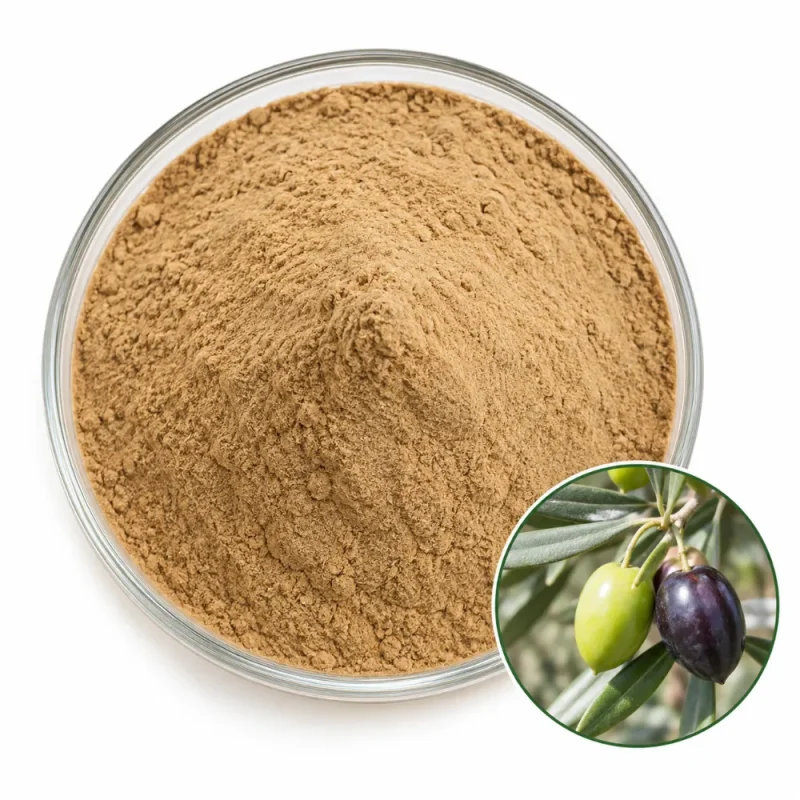
Olive Fruit Extract Powder

Olive fruit extract starts from the fruit of Olea europaea, the drupe of the cultivated olive tree, with the leaf, stone and oil excluded. Water extraction concentrates the soluble fruit fraction, and the liquor is dried into a light brown powder that disperses in water.

The extract is supplied at a 10:1 ratio with no marker percentage and is milled to 80 mesh. It is a ratio extract of the whole fruit profile, kept apart from the hydroxytyrosol-defined grade and from the leaf extract of the same tree.

Olea europaea Fruit Source & Identity

The botanical entity is Olea europaea L., the olive of the Oleaceae, an evergreen tree whose fleshy drupe changes from green to purple-black as it ripens. The part used is the fruit. Leaf, wood and pressed oil are not part of this olive fruit extract.

Olive products are easy to mix up. The leaf is rich in oleuropein and is sold as its own extract, while the fruit is the source of the secondary phenols that are measured as hydroxytyrosol after processing. The fruit also holds pectin, sugars and phenolic acids, named here only as families. A purchase form should state fruit and the Latin binomial.

Olive Fruit vs Leaf and Marker Grades

FormWhat It IsChoose It When
10:1 Fruit ExtractWater-extracted, concentrated Olea europaea fruitThe fruit is the specified part
Olive Leaf Extract PowderRatio extract of the olive leaf, same treeLeaf material is specified
Olive Fruit Extract 10–40% HydroxytyrosolOlive fruit extract defined by a hydroxytyrosol rangeA stated hydroxytyrosol range is required
Olive Leaf Extract 10–40% OleuropeinOlive leaf extract defined by an oleuropein rangeA stated oleuropein range is required

All four entries come from one species. The olive fruit extract here is a plain ratio product, so its 10:1 figure expresses concentration against the starting fruit and does not report phenols. The leaf is a different tissue with a different phenolic profile. The defined grade carries a stated hydroxytyrosol range and is the choice when a declared marker level must appear in the specification. A leaf extract defined by an oleuropein range is the fourth option, and olive fruit extract serves buyers who want the whole-fruit profile at a fixed ratio.

Typical Specifications

Specification ItemProduct Information
Latin NameOlea europaea
Plant PartFruit & Berry
ProcessingWater Extraction
Common NameOlive Fruit
Ingredient TypeRatio Extract
Extract Ratio10:1
AppearanceLight brown powder
Solubility / DispersibilityWater Dispersible
Quality Parameters
Moisture (LOD)≤5.0%
Total Ash≤5.0%
Particle Size80 mesh
Heavy MetalsLead ≤2 ppm · Arsenic ≤1 ppm · Cadmium ≤1 ppm · Mercury ≤0.1 ppm
MicrobiologyTPC ≤1,000 cfu/g · Yeast & Mold ≤100 cfu/g · E. coli Negative · Salmonella Negative/25 g
Shelf Life24 months in unopened original packaging, cool and dry storage

Application Areas

Capsules for Fruit Extracts

Olive fruit extract fills into capsules as a light brown powder with a mild, fruity-bitter note. The soluble sugars make the powder hygroscopic, so the filling room is kept dry and a flow aid is premixed. Opaque shells slow light-driven darkening of the phenolic fraction.

Tablet Blends with Phenolics

Compressed tablets carry olive fruit extract with microcrystalline cellulose and a disintegrant. Phenols darken on contact with iron, so stainless tooling is used, and a film coat hides the tan to brown tint and the bitter edge.

Drink Powders with Citrus

Drink powders pair the extract with lemon or green apple flavors that echo the bitterness of the olive. The liquid is hazy and tan. Acid helps stabilize phenols, but color is checked after storage because phenolic extracts brown at high pH.

Sachets for Fruit Extracts

Sachets combine the extract with a carrier and a mild flavor so the dose stays level from pack to pack. Fruit-derived sugars cause caking, so the premix is dried and sealed quickly, with the sachet laminate checked for barrier performance.

Bar Binder Mixes

Bars take the olive fruit extract in the dry blend before the binder syrup is added, so it wets evenly. Dark chocolate and date flavors cover the bitterness and tint, and color and texture are rechecked after storage.

Formulation Notes

Olive fruit extract is a light brown powder with a faint, fruity, slightly bitter aroma and a bitter, astringent taste. In water it forms a hazy tan liquid, and fine fruit fragments settle slowly. The bitterness is the main sensory constraint and limits the dose in unflavored drinks.

Phenols oxidize and darken in air and on contact with iron. Weigh the olive fruit extract in a dry area, reseal the liner after each draw and keep the opened pack away from heat and light. Surface clumping and a deeper brown are the first signs of moisture pickup.

Dry-blend olive fruit extract with a flow aid and screen it before it joins the bulk, which breaks the soft lumps formed by the sugar fraction. In drinks, pre-blend with sugar or a carrier to avoid floating clumps. Run a color check on trial lots, since phenolic fruit extracts deepen in tone as they age.

Packaging & Commercial Supply

Essencefield supports product evaluation, formulation trials, commercial orders, and ongoing ingredient supply. Packaging, storage, and shipping arrangements are determined by product characteristics, order quantity, stability requirements, and destination-market needs.

Supply ItemGeneral Information
SampleAvailable upon request for formulation, testing, and supplier evaluation
Order Quantities100 g · 1 kg · 5 kg · 25 kg · 100 kg · 500 kg · Bulk
Sample Lead TimeTypically 5–7 days after sample confirmation
Production Lead TimeTypically 15–30 days after order and specification confirmation
PackagingSuitable protective inner packaging with bags, cartons, drums, or other appropriate outer packaging
StorageStore in tightly sealed, suitable protective packaging in a cool, dry environment. Protect from moisture, heat, and direct sunlight. Specific storage conditions follow the approved product specification.
DocumentationCOA · Product Specification · TDS · SDS · Applicable declarations (as applicable)

Final order quantities, lead times, packaging, documentation, and shipping arrangements are confirmed according to the selected product and commercial requirements.

Request Ingredient Specifications & Quote

Share your target specification, application, quantity, and documentation needs. We’ll help confirm suitable options, samples, and commercial supply details.