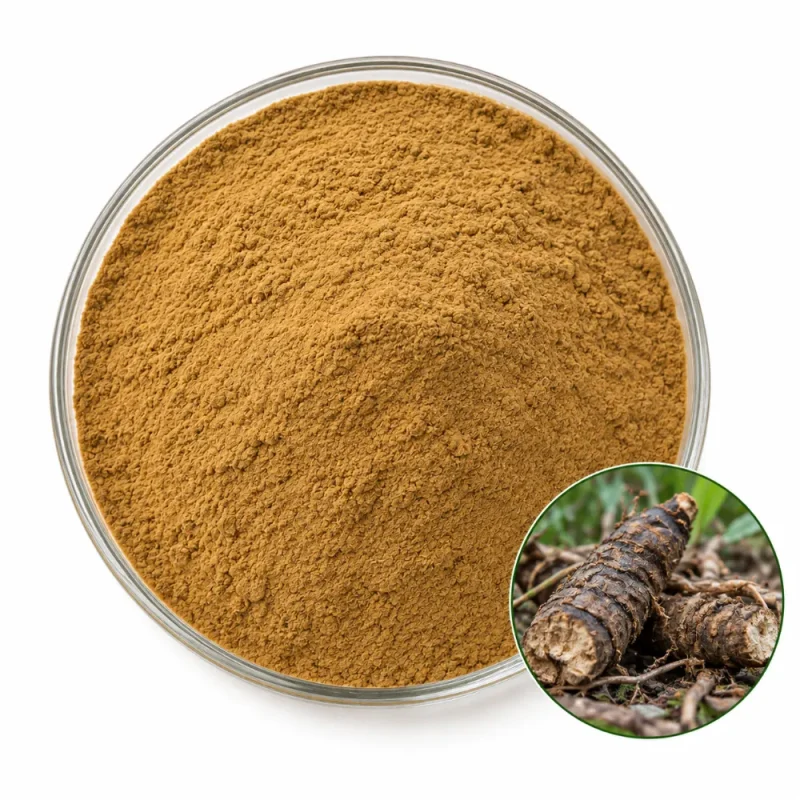
Picrorhiza Kurroa Extract Powder

Picrorhiza kurroa extract starts from the rhizome of Picrorhiza kurroa, the bitter Himalayan root known as kutki, with the leaf and flower stalk excluded. Water extraction concentrates the soluble rhizome fraction, and the liquor is dried into a light brown powder that disperses in water.

The extract is supplied at a 10:1 ratio with no marker percentage and is milled to 80 mesh. It is a whole-rhizome ratio extract and is kept apart from the picroside-defined grade of the same plant. Bitterness is extreme, and that fact drives most formulation choices.

Picrorhiza kurroa Rhizome Source & Identity

The botanical entity is Picrorhiza kurroa Royle ex Benth., kutki of the Plantaginaceae, a small perennial of high Himalayan slopes with rosettes of toothed leaves, a short flowering spike and a creeping, knotty rhizome. The part used is the rhizome together with its attached roots. Leaf and flower are not part of this Picrorhiza kurroa extract.

Two points matter to buyers. The Chinese trade name hu huang lian covers related plants, and Indian kutki lots may also mix species, so a specification should quote the Latin binomial. The rhizome holds iridoid glycosides, including picrosides, together with cucurbitacin glycosides and phenolic compounds, named here only as constituent families.

Picrorhiza Extract vs Picroside Grade

FormWhat It IsChoose It When
10:1 Rhizome ExtractWater-extracted, concentrated Picrorhiza kurroa rhizomeA whole-rhizome ratio extract is wanted
Picrorhiza kurroa Extract 4% Picrosides + 8% Bitter PrinciplesRhizome extract defined by picroside and bitter-principle levelsStated marker levels are required

Both entries come from the same rhizome. The 10:1 ratio gives concentration against the starting rhizome and reports no picroside figure, and the polar iridoid glycosides favored by water are the same class that the defined grade measures. A buyer who needs declared picroside levels should choose the defined grade. A buyer who wants a plain whole-rhizome profile can order the Picrorhiza kurroa extract and rely on species, part and ratio.

Typical Specifications

Specification ItemProduct Information
Latin NamePicrorhiza kurroa
Plant PartRoot & Rhizome
ProcessingWater Extraction
Common NameKutki Rhizome
Ingredient TypeRatio Extract
Extract Ratio10:1
AppearanceLight brown powder
Solubility / DispersibilityWater Dispersible
Quality Parameters
Moisture (LOD)≤5.0%
Total Ash≤5.0%
Particle Size80 mesh
Heavy MetalsLead ≤2 ppm · Arsenic ≤1 ppm · Cadmium ≤1 ppm · Mercury ≤0.1 ppm
MicrobiologyTPC ≤1,000 cfu/g · Yeast & Mold ≤100 cfu/g · E. coli Negative · Salmonella Negative/25 g
Shelf Life24 months in unopened original packaging, cool and dry storage

Application Areas

Capsules for Extreme Bitterness

Picrorhiza kurroa extract is among the most bitter botanical powders, so capsules are the only practical dosage form for direct intake. The light brown powder is hygroscopic and cohesive, which makes a flow aid and a dry filling room necessary.

Film-Coated Tablets

Tablets carry the extract with microcrystalline cellulose and a disintegrant and need a film coat that holds up through storage, because even a small break in the coating releases the bitter taste. Coating weight gain is tuned in pilot lots.

Heavily Masked Drink Powders

Drink powders pair the extract with intense flavors such as cola, chocolate or spiced citrus, plus a generous sweetener. Even then the dose per serving is kept low. Sensory panels, not weight alone, set the inclusion level.

Encapsulated Sachet Fills

Sachet products usually hold the extract inside a capsule or granule, because a loose bitter powder reaches the tongue too fast. If a loose premix is used, it is blended with carrier and flavor and sealed in barrier laminate.

Dark Gummies with Strong Flavor

Cooked gummies take Picrorhiza kurroa extract late in the base with dark cherry or cocoa flavors. A storage trial shows whether the bitter note resurfaces after a few weeks, and the flavor system is adjusted if it does.

Formulation Notes

Picrorhiza kurroa extract is a light brown powder with a faint, earthy aroma and an intensely bitter taste that lingers for a long time. In water it forms a hazy tan liquid, and fine rhizome fragments settle slowly. Bitterness is the dominant sensory trait.

Weigh the rhizome extract in a dry area, reseal the liner at every draw and keep the opened pack out of heat and light. Polar glycosides make the powder pick up moisture, and surface clumping is the first sign. Use dedicated scoops, because bitter residue transfers to the next product.

Premix the extract with a carrier and screen it into the bulk in one stage, then fill promptly. Clean equipment thoroughly between products, since traces of a bitter powder carry over. In drinks, dry-blend with sugar before adding water to avoid floating clumps.

Packaging & Commercial Supply

Essencefield supports product evaluation, formulation trials, commercial orders, and ongoing ingredient supply. Packaging, storage, and shipping arrangements are determined by product characteristics, order quantity, stability requirements, and destination-market needs.

Supply ItemGeneral Information
SampleAvailable upon request for formulation, testing, and supplier evaluation
Order Quantities100 g · 1 kg · 5 kg · 25 kg · 100 kg · 500 kg · Bulk
Sample Lead TimeTypically 5–7 days after sample confirmation
Production Lead TimeTypically 15–30 days after order and specification confirmation
PackagingSuitable protective inner packaging with bags, cartons, drums, or other appropriate outer packaging
StorageStore in tightly sealed, suitable protective packaging in a cool, dry environment. Protect from moisture, heat, and direct sunlight. Specific storage conditions follow the approved product specification.
DocumentationCOA · Product Specification · TDS · SDS · Applicable declarations (as applicable)

Final order quantities, lead times, packaging, documentation, and shipping arrangements are confirmed according to the selected product and commercial requirements.

Request Ingredient Specifications & Quote

Share your target specification, application, quantity, and documentation needs. We’ll help confirm suitable options, samples, and commercial supply details.