
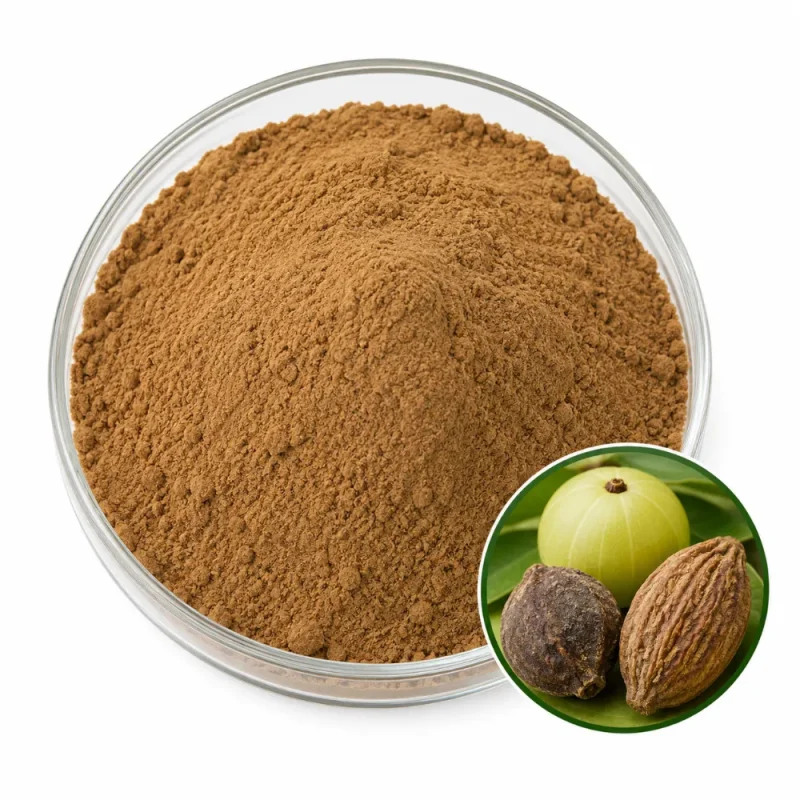
Triphala Tannin Standardization & Grades
The name triphala means three fruits in Sanskrit, and in traditional practice it refers to a combination of haritaki, bibhitaki and amla. On this specification the botanical entity is the fruit of Terminalia chebula Retz., the haritaki component, and that entity is what the tannin figure describes. Buyers who need the full three-fruit combination should read the botanical line of the specification before using the name as a guide to composition.
Tannins are polyphenols large enough to bind proteins. The fruit of Terminalia chebula carries hydrolyzable tannins led by chebulagic acid and chebulinic acid, with gallic acid, ellagic acid and corilagin, and these esters of gallic and ellagic acid with a glucose core dominate its chemistry. The extract is standardized to tannins at 40% because the class is the defining one for the fruit and a UV method gives a repeatable figure.
This is a single grade, so there is no grade table. The 40% powder is the one the specification is written around. The same fruit is supplied at graded strengths as Terminalia chebula Extract 20–50% Tannins, as a 10:1 ratio extract with no marker figure, the Chebulic Myrobalan Extract Powder, and as the combination extract Triphala Extract Powder.
Production starts with dried fruit that is deseeded and crushed, then extracted, filtered and concentrated. The seed kernel carries little tannin, and removing it concentrates the fruit wall, which holds most of the tannin.


