
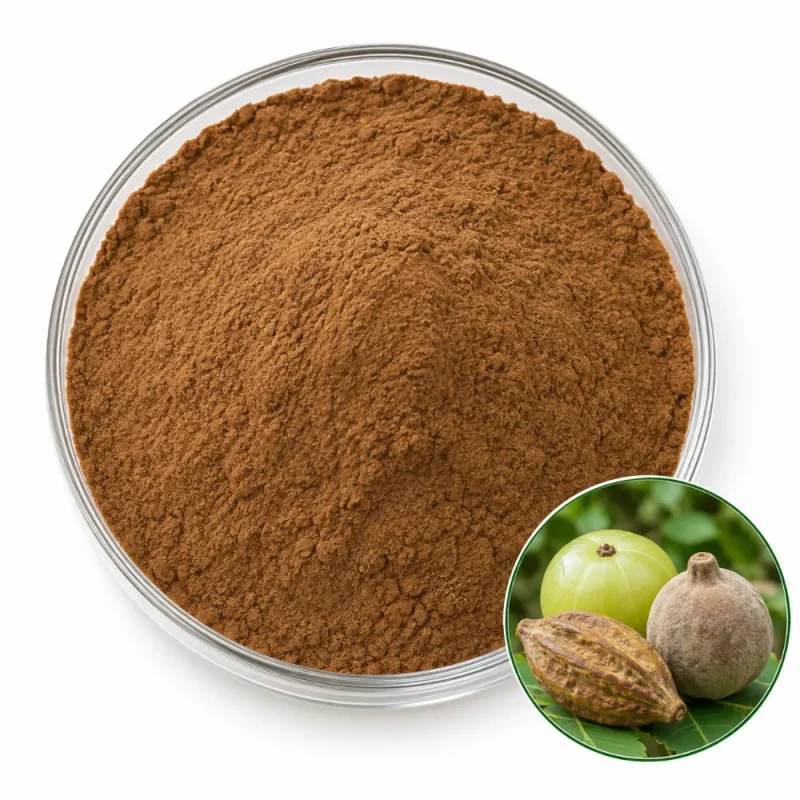
Terminalia chebula Identity & Plant Part
The botanical entity is Terminalia chebula Retz., the chebulic myrobalan or haritaki, a large deciduous tree of the Combretaceae. The part used is the ripe, dried fruit. Leaves, bark and wood are not part of this ingredient. The name triphala refers in Ayurveda to a combination of three fruits, namely haritaki, bibhitaki and amla, and this entry is built on the first.
The other two fruits are different species: Terminalia bellirica and Phyllanthus emblica. Terminalia chebula fruit carries hydrolysable tannins such as chebulagic and chebulinic acids, gallic acid and ellagic acid, named here as families only. The dried fruit is ovoid, ribbed and wrinkled, with a dark brown to blackish surface. The fruit tastes sour and astringent, and it darkens in contact with iron.


