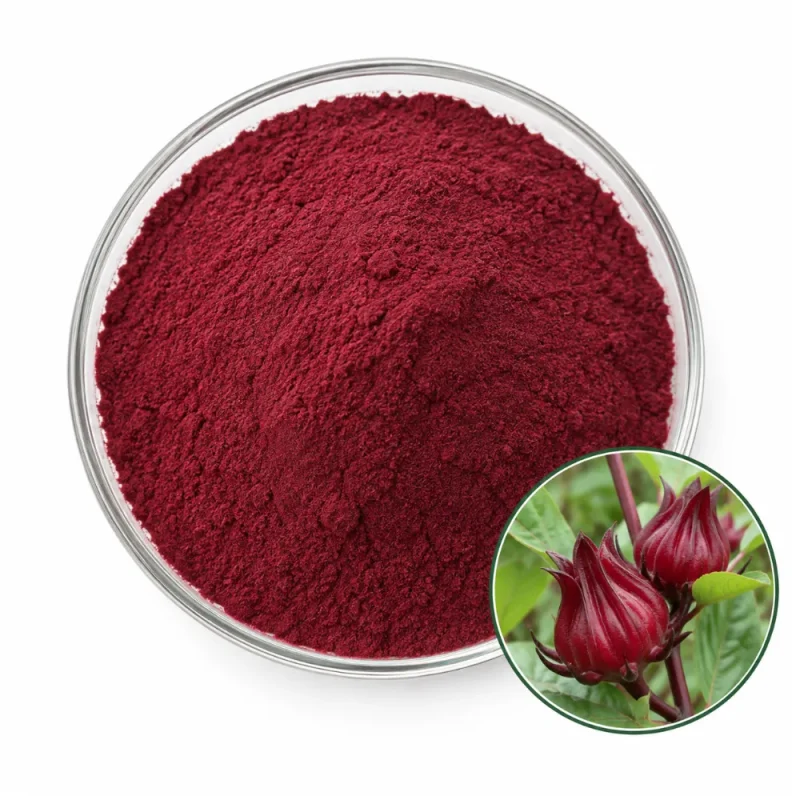
Hibiscus (Roselle) Extract Powder

The red calyces of Hibiscus sabdariffa, known as roselle, are the raw material behind this hibiscus extract. Water extraction concentrates the soluble calyx fraction, and the liquor is dried to a purple red powder at a 10:1 ratio. Leaves, seeds and the ornamental Hibiscus rosa-sinensis are not used.

The 10:1 ratio carries no anthocyanin percentage. The powder is purple red, ground to 80 mesh and water dispersible. An anthocyanin-graded hibiscus extract and the plain flower powder are separate products, and the single-compound reference material listed on this site is a different product type.

Hibiscus sabdariffa Flower Identity & Plant Part

The botanical entity is Hibiscus sabdariffa L., an annual shrub of the mallow family, Malvaceae. The part sold as the flower is the fleshy red calyx, the sepals that thicken around the seed capsule after the petals fall, and this calyx is what is dried and extracted. Leaves, seeds and petals are not added to this hibiscus extract.

Hibiscus covers many species, and the garden hibiscus, Hibiscus rosa-sinensis, is a different plant with different uses. Roselle calyces carry delphinidin and cyanidin sambubiosides, together with organic acids that make them strongly sour. The name roselle, karkade and sorrel in trade all point to the same calyx.

Hibiscus Extract vs Powder & Standardized Grades

FormWhat It IsChoose It When
10:1 Hibiscus Calyx ExtractWater-extracted, concentrated and dried i. sabdariffa calyxA dispersible extract without a marker is wanted
Hibiscus Extract 5–25% AnthocyaninsExtract with a defined anthocyanin rangeThe specification names an anthocyanin figure
Hibiscus Flower PowderDried, milled calyxFiber and whole-calyx character are wanted
3,4-Dihydroxybenzoic Acid 98%Single purified phenolic acidA pure compound is required, not a plant extract

Hibiscus extract at 10:1 starts from ten parts of calyx for every part of dried powder. It does not state an anthocyanin figure, and the color depth of a given lot follows the calyx variety, the drying and the amount of pigment that reached the water.

For a label that has to declare anthocyanins, the graded extract is the product to use. The ratio extract suits tart drink mixes and blends that want hibiscus identity and a deep red tint, while the milled calyx brings fiber. The pure compound in the table is a chemical standard and does not replace a plant extract.

Typical Specifications

Specification ItemProduct Information
Latin NameHibiscus sabdariffa
Plant PartFlower
ProcessingWater Extraction
Common NameHibiscus, Roselle
Ingredient TypeRatio Extract
Extract Ratio10:1
AppearancePurple Red powder
Solubility / DispersibilityWater Dispersible
Quality Parameters
Moisture (LOD)≤5.0%
Total Ash≤5.0%
Particle Size80 mesh
Heavy MetalsLead ≤2 ppm · Arsenic ≤1 ppm · Cadmium ≤1 ppm · Mercury ≤0.1 ppm
MicrobiologyTPC ≤1,000 cfu/g · Yeast & Mold ≤100 cfu/g · E. coli Negative · Salmonella Negative/25 g
Shelf Life24 months in unopened original packaging, cool and dry storage

Application Areas

Tart Red Drink Powders

Drink powders use hibiscus extract for a ruby color and a cranberry-like sharpness. In cold water the powder gives a clear to lightly hazy red, and the sourness often needs more sweetener than other fruit extracts. Mixes with berry or tropical flavors tend to taste rounder than hibiscus alone.

Floral Fruit Gummy Mixes

Gummy mixes add hibiscus extract after the cook, once the mass has cooled, to protect the pigment. Its natural acidity helps pectin set, though too much can weaken a gelatin gel, so texture is trialed. The flavor stays tart, which fits cherry, pomegranate or citrus profiles.

Acid-Stable Stick Packs

Single-serve sticks combine the extract with sweetener and citric or malic acid. Hibiscus color holds best at low pH and turns purple-blue toward neutral, so acid is built into the stick. Foil sachets keep the red from fading, while clear films dull it on a shelf within weeks.

Opaque Capsule Blends

Capsule blends take the extract as a dry red component. The strong pigment stains equipment and shows through clear shells, so opaque capsules are chosen and the line is cleaned between colors, which prevents carry-over into the next product.

Formulation Notes

The powder is purple red with a faint fruity-floral aroma and a distinctly sour, tart taste. In water it dissolves or disperses to a deep ruby liquid that shifts to purple and blue-grey as the pH rises. Light, heat, oxygen and metal ions fade the pigment, so the extract is added late in the blend and finished goods are kept from strong light.

Premix the powder into a measured part of the base before the main mix to avoid dark specks. Its acids and sugars attract moisture, and the powder fuses into a hard cake in an open pack. After opening, press out the air, seal the liner tightly and store the drum in a cool, dry place. Hibiscus extract powder is among the stickier plant extracts, so a desiccant sachet inside the outer pack is helpful on long storage.

In dry blends the hibiscus extract stains scoops and mixer paddles, so equipment is cleaned between products. A pH check of the finished liquid confirms that the shade will hold through the intended shelf life.

Packaging & Commercial Supply

Essencefield supports product evaluation, formulation trials, commercial orders, and ongoing ingredient supply. Packaging, storage, and shipping arrangements are determined by product characteristics, order quantity, stability requirements, and destination-market needs.

Supply ItemGeneral Information
SampleAvailable upon request for formulation, testing, and supplier evaluation
Order Quantities100 g · 1 kg · 5 kg · 25 kg · 100 kg · 500 kg · Bulk
Sample Lead TimeTypically 5–7 days after sample confirmation
Production Lead TimeTypically 15–30 days after order and specification confirmation
PackagingSuitable protective inner packaging with bags, cartons, drums, or other appropriate outer packaging
StorageStore in tightly sealed, suitable protective packaging in a cool, dry environment. Protect from moisture, heat, and direct sunlight. Specific storage conditions follow the approved product specification.
DocumentationCOA · Product Specification · TDS · SDS · Applicable declarations (as applicable)

Final order quantities, lead times, packaging, documentation, and shipping arrangements are confirmed according to the selected product and commercial requirements.

Request Ingredient Specifications & Quote

Share your target specification, application, quantity, and documentation needs. We’ll help confirm suitable options, samples, and commercial supply details.