3,4-Dihydroxybenzoic Acid Chemical Identity
3,4-Dihydroxybenzoic acid has the formula C7H6O4 and a molecular weight of 154.1. A benzoic acid ring carries hydroxyl groups at positions 3 and 4, side by side, which forms a catechol. This pair of adjacent hydroxyls binds metal ions and oxidizes easily to a quinone, and it explains both the usefulness and the instability of 3,4-dihydroxybenzoic acid. The 2,4-isomer, in contrast, has a resorcinol arrangement and an internal hydrogen bond to the acid group, so the two isomers differ in acidity, solubility and reactivity despite the shared formula. The 2,4-isomer is supplied as 2,4-Dihydroxybenzoic Acid 98%.
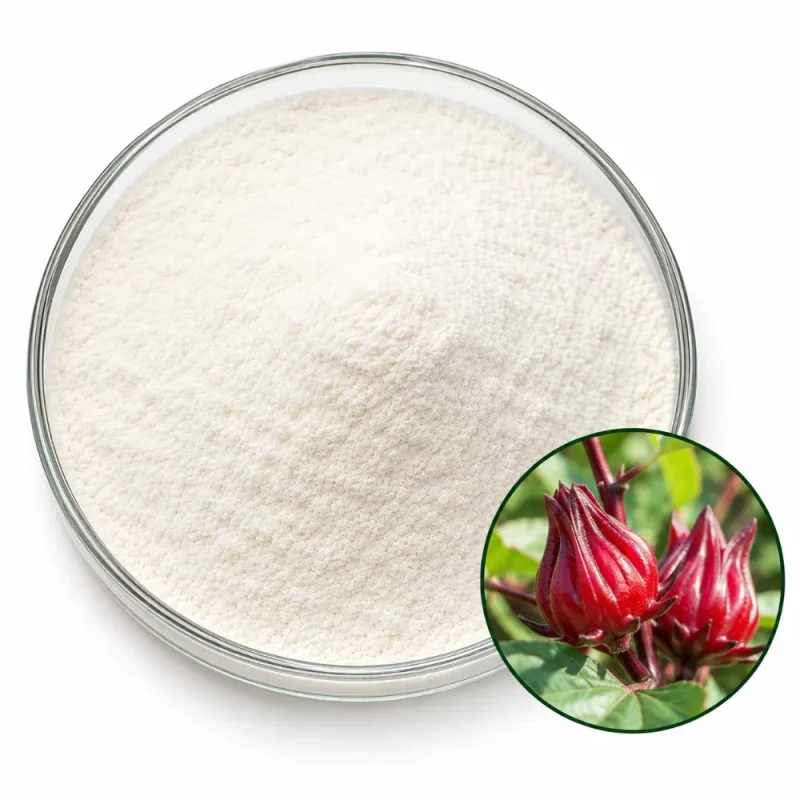
The natural source is the flower of Hibiscus sabdariffa L., roselle, which in trade usage means the red calyx. Protocatechuic acid forms there as a breakdown product of cyanidin-type anthocyanins, and it also occurs widely in other plants, including fruit and grain, so the botanical source and part belong beside the name. Roselle is supplied in other forms: Hibiscus Extract 5–25% Anthocyanins, the 10:1 Hibiscus (Roselle) Extract Powder and the milled Hibiscus Flower Powder. Those are red, pigment-based materials, whereas this acid is a colorless, single compound.