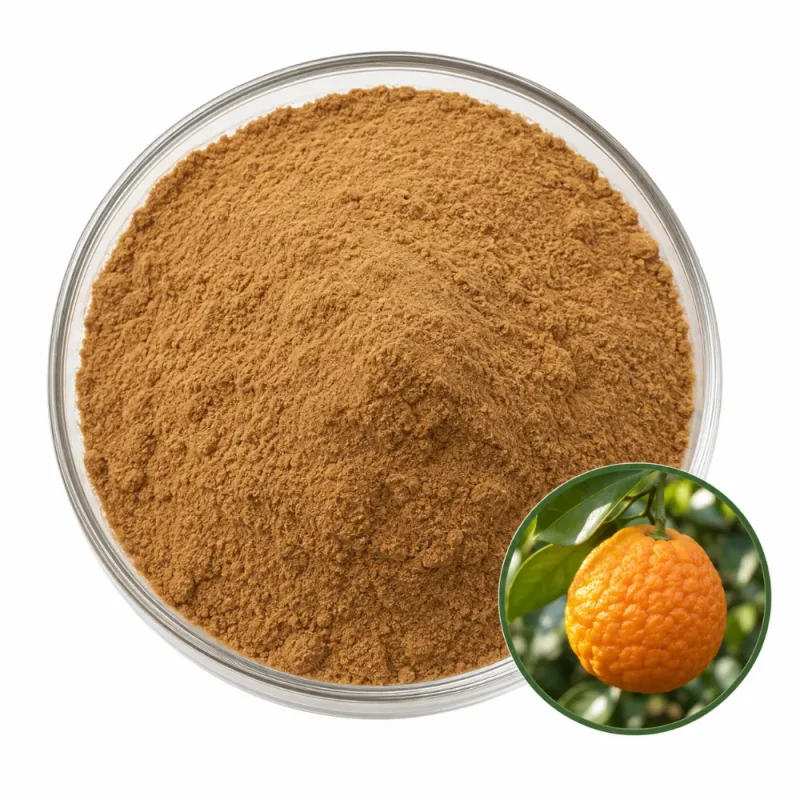
Bitter Orange Extract Powder

Bitter orange, the sour fruit of the hybrid citrus tree Citrus aurantium, is the only plant material behind this extract. The fruit is extracted in water, concentrated and dried to a yellow-orange powder. Flowers, leaves and the separately sold peel are not part of the material.

This bitter orange extract is a 10:1 ratio extract with no marker assay and no synephrine figure. The powder is milled to 80 mesh and disperses in water. A synephrine-standardized extract of the same fruit is a separate product, and the comparison table below sets out the difference.

Citrus aurantium Fruit Source & Identity

The botanical entity is Citrus × aurantium L., known as bitter orange, sour orange or Seville orange, a thorny evergreen tree of the rue family, Rutaceae, long grown in the Mediterranean and in Asia. The part used is the fruit. The blossoms, which give neroli, the leaves, which give petitgrain, and the peel on its own are separate raw materials and are not included in this bitter orange extract.

Sweet orange, Citrus sinensis, is a different taxon, and so are mandarin, pomelo and bergamot. Bitter orange fruit is also not the same as the immature fruit used in some herbal texts, so the ripeness of the raw fruit should be stated on a specification if it matters.

Flavanone glycosides, a protoalkaloid called synephrine and pectin are the main constituent families of the fruit.

Bitter Orange Extract vs Standardized Grade

FormWhat It IsChoose It When
10:1 Bitter Orange ExtractWater extract of the whole fruit, ratio-definedA whole-fruit extract profile without a marker figure is needed
Citrus Aurantium Extract 6–30% SynephrineStandardized extract of the same species with a defined synephrine rangeThe specification names a synephrine figure
Bitter Orange Peel Extract Powder10:1 water extract of the bitter orange peelThe peel, not the whole fruit, is the requirement
Bitter Orange Flower Extract Powder10:1 water extract of the bitter orange flowerThe flower, not the fruit, is the requirement

The 10:1 ratio measures fruit going into the bitter orange extract. It is not a synephrine assay. A ratio extract keeps the whole water-soluble profile of the fruit, including its pectin and flavanone glycosides, while the standardized extract is built around one named compound.

Two different specification bases sit behind the two rows. The ratio extract fixes species, part and solvent. The standardized extract adds a declared synephrine range, which is why it is listed as its own product.

Typical Specifications

Specification ItemProduct Information
Latin NameCitrus aurantium
Plant PartFruit & Berry
ProcessingWater Extraction
Common NameBitter Orange, Sour Orange, Seville Orange
Ingredient TypeRatio Extract
Extract Ratio10:1
AppearanceYellow-Orange powder
Solubility / DispersibilityWater Dispersible
Quality Parameters
Moisture (LOD)≤5.0%
Total Ash≤5.0%
Particle Size80 mesh
Heavy MetalsLead ≤2 ppm · Arsenic ≤1 ppm · Cadmium ≤1 ppm · Mercury ≤0.1 ppm
MicrobiologyTPC ≤1,000 cfu/g · Yeast & Mold ≤100 cfu/g · E. coli Negative · Salmonella Negative/25 g
Shelf Life24 months in unopened original packaging, cool and dry storage

Application Areas

Capsules for a Pectin-Bearing Extract

Bitter orange extract fills hard capsules after a flow check at 80 mesh. The pectin and acid content of the fruit make the dried powder take up moisture, so fill in a controlled-humidity room and keep the hopper covered. A glidant is usually needed when the powder bridges.

Tablets with Moisture Barrier

Tablets pressed from a pectin-rich fruit extract soften as they absorb water. Use a dry binder, a late-added lubricant and a film coat that acts as a moisture barrier, then compare hardness at pressing and after a week of storage in the final pack.

Citrus-Style Drink Sticks

The bitter orange extract disperses in water to a yellow-orange, slightly hazy liquid, and the natural citrus-bitter taste fits tea, tonic and soda-style drinks. Sweetener balance matters because the fruit is bitter and sour, so test taste at the planned dose before fixing the fill weight.

Carrier-Blended Sachets

Single-serve sachets pair the powder with a flavoured carrier. Sieve bitter orange extract into the carrier before filling, and run a dose-uniformity check at the start, middle and end of the filling run, since pectin-bearing powders form soft lumps when poured.

Gummy Premixes

For gummies, blend the extract into the dry sugar portion before cooking. Pectin and acid influence gel set, so trial the gummy texture after a week and adjust the gelling agent if needed. The bitter note of the fruit also needs a sweet, strongly flavoured gummy base.

Formulation Notes

Bitter orange extract is a yellow-orange powder with a citrus, slightly bitter aroma. In water it forms an orange-tan dispersion with a light haze, and the pectin fraction adds a little body to the liquid. The colour is stable enough for citrus-flavoured drinks and shows clearly in clear bases.

Feeding the powder into a vortex hydrates it evenly and avoids lumps that form on the surface. Pass the bitter orange powder and a portion of the carrier through a sieve together before they enter a dry blender. For bitter orange, an opened drum needs a tightly closed liner, a dry shelf and a place away from heat.

Packaging & Commercial Supply

Essencefield supports product evaluation, formulation trials, commercial orders, and ongoing ingredient supply. Packaging, storage, and shipping arrangements are determined by product characteristics, order quantity, stability requirements, and destination-market needs.

Supply ItemGeneral Information
SampleAvailable upon request for formulation, testing, and supplier evaluation
Order Quantities100 g · 1 kg · 5 kg · 25 kg · 100 kg · 500 kg · Bulk
Sample Lead TimeTypically 5–7 days after sample confirmation
Production Lead TimeTypically 15–30 days after order and specification confirmation
PackagingSuitable protective inner packaging with bags, cartons, drums, or other appropriate outer packaging
StorageStore in tightly sealed, suitable protective packaging in a cool, dry environment. Protect from moisture, heat, and direct sunlight. Specific storage conditions follow the approved product specification.
DocumentationCOA · Product Specification · TDS · SDS · Applicable declarations (as applicable)

Final order quantities, lead times, packaging, documentation, and shipping arrangements are confirmed according to the selected product and commercial requirements.

Request Ingredient Specifications & Quote

Share your target specification, application, quantity, and documentation needs. We’ll help confirm suitable options, samples, and commercial supply details.