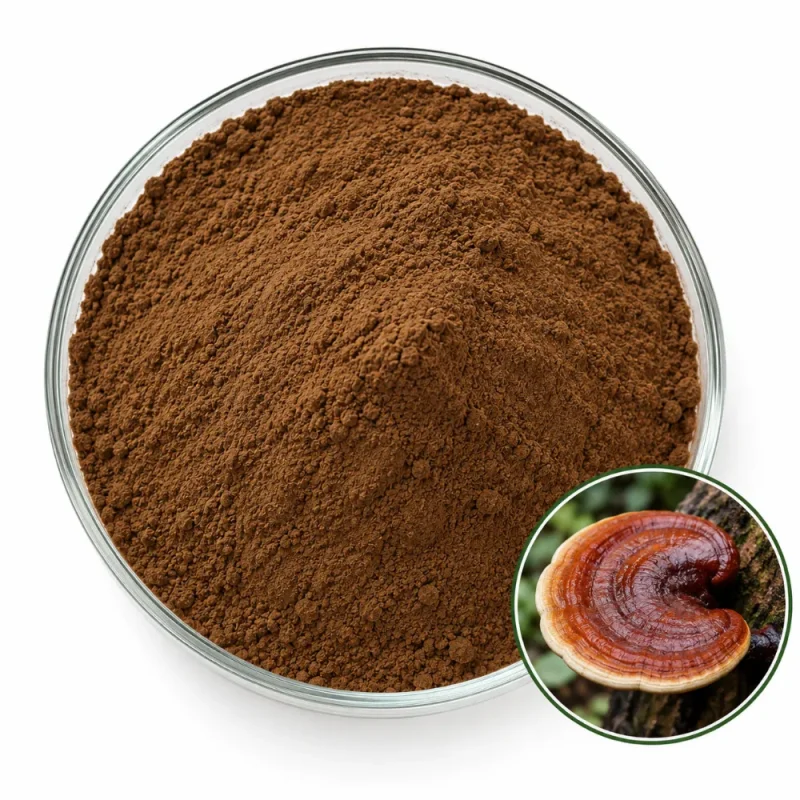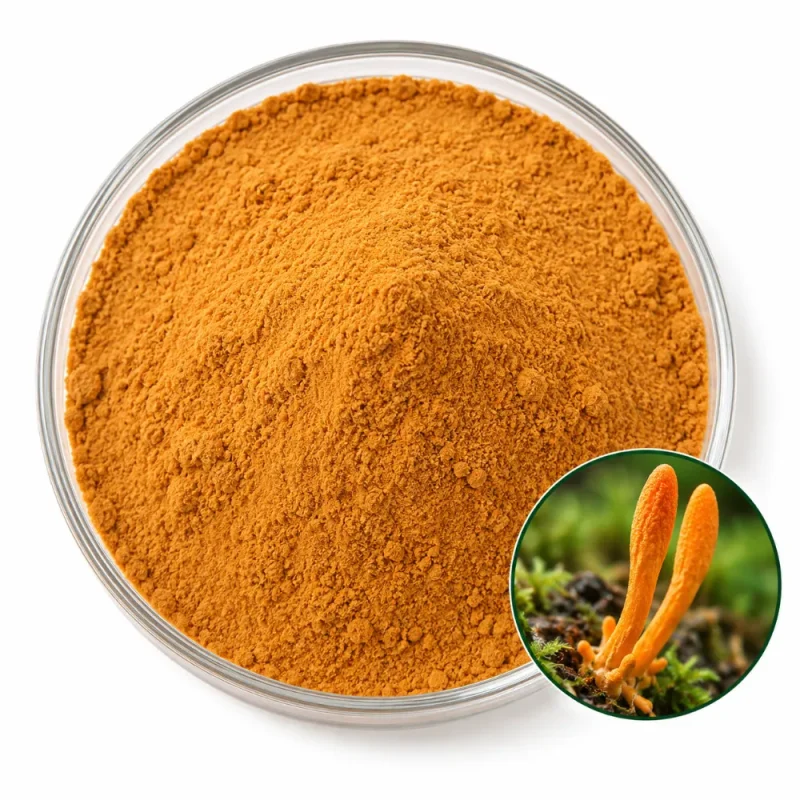
Cordyceps Mushroom Powder

Cordyceps mushroom powder starts with the dried, milled fruiting body of Cordyceps militaris, the orange club-shaped fungus that grows from a host or from a cultivation substrate. The powder contains only the fruiting body, not the mycelium, grain medium or insect host.

It is supplied at 80 mesh, with 40, 60 and 100 mesh optional, as a light brown powder with a mild, earthy mushroom odor. As a raw milled material it differs from cordyceps extract powder and from the cordycepin-standardized extract in fiber content, flavor and inclusion rate.

Cordyceps militaris Raw Material & Plant Part

The scientific name is Cordyceps militaris (L.) Fr., family Cordycipitaceae, the type species of the genus. In nature the fungus grows from buried insect pupae or larvae. In commerce it is cultivated on grain-based media, and some recipes add silkworm pupa powder. The part used here is the fruiting body, the orange club that emerges from the substrate.

Three raw materials carry similar names and are not interchangeable: the fruiting body of C. militaris, mycelium biomass grown in liquid or on grain, and wild caterpillar fungus. The wild caterpillar fungus is a different species, Ophiocordyceps sinensis, which was moved to the family Ophiocordycipitaceae after DNA studies in 2007. It is the one usually meant by the traditional name cordyceps.

The dried fruiting body is light, fibrous and orange to brown, and the milled powder is light brown. Substrate residue, spent grain and the insect host are not part of this raw material, which is a point worth stating in any specification.

In a specification, cordyceps mushroom powder should state the part and the species in words. A listing that says cordyceps powder without the part may refer to mycelium on grain, which is a different material, or to the wild caterpillar fungus, which is a different species. The words dried fruiting body and Cordyceps militaris make the raw material unambiguous.
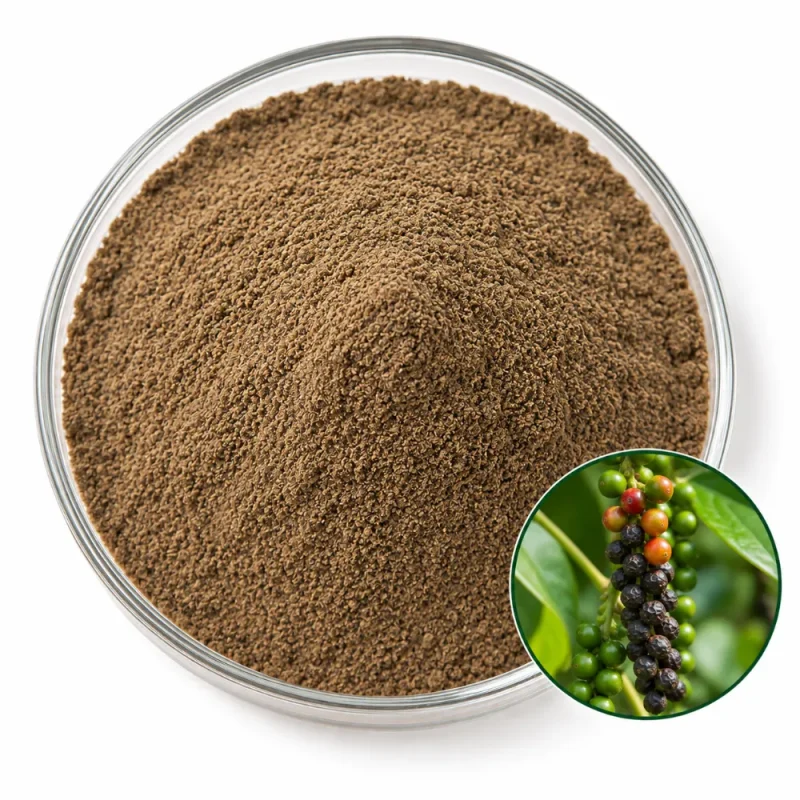
Cordyceps Mushroom Powder vs Extract

FormWhat It IsChoose It When
Cordyceps Fruiting Body PowderMilled dried fruiting body with its fiberWhole-material inclusion in capsules and blends
Cordyceps Extract PowderWater-extracted fruiting body powder with the insoluble fiber removedA lower inclusion rate or a more soluble format
Cordyceps Militaris Extract 0.5–20% CordycepinFruiting body extract standardized to a cordycepin rangeA defined marker content is required
Cordyceps militaris Polysaccharide PowderPolysaccharide powder from the same mushroomA polysaccharide-defined ingredient is required

The powder keeps the insoluble fiber of the fruiting body and the full range of constituents at their natural, lower concentration. Inclusion rates are higher than for an extract, the mushroom flavor is stronger and the powder only disperses in water. The extract removes fiber and is dosed at lower weights, the standardized extract is defined by a marker compound, and the polysaccharide powder is defined by polysaccharide content. Choose the powder when the whole fruiting body is the point, and an extract or polysaccharide ingredient when concentration or a stated marker is needed.

Taste and fiber are the practical dividers between the forms. Cordyceps mushroom powder is mildly earthy and fibrous, so it leaves sediment in water, while an extract powder dissolves with less residue and is usually less flavorful. Many drink mixes therefore use the extract and capsules use the powder.

Typical Specifications

Specification ItemProduct Information
Latin NameCordyceps militaris
Plant PartMushroom & Fungi
ProcessingMilled
Common NameCordyceps, orange caterpillar fungus
Raw MaterialDried fruiting body
Ingredient TypeMilled Powder
AppearanceLight Brown powder (natural color of the dried material)
Odor & TasteMild earthy mushroom odor
Solubility / DispersibilityWater Dispersible
Quality Parameters
Moisture (LOD)≤8.0%
Particle Size80 mesh (40 / 60 / 100 mesh optional)
Heavy MetalsLead ≤2 ppm · Arsenic ≤1 ppm · Cadmium ≤1 ppm · Mercury ≤0.1 ppm
MicrobiologyTPC ≤10,000 cfu/g · Yeast & Mold ≤1,000 cfu/g · E. coli Negative · Salmonella Negative/25 g
Shelf Life24 months in unopened original packaging, cool and dry storage

Application Areas

Capsule and tablet fills

Cordyceps mushroom powder is fibrous and low in bulk density, so capsules are volume-limited and tablets need a compressible binder. Doses are by weight in milligrams, and a pilot run shows how many capsules are needed for the intended dose.

Powder sticks and drink mixes

Dry mixes blend the powder with cocoa, coffee or malt bases that cover the mild earthy note. The fiber does not dissolve, so the drink is cloudy, and a suspension aid keeps particles from settling.

Bars and snack blends

In bars and baked snacks the powder adds a mild mushroom note and fiber, and it tolerates dry baking steps. A flavor test shows how much can be added before the earthy character dominates. Results are noted for each trial.

Gummies and chews

Chewable formats use the powder at moderate inclusion in a flavored base. The color is a light brown that is easy to hide, and the powder is added late in the process to limit heat exposure. Heat exposure is kept short.

Handling & Blending Notes

Flow and moisture are the handling points. The powder is fluffy and fibrous, so it bridges in hoppers, forms dust and takes up water from humid air. Moisture-barrier bags, dry weighing rooms and quick resealing prevent caking and mold, and wide outlets or vibration aids help flow in larger equipment.

Mesh choice changes behavior. The 80 mesh grade suits capsules and most dry blends, the 40 and 60 mesh grades keep particles in a tea bag, and the 100 mesh grade suspends more evenly in a drink. Finer powder gives a smoother texture but dusts more, and dust extraction reduces losses.

The mild earthy taste is easy to hide in flavored products, but in a plain drink it needs cocoa, vanilla or cinnamon. Because the product is raw milled material, it is more exposed to humidity and odors than a dense extract. Opened containers are used promptly and stored in a cool, dry area away from strong aromas, and a cool grind preserves color and aroma.

Storage after opening needs a plan. Cordyceps mushroom powder should be kept in the original barrier bag, rolled and clipped or heat-sealed, and returned to a cool, dry room. The powder quickly absorbs moisture and odors from neighboring materials, so it is kept on a separate shelf away from spices and strong flavors.

Packaging & Commercial Supply

Essencefield supports product evaluation, formulation trials, commercial orders, and ongoing ingredient supply. Packaging, storage, and shipping arrangements are determined by product characteristics, order quantity, stability requirements, and destination-market needs.

Supply ItemGeneral Information
SampleAvailable upon request for formulation, testing, and supplier evaluation
Order Quantities100 g · 1 kg · 5 kg · 25 kg · 100 kg · 500 kg · Bulk
Sample Lead TimeTypically 5–7 days after sample confirmation
Production Lead TimeTypically 15–30 days after order and specification confirmation
PackagingSuitable protective inner packaging with bags, cartons, drums, or other appropriate outer packaging
StorageStore in tightly sealed, suitable protective packaging in a cool, dry environment. Protect from moisture, heat, and direct sunlight. Specific storage conditions follow the approved product specification.
DocumentationCOA · Product Specification · TDS · SDS · Applicable declarations (as applicable)

Final order quantities, lead times, packaging, documentation, and shipping arrangements are confirmed according to the selected product and commercial requirements.

Request Ingredient Specifications & Quote

Share your target specification, application, quantity, and documentation needs. We’ll help confirm suitable options, samples, and commercial supply details.