Harpagophytum procumbens Raw Material & Plant Part
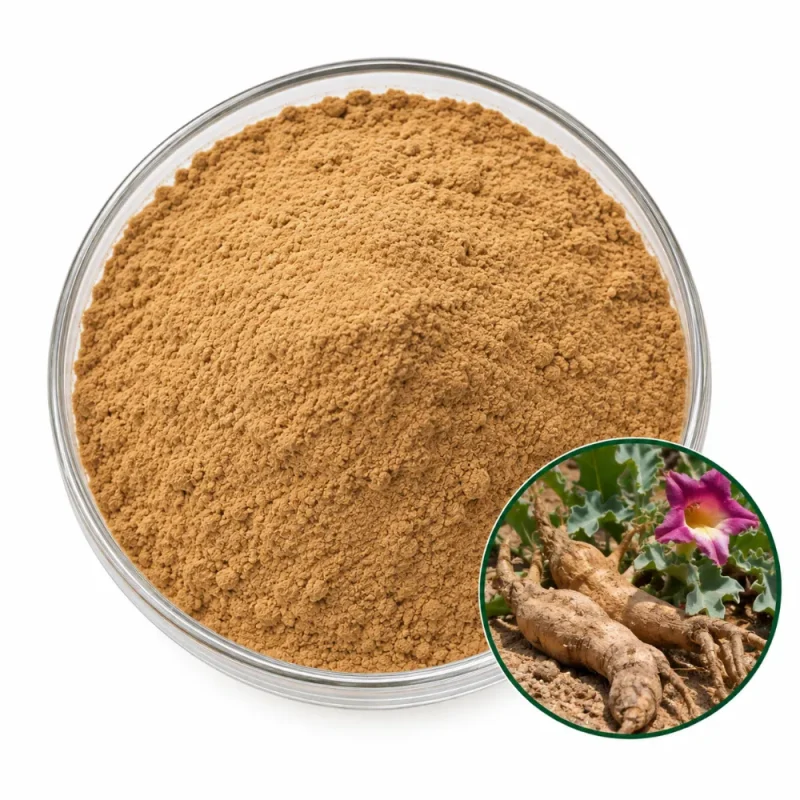
The botanical name is Harpagophytum procumbens (Burch.) DC. ex Meisn., family Pedaliaceae, known as devil’s claw or grapple plant, after the woody fruit covered in hooks. The raw material is the dried secondary root, the swollen storage tubers that grow off the main root. These tubers are lifted, sliced into thin pieces and sun-dried before milling, while the main taproot, the leaves and the fruits are not used.
The part and the species are both critical. Harpagophytum zeyheri is a closely related species with its own range and with a different marker profile, and the two roots are sometimes mixed in trade. A specification that states H. procumbens and the secondary tuber avoids this confusion and defines the ingredient more exactly than the words devil’s claw alone.
The tubers are known for iridoid glycosides, mainly harpagoside, harpagide and procumbide, which carry the strong bitterness of the root, and for phenylethanoid glycosides such as verbascoside and for flavonoids.
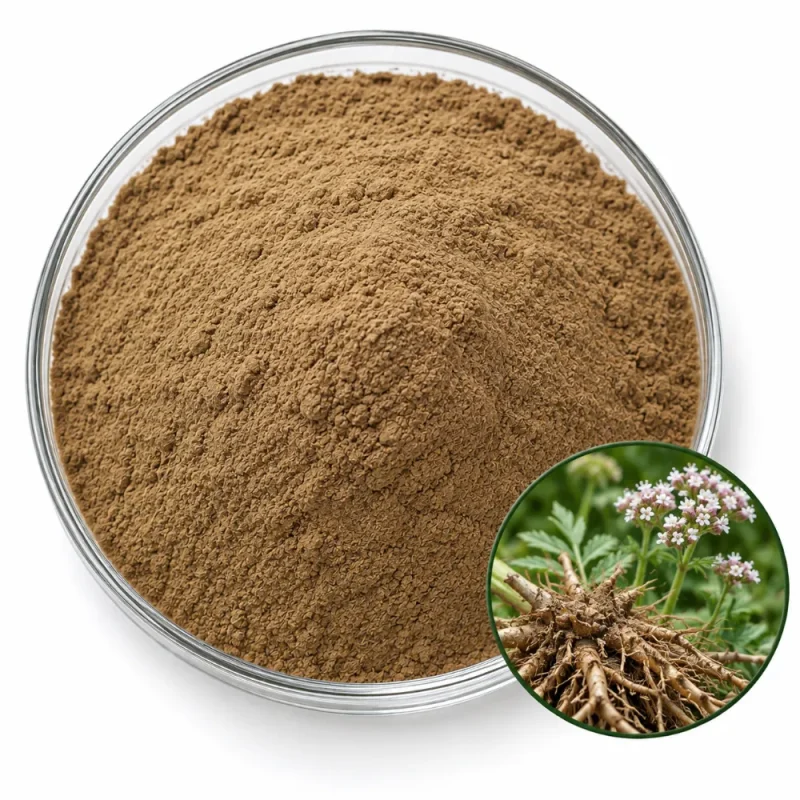
Harvest and drying matter for the powder. Thin slices dry quickly and keep their pale brown interior, while thick or damp pieces darken and develop musty notes. The cut surface of dried pieces is gray-brown with a wrinkled, fibrous look, and the milled powder is correspondingly light brown with darker flecks.