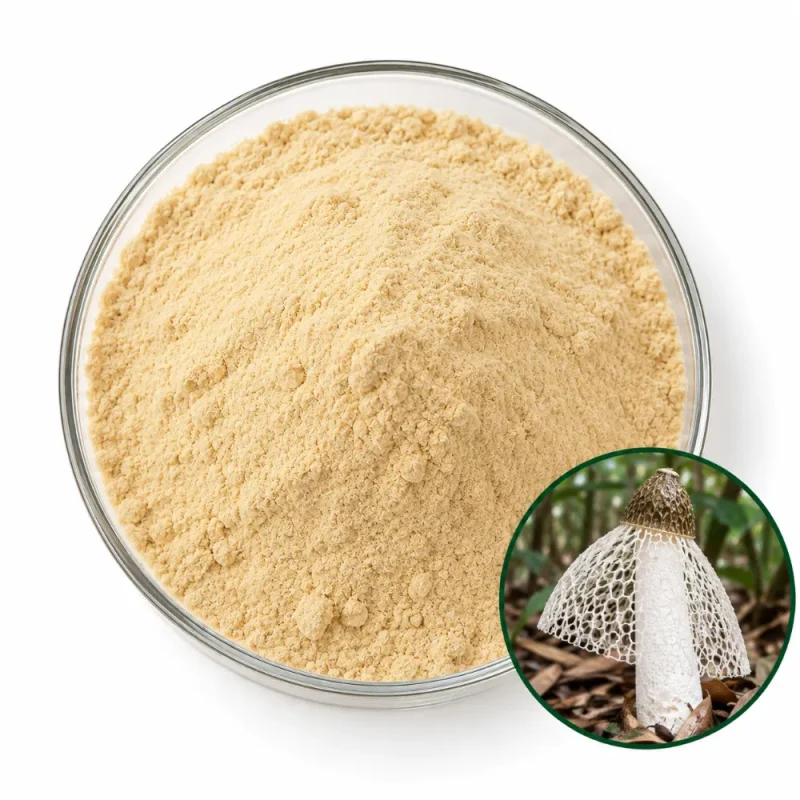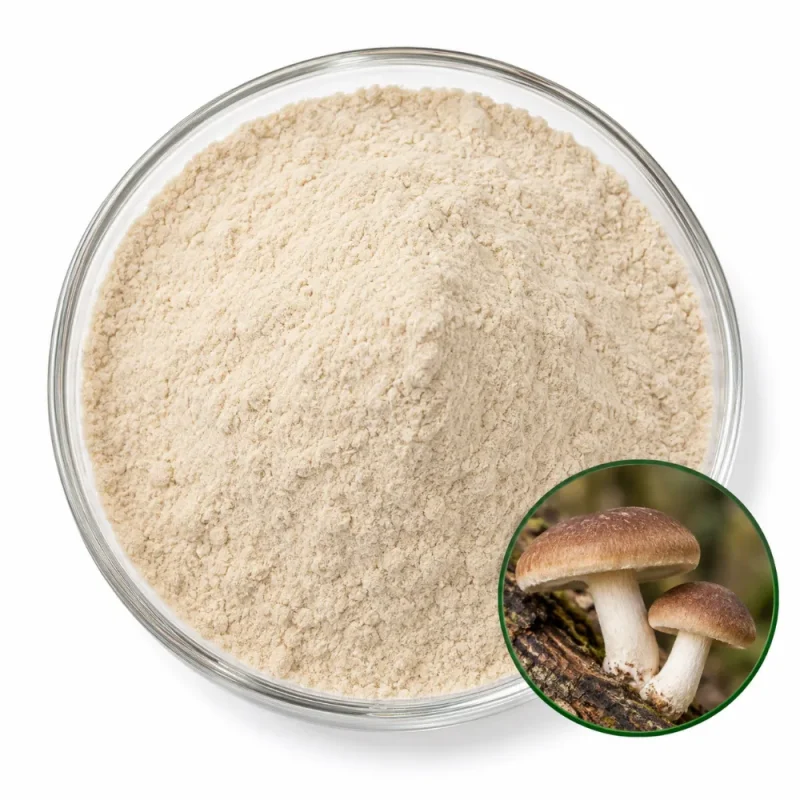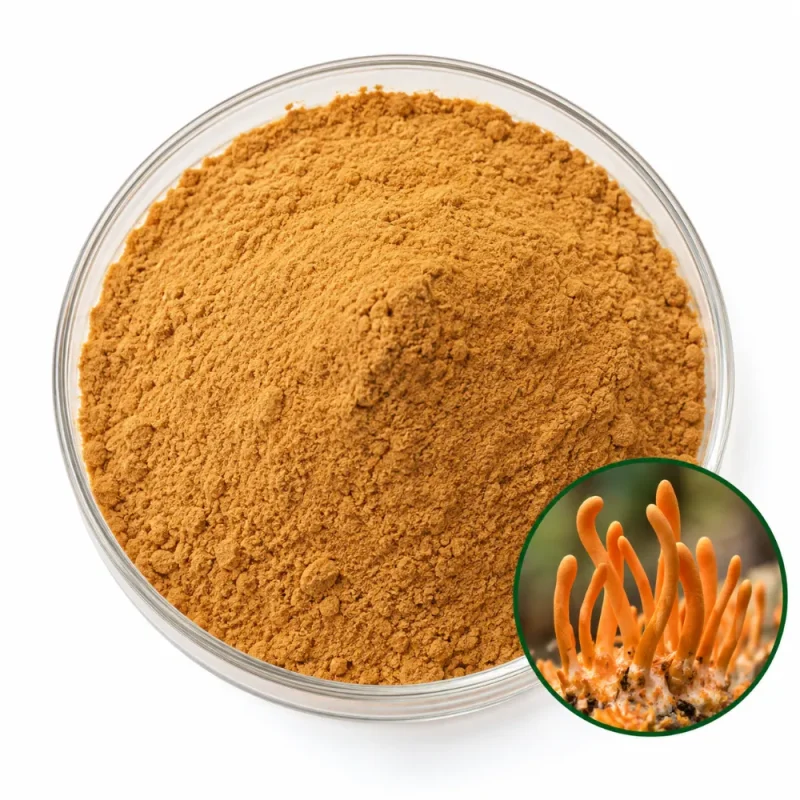
Cordyceps militaris Polysaccharide Powder

Cordyceps militaris polysaccharide powder is a water-extracted, purified fraction from the fruiting body of the orange cordyceps fungus. The light yellow, water-soluble powder is defined by its polysaccharide content, measured as total carbohydrate by UV-Vis against glucose. Cordycepin, a nucleoside, is a different compound and is not what the percentage measures. It suits capsules, sticks and beverage powders that need a defined Cordyceps militaris polysaccharide content.

The figure counts carbohydrate polymers, mainly glucans and mannose-rich heteropolysaccharides, and it is meaningful only with its method. The page therefore states the percentage and the test together.

Cordyceps Polysaccharide Identity

The source is Cordyceps militaris (L.) Fr., the scarlet caterpillar fungus, a member of the Cordycipitaceae. In nature it grows from buried insect pupae and forms a small orange club above ground. Cultivation on grain or silkworm pupa substrates is routine, and the commercial fruiting body is grown on such a substrate. The part used here is the fruiting body, the orange club.

The fungus is often confused with Cordyceps sinensis, now classified as Ophiocordyceps sinensis, the Tibetan caterpillar fungus that is far scarcer and more expensive. The two are different species with different chemistry. Mixing the names on a label is a recurring market problem, and the Latin name in this product’s H1 settles which fungus is meant.

The polysaccharides of Cordyceps militaris include glucans, mannose-rich heteropolysaccharides and galactose-containing fractions. Water extraction followed by concentration and ethanol precipitation recovers the water-soluble polysaccharides, and the fraction is dried to a powder. Protein, small amounts of mineral salts and, depending on the substrate, residual starch or dextrins can travel with them.

Related Cordyceps militaris products are separate. The Cordyceps Extract Powder is a ratio extract, and the Cordyceps Mushroom Powder is the dried, milled fruiting body. Neither is defined by a polysaccharide percentage.

Polysaccharide Content & Test Method

The only grade is polysaccharides at 30% minimum by UV-Vis against glucose, so no selection table is needed and the method is explained here in prose.

The three common methods count different things. UV-Vis, normally the phenol–sulfuric acid assay, reads total carbohydrate: starch, dextrin and any other sugar polymer that releases sugars on acid hydrolysis give a color, together with the target polysaccharides. The gravimetric method weighs the material that precipitates in ethanol, which also includes protein. An enzymatic method digests beta-glucan specifically and measures the released glucose, which gives a lower and more specific result.

Here 30% means total carbohydrate read by UV-Vis, which is not a beta-glucan content. Because cordyceps products grown on cereal or other carbohydrate-rich substrates can carry starch and dextrin, a UV-Vis figure from such a product may mostly reflect the substrate, and a percentage is only comparable between products that share a method, a standard and a raw material.

A cordycepin-defined extract is a separate specification. Cordycepin is a small nucleoside analogue measured by HPLC, and the Cordyceps Militaris Extract 0.5–20% Cordycepin is the grade for buyers who need that marker. A polysaccharide figure says nothing about cordycepin, and the reverse is also true. Any Cordyceps militaris polysaccharide value is therefore read together with its method.

Typical Specifications

Specification ItemProduct Information
Latin NameCordyceps militaris
Plant PartMushroom & Fungi
ProcessingWater Extraction & Purification
Common NameCordyceps militaris
Ingredient TypePolysaccharide Extract
Polysaccharide TypeGlucan and mannose-rich heteropolysaccharides
ContentPolysaccharides ≥30% (UV-Vis, as glucose)
AppearanceLight Yellow powder
Solubility / DispersibilityWater Soluble
Quality Parameters
Moisture (LOD)≤5.0%
Total Ash≤5.0%
Particle Size80 mesh
Heavy MetalsLead ≤2 ppm · Arsenic ≤1 ppm · Cadmium ≤1 ppm · Mercury ≤0.1 ppm
MicrobiologyTPC ≤1,000 cfu/g · Yeast & Mold ≤100 cfu/g · E. coli Negative · Salmonella Negative/25 g
Shelf Life24 months in unopened original packaging, cool and dry storage

Cordyceps militaris Polysaccharide Solution Behavior

In water, Cordyceps militaris polysaccharide powder dissolves to a pale yellow, clear to lightly hazy solution. The fraction hydrates quickly at room temperature, and warm water speeds the process. At the use levels of drinks and sticks the solution stays thin, and viscosity rises only slowly with concentration. No viscosity value is given.

The polysaccharides tolerate normal food processing. Pasteurization and hot filling leave the chains largely intact, while long boiling at low pH can hydrolyze them and shorten the average chain. Because the change depends on time, temperature and acid, heat steps in a formula are checked against the target.

Other ingredients interact in predictable ways. The protein fraction can combine with tannins in tea and coffee and cause slight haze, and the powder leaves acidic drinks clear when fully dissolved. Calcium and magnesium do not precipitate the polysaccharides at normal levels. A trace of yellow color is stable in the dark and darkens slowly under light.

Cordyceps militaris polysaccharide powder is hygroscopic. It takes up moisture readily from air, becomes tacky and then clumps, and high humidity can set it into a firm cake. Weigh and blend in a dry area, close the liner after each draw and use opened containers within a short window.

In short, Cordyceps militaris polysaccharide dissolves quickly, stays thin at drink levels and tolerates normal heat, with long acidic boiling as the main risk. Cordyceps militaris contributes little flavor of its own, so a Cordyceps militaris polysaccharide powder at 30% is dosed by the polysaccharide amount a label needs.

Application Areas

Capsules and Tablets

Capsule and tablet makers fill Cordyceps militaris polysaccharide powder alone or with excipients. Dry filling rooms suit this fine, hygroscopic powder during filling, and flow aids are a decision for the buyer’s own formula and process.

Instant Drink Sticks

Single-serve sticks combine the powder with fruit powders, tea or creamers. It dissolves in hot or cold water with little flavor of its own, and the light yellow tint is unobtrusive. Moisture-proof film keeps sticks free-flowing in storage.

Ready-to-Mix Beverage Powders

Beverage powders use the powder for a labeled polysaccharide content in a soluble base. It dissolves clearly at drinking concentrations, which suits clear and lightly colored drinks, and the mild earthy note is easy to cover with citrus or berry flavors.

Gummies and Chewables

Confectioners stir the powder into the gummy mass once the main cook is finished, which protects chain length. The pale color suits light-colored candy, and the mild flavor is covered by fruit notes in typical recipes.

Nutrition Powders and Bars

Protein powders, meal-replacement mixes and bars include the powder in small amounts for a labeled polysaccharide content. It blends easily with dry ingredients and adds little color or taste, and humidity control in the plant keeps the blend loose.

Packaging & Commercial Supply

Essencefield supports product evaluation, formulation trials, commercial orders, and ongoing ingredient supply. Packaging, storage, and shipping arrangements are determined by product characteristics, order quantity, stability requirements, and destination-market needs.

Supply ItemGeneral Information
SampleAvailable upon request for formulation, testing, and supplier evaluation
Order Quantities100 g · 1 kg · 5 kg · 25 kg · 100 kg · 500 kg · Bulk
Sample Lead TimeTypically 5–7 days after sample confirmation
Production Lead TimeTypically 15–30 days after order and specification confirmation
PackagingSuitable protective inner packaging with bags, cartons, drums, or other appropriate outer packaging
StorageStore in tightly sealed, suitable protective packaging in a cool, dry environment. Protect from moisture, heat, and direct sunlight. Specific storage conditions follow the approved product specification.
DocumentationCOA · Product Specification · TDS · SDS · Applicable declarations (as applicable)

Final order quantities, lead times, packaging, documentation, and shipping arrangements are confirmed according to the selected product and commercial requirements.

Request Ingredient Specifications & Quote

Share your target specification, application, quantity, and documentation needs. We’ll help confirm suitable options, samples, and commercial supply details.