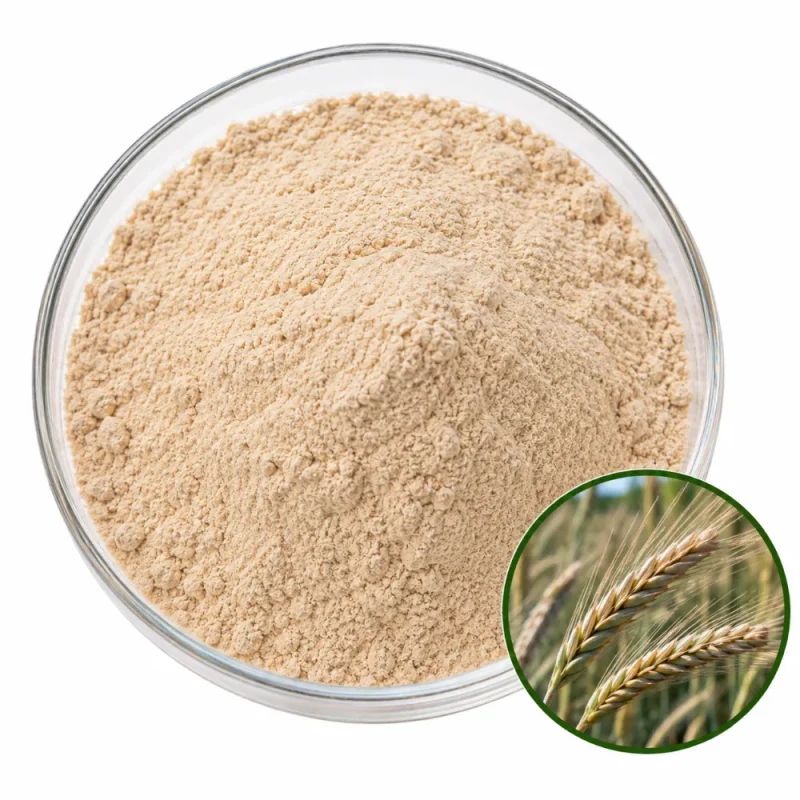
Barley Beta-Glucan Identity
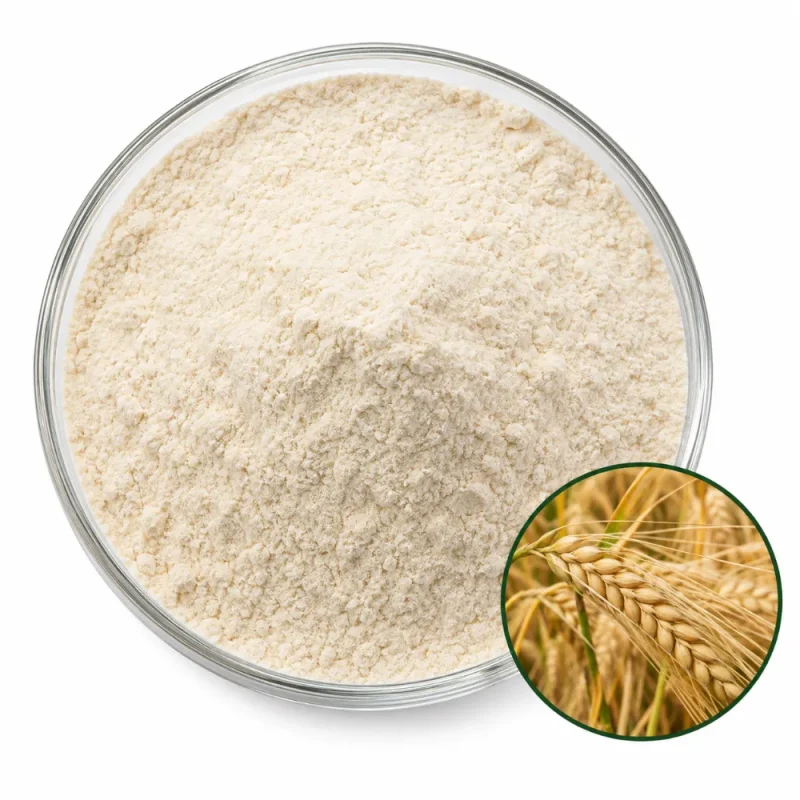
Barley beta-glucan powder comes from the seed of Hordeum vulgare L., where the glucan sits mainly in the cell walls of the starchy endosperm and aleurone layer. The polymer is a linear chain of glucose units joined by both β-(1→4) and β-(1→3) bonds. Short runs of three or four β-(1→4)-linked units are separated by single β-(1→3) links, and that irregular pattern keeps the chain flexible and water-hydrating. Barley is one of the richest cereal sources of this glucan, and hull-less types are generally richer than hulled ones.
Extraction in warm water, followed by enzyme treatment and precipitation, removes most of the starch, protein and arabinoxylan that travel with the glucan in the grain. The remaining solid is a purified fiber fraction, so its behavior differs from barley flour, where the same glucan is diluted by starch.
Three other barley products are easy to confuse with this one. Barley Powder is the milled grain, Highland Barley Powder is milled hull-less grain, and Malt Extract Powder is a sprouted-grain extract rich in maltose. None of them is specified by a glucan assay, and each behaves like barley food rather than like a concentrated fiber.
The distinction matters for dose. A milled barley product carries glucan as a minor share of its mass, so reaching a meaningful glucan amount through flour means adding a large mass of starch and protein with it. The purified fraction delivers the polymer at a much smaller inclusion, which is its reason to exist in capsule and beverage formats where space and flavor are limited.