Botanical extracts made from the same plant can behave very differently in water, which matters when selecting botanical extracts for beverages, powders, gummies, functional foods, capsules or tablets. Botanical extract solubility describes how much of an extract can dissolve in a particular solvent under specified conditions such as concentration, temperature and pH.
Quick Answer
Soluble extracts dissolve into the liquid phase. Dispersible extracts distribute through the liquid but may keep suspended particles or droplets. Insoluble or poorly soluble extracts stay partly undissolved and may need suspension, emulsification or a different product format.
| Extract Form | Behavior in Water | Typical Appearance | Main Formulation Concern |
|---|---|---|---|
| Soluble | Constituents dissolve into the liquid phase | Clear, colored, or slightly hazy | Practical concentration and stability |
| Dispersible | Particles or droplets distribute without fully dissolving | Usually cloudy or turbid | Settling and redispersibility |
| Insoluble / poorly soluble | A significant portion remains undissolved | Visible particles, floating material, or sediment | Delivery system and application fit |
For formulators and buyers, “is this extract water-soluble?” is too narrow a question; what matters is how the specific grade behaves in the target formulation.
What Does Botanical Extract Solubility Mean?
Solubility is how much of a substance can dissolve in a given solvent under stated conditions. The United States Pharmacopeia separates it from dissolution rate in General Chapter <1236> Solubility Measurements: solubility is how much material can enter solution, dissolution rate is how fast. The distinction matters because an extract is usually a complex mixture rather than a single purified compound, containing varying proportions of polyphenols and flavonoids, glycosides and polysaccharides, organic acids, alkaloids and terpenoids, pigments, minerals and other co-extractives. One powder may dissolve slowly yet end up highly water-compatible; another may seem to vanish quickly because fine particles have dispersed without dissolving. Appearance right after mixing is therefore not enough — concentration, pH, temperature, particle characteristics, processing, mixing and observation time all affect the result.
Soluble vs Dispersible vs Insoluble Botanical Extracts
These terms describe different physical behaviors and should not be used interchangeably. For a closer comparison of the first two, see Water-Soluble vs Water-Dispersible Botanical Extracts.
Soluble Botanical Extracts
A soluble extract dissolves sufficiently in the chosen liquid at the stated use level. The liquid need not be colorless — natural pigments, polyphenols and other constituents can give strong color even when the material dissolves well — so a solubility statement should always be read with its concentration, temperature, pH and observation time.
Dispersible Botanical Extracts
A water-dispersible extract distributes through the liquid but may keep fine particles, colloidal material or small droplets, so the system can stay cloudy even when distribution is uniform. Research in Frontiers in Pharmacology on solubility and dispersibility in botanical extract systems shows that particle structure, granulation, excipients and emulsification materially affect practical dispersibility, and that low-polarity materials can be brought into water by emulsification without becoming intrinsically soluble. For a dispersible grade, watch uniformity after mixing, haze or turbidity, settling rate, sediment and redispersibility after standing. In cloudy beverages, shots or powdered systems, controlled dispersibility may matter more than complete dissolution — Echinacea Extract 4% Polyphenols, for instance, is published as dispersible in water.
Insoluble or Poorly Soluble Extracts
Some constituents have little affinity for water, so poorly soluble material may float, aggregate, settle, stick to equipment or separate in storage. That does not make the ingredient unsuitable. Our Kava Extract Powder and Kava Extract 30–70% Kavalactones show why: concentrated kavalactones have limited intrinsic water solubility, so wetting, dispersion, sedimentation and delivery-system compatibility become the relevant considerations. Capsules, tablets, lipid-based systems and some food matrices can accommodate ingredients that would be hard to put into a clear aqueous product. Note too that water-insoluble does not automatically mean oil-soluble; some constituents dissolve poorly in both water and common lipids, so oil-phase compatibility should be tested rather than inferred.
Why Botanical Extracts Behave Differently in Water
Final behavior depends on what was extracted and how the material was processed afterward. Botanical identity tells you what the ingredient is; the commercial grade largely determines how it behaves, so the plant name alone cannot predict aqueous performance.
Phytochemical Composition and Polarity
Broadly, hydrophilic constituents interact readily with water and lipophilic ones prefer less-polar environments, and extracts can contain both — polysaccharides, glycosides, anthocyanin-rich fractions, carotenoids and terpenoid-rich materials can behave very differently. Polarity helps predict formulation behavior, but it is not a purchasing specification.
Extraction Solvent
The solvent shapes which constituents move into the extract — water tends toward more polar compounds, while ethanol or hydroalcoholic systems shift the profile (see Water vs Ethanol Extraction). But it is only one part of the outcome: concentration, standardization, drying, carrier system and physical processing each change how the finished powder behaves.
Extract Ratio and Standardization
A ratio extract and a standardized extract of the same plant can be very different ingredients, and neither the ratio nor the marker assay directly defines water compatibility. Research on plant-to-extract ratios in botanical extracts stresses that the ratio alone does not characterize a finished ingredient, because solvent, native extract content, excipients and manufacturing conditions also shape composition. Ratio and assay describe composition or concentration, not aqueous behavior — a point that matters when comparing standardized extracts with conventional ratio extracts (see Botanical Extract Ratios Explained).
Processing, Particle Structure and Carriers
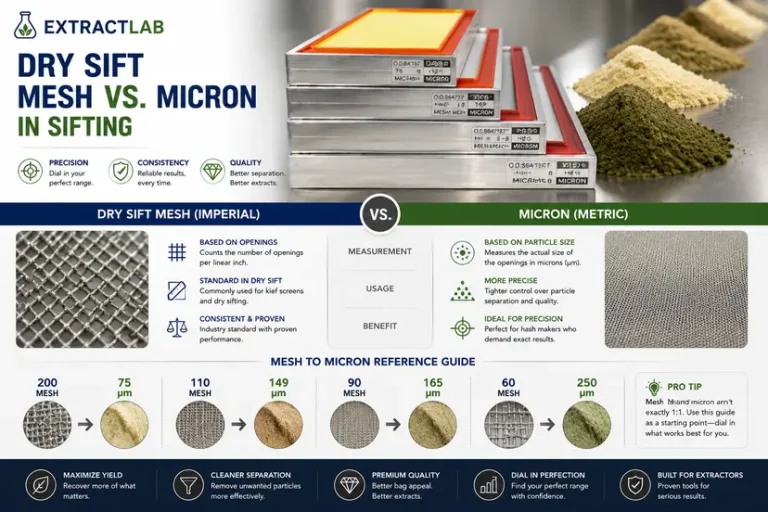
After concentration, extracts may be spray- or freeze-dried, milled, granulated, agglomerated or blended, which affects particle structure, surface area, wetting, disintegration, flow and dispersion — so physical performance can change even when identity and headline assay stay the same (see Particle Size & Mesh Size Explained). Carriers may aid drying, reduce stickiness, normalize concentration, improve handling or assist dispersion, and should be judged by function, type and level rather than treated as a defect by default. Our Processing & Standardization service treats solvent, concentration, drying, carrier, particle-size adjustment and solubility or dispersibility as connected parts of the finished profile.
Water-Soluble Does Not Always Mean Clear
Four properties are easily confused: solubility (how much material enters solution), dispersibility (how well undissolved material distributes), clarity (how much visible haze or turbidity there is) and stability (whether acceptable physical characteristics hold over time). An extract can be soluble but strongly colored, uniformly dispersible but cloudy, or fine immediately after mixing and unstable later. Each answers a separate question, which matters especially in functional beverage formulation, where dissolution, clarity, suspension, sedimentation, pH response and stability all bear on grade selection.
What Does “Clear Water-Soluble” Mean?
Some suppliers label grades intended for low-turbidity aqueous use as “clear-soluble” or “clear water-soluble”. The terms are useful but are not universal technical classes, so confirm the concentration, liquid system, temperature, pH and clarity method behind them.
What Causes Haze, Sediment or Precipitation?
Poor appearance in water does not necessarily mean the extract is defective; several factors are usually involved.
Concentration
A grade that behaves well at low use levels may haze or show undissolved material as loading rises, so test at the intended level.
pH
pH changes can alter ionization and interactions of some constituents, so a grade tested in neutral water may behave differently in an acidic beverage or food.
Temperature
Warm water speeds wetting and dissolution, but material that looks dissolved while warm may separate on cooling, so hot-water results should not be used to predict cold-water reconstitution.
Formulation Matrix
Proteins, minerals, acids, electrolytes, hydrocolloids, flavors, sweeteners and other botanicals can change physical behavior, and ionic strength can affect aggregation or clouding, so an extract that performs well alone may not once the full formulation is assembled.
Time
Some problems develop slowly: a sample that looks uniform after mixing may later show haze, sediment, flocculation, precipitation, surface rings or phase separation. Initial appearance is not physical stability.
How to Test Botanical Extract Solubility and Dispersibility
A useful comparative test controls the variables rather than adding an arbitrary amount of powder to water, and applies the same procedure to every candidate grade.
| Parameter | Example Condition | Why It Matters |
|---|---|---|
| Extract amount | 1 g | Establishes a defined test quantity |
| Liquid volume | 100 mL | Allows the test to be reproduced |
| Concentration | 1% w/v | Performance can change as loading increases |
| Temperature | 20–25°C | Hot water may overstate cold-water performance |
| pH | Measure and record | Some constituents behave differently across pH |
| Mixing | Fixed method and time | Keeps shear conditions comparable |
| Initial observation | Immediately after mixing | Shows wetting, clumping, and initial distribution |
| Standing time | e.g. 30 min and/or 24 h | Reveals delayed sediment or precipitation |
| Appearance | Clear / hazy / turbid | Separates solubility from optical clarity |
| Sediment | Record amount and character | Indicates physical separation |
| Redispersibility | Yes / no | Shows whether settled material can be resuspended |
| Post-process observation | Recheck after cooling where relevant | Detects haze or precipitation after thermal processing |
These values are an example comparative protocol, not a universal pharmacopoeial test. Adapt it to the real use: test a cold-mix drink powder in cold water, an acidic RTD near its target pH, a concentrated shot near its target loading, and recheck hot-fill or pasteurized systems after cooling. Rather than a bare pass or fail, record wetting, clumping, color, clarity, suspended particles, sediment, precipitation and redispersibility, together with the lot number so results link to the material tested.
Screening Is Not the Same as Quantitative Solubility Measurement
This protocol is for comparative formulation screening — whether a powder wets, disperses, hazes or forms sediment at use level — and should not be confused with a quantitative equilibrium-solubility measurement. If solubility is a formal purchasing or release specification, the method must define the analytical endpoint, concentration basis, medium, temperature, equilibration time and acceptance criterion; “looks dissolved at 1%” and “measured solubility of X mg/mL” are not equivalent statements. The FDA’s Botanical Drug Development: Guidance for Industry covers a different regulatory category, but its principles on raw-material control, manufacturing consistency and analytical characterization are still useful for complex botanicals.
How to Read Botanical Extract Solubility Claims
| Supplier Claim | What It May Indicate | What the Buyer Should Confirm |
|---|---|---|
| Water-soluble | Material dissolves adequately under stated conditions | Concentration, temperature, pH, observation time |
| Water-dispersible | Material distributes without fully dissolving | Haze, settling, sediment, redispersibility |
| Clear-soluble | Designed for relatively low-turbidity systems | Clarity criterion and test conditions |
| Poorly soluble | Limited dissolution in the selected system | Practical concentration and application |
| Instant | Improved wetting or rapid reconstitution | Whether the material dissolves or mainly disperses |
| Carrier-free | No added carrier is present | Whether required physical performance is maintained |
Two terms are especially easy to misread. “Instant” usually describes reconstitution behavior rather than complete dissolution, and “carrier-free” describes composition rather than formulation superiority — in some systems a suitable carrier or emulsifying structure is part of reaching the required performance.
Choosing the Right Extract Form by Application
| Application | Priority Property | Common Risk |
|---|---|---|
| Clear RTD beverage | Solubility, clarity and stability | Haze or precipitation |
| Cloudy beverage | Uniform dispersibility | Sedimentation |
| Wellness shot | Performance at high loading | Heavy sediment |
| Instant drink powder | Wetting and reconstitution | Floating material or clumping |
| Gummy / food | Uniform distribution | Localized separation |
| Capsule | Powder handling | Flow or segregation |
| Tablet | Processing and dosage-form dissolution | Compression or disintegration issues |
Clear RTD Beverages
Clear beverages are among the most demanding: a suitable grade may need good aqueous compatibility, controlled turbidity, minimal sediment and resistance to precipitation at the intended pH, so a specification saying only “water-soluble” may not be enough.
Instant Drink Powders
For powdered beverages, wetting and reconstitution are part of the user experience, and a chemically soluble material can still disappoint if it floats, clumps or dissolves slowly in cold water.
Capsules and Tablets
Dry dosage forms generally do not need full water solubility before consumption; particle size, bulk density, flow, blend uniformity, compressibility, disintegration and finished-product dissolution matter more, so a more soluble extract is not automatically the better choice — a poorly water-soluble grade such as our Turmeric Extract Powder may be entirely appropriate here.
What Buyers Should Check Before Selecting an Extract
Technical suitability is application-specific: a grade can meet its chemical specification and still perform poorly if its physical behavior is overlooked.
Confirm Identity and Ingredient Type
Start with species, plant part, ingredient form and whether it is a ratio extract, standardized extract or other defined grade; different forms are not automatically equivalent.
Review Standardization and Carrier Status
Where relevant, confirm extract ratio, marker or assay, analytical method, carrier type and level, and particle characteristics. Our Specification & Grade Matching service weighs these against formulation, analytical, physical and purchasing requirements rather than relying on a product name.
Confirm the Test Conditions
For a water-soluble claim, ask at what concentration, in what solvent, at what temperature and pH, with what mixing method and over what observation time; for a dispersible grade, also review haze, sedimentation and redispersibility.
Understand Specification vs CoA
A specification sets the agreed requirements for a grade; a Certificate of Analysis records results or conformity for a particular lot. If aqueous behavior is critical, clarify whether solubility or dispersibility is descriptive information, a formal specification parameter or a lot-release criterion, and if it is an acceptance criterion, define the method and pass/fail limits.
Match the Grade to the Application
A capsule grade may not suit a clear beverage, and a grade optimized for water may carry features a tablet does not need. Define the required performance before choosing.
Test the Actual Commercial Grade
Extracts sharing a botanical name, plant part, ratio or marker specification can still behave differently because of extraction conditions, drying, carriers, particle processing, moisture or constituent profile, so evaluate a representative sample in the final formulation before approval.
Recheck After Meaningful Material or Process Changes
A grade that passed before may need re-evaluation after changes to extraction solvent, carrier system, drying method, particle-size specification, production site or other processes affecting physical form — the name and headline assay can stay the same while performance shifts. When physical behavior is critical, follow bench work with pilot or production-scale confirmation, since mixing energy, process water, heating and cooling, batch size, hold time and order of addition can all differ from a small lab test.
Matching Solubility to the Formulation
Solubility is not a simple soluble-or-insoluble label. Solubility, dispersibility, clarity and stability answer different formulation questions, and no single physical form suits every application. A clear RTD may need low turbidity and minimal precipitation, a cloudy beverage can work well with a stable dispersion, an instant powder must reconstitute efficiently, and a capsule or tablet may not need full aqueous solubility at all. The most reliable approach is to define the required physical performance, review the actual grade and specification, and test a representative sample under realistic conditions before scale-up.
Request a Grade Recommendation or Sample
Browse our Botanical Extracts and Standardized Extracts, then contact Essencefield Botanicals with your application, target concentration and required water behavior to request a specification, representative COA or sample.