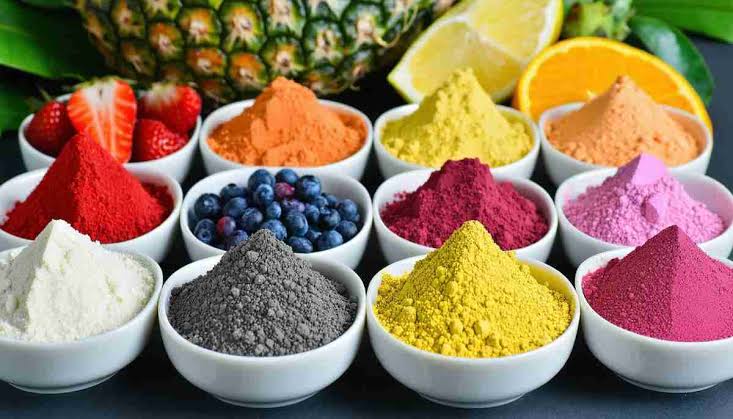
A botanical extract ratio describes the relationship between the amount of botanical starting material used and the amount of extract produced. For a typical dry extract, 10:1 means roughly 10 mass units of defined botanical material were used to make 1 unit of extract. A larger ratio is not, on its own, evidence of greater potency or a higher concentration of active compounds: extraction method, native extract content, carrier system, standardization and the composition of the finished powder all affect how two extracts should be compared.
This guide focuses on solid and dry botanical extracts. Soft extracts, liquid extracts and tinctures need additional interpretation because part of the extraction solvent may remain in the finished preparation.
What Is a Botanical Extract Ratio?
For a solid extract the ratio is written as botanical starting material : extract, so 5:1 means about five units of starting material per unit of extract, 10:1 about ten and 20:1 about twenty. Health Canada uses the same convention; its Quality of Natural Health Products Guide gives 5:1 as an example of 5 g of crude botanical material used to prepare 1 g of solid extract.
Terminology varies: Plant-to-Extract Ratio is common in botanical ingredient literature, while European herbal documentation uses Drug-to-Extract Ratio (DER). In commercial sourcing, the ratio is only one part of the material definition — our Botanical Extracts range differentiates grades by plant source, plant part, extract ratio, concentration and physical form. Before comparing two extracts, establish what exactly the ratio is based on.
What Do 5:1, 10:1 and 20:1 Extract Ratios Mean?
| Ratio | Approx. Starting Material | Extract | What It Tells You | What It Does Not Tell You |
|---|---|---|---|---|
| 5:1 | 5 kg | 1 kg | Starting-material-to-extract relationship | Marker concentration |
| 10:1 | 10 kg | 1 kg | Greater material input per unit of extract | 10× potency |
| 20:1 | 20 kg | 1 kg | Higher material-to-extract relationship | Better quality |
The ratio is closely related to extraction yield but does not define the concentration of any particular phytochemical, so a 10:1 extract should not be read as containing ten times more of every constituent in the original botanical.
Does a Higher Extract Ratio Mean a Stronger Extract?
No. Assuming both ratios use the same basis, a higher ratio only means more starting material was associated with each unit of extract; it does not establish greater potency, higher marker content or better quality. Yield and composition depend on the starting material, solvent, process selectivity, temperature, processing conditions and any purification.
A review in Frontiers in Pharmacology by experts associated with the United States Pharmacopeia, Understanding Plant-to-Extract Ratios in Botanical Extracts, identifies “higher ratio = stronger extract” as a common misconception: a high ratio can result from selective extraction or simply from a low amount of extractable material. The review’s Gymnema example shows a more highly purified extract with a much higher ratio than the native extract because purification removes part of the extracted material — the larger number reflects a different manufacturing profile, not superiority. Extract ratio is one specification parameter, not a potency scale.
How Are Botanical Extract Ratios Calculated?
At its simplest, Plant-to-Extract Ratio = starting botanical material ÷ extract obtained. For example, 80 kg of dried botanical material yielding 8 kg of native extract gives 80 ÷ 8 = 10, or approximately 10:1. The calculation is meaningful only when both the starting material and the extract stage are defined.
Extraction Yield
With the same starting-material basis, lower yield produces a higher numerical ratio. Yield in turn depends on how much extractable material is present and what the process is meant to recover. Water, ethanol and hydroethanolic systems give different constituent profiles, and extraction time, temperature, solvent strength, purification, concentration and drying further shape the result. These variables matter most during processing and standardization, where an intended extract profile becomes a repeatable commercial specification.
Does the Ratio Use Fresh or Dried Botanical Material?
The starting-material basis should be stated. The USP-associated framework in the Frontiers review calculates Plant-to-Extract Ratio on a dry-weight basis, even when the raw material was fresh. European DER terminology differs: EMA guidance states that when fresh material is used, the actual amount entering the process — including its natural water — is used in the DERgenuine calculation. Suppliers should therefore say whether a ratio refers to dried material, fresh material, a dry-weight-equivalent basis or another defined convention; two identical numbers on different bases are not directly comparable.
Why Are Some Ratios Written as 7–9:1?
Because botanical materials vary, yield is not identical from batch to batch, and a process may genuinely produce a range such as 7–9:1 rather than exactly 8:1. Moisture, soluble-solid content, harvest conditions, natural composition and normal process yield all contribute. A ratio range does not necessarily signal poor process control; for some botanicals it describes normal variability more accurately than a fixed nominal figure.
How to Calculate Botanical Equivalent from an Extract Ratio
Ratios can estimate how much starting material a quantity of extract represents: extract amount × extract ratio ≈ botanical equivalent. So 250 mg of a 10:1 extract represents roughly 2,500 mg of starting material — provided the ratio applies to the material being weighed. If 10:1 refers to the native extract but the finished powder contains significant carrier, multiplying the whole powder weight by 10 overstates the equivalent. Botanical equivalence is also not chemical equivalence: two extracts representing similar amounts of starting material can still differ in constituent profile.
Native Extract vs Finished Extract: Why the Difference Matters
A native (genuine) extract is the extracted material before added excipients. Commercial dry extracts may also contain carriers such as maltodextrin or gum acacia to support drying, handling, stability or physical standardization. EMA distinguishes DERgenuine (starting material to native extract) from DERtotal (starting material to the whole extract including excipients), defining the genuine preparation as the one without added excipients in its herbal medicinal product quality guideline.
Worked example: 10 kg of botanical material gives 2 kg of native extract, a native ratio of 5:1. Adding 0.5 kg of carrier produces 2.5 kg of finished powder, so the starting-material-to-finished-powder relationship becomes 10 ÷ 2.5 = 4:1. The native ratio is still 5:1, but its relationship to the commercial powder has changed. Buyers should therefore confirm whether the ratio refers to native or finished extract, whether a carrier is present, and how much native extract the finished material contains.
Extract Ratio vs Standardization: What Does Each Tell You?
| Specification | What It Describes | Example |
|---|---|---|
| Extract ratio | Starting-material-to-extract relationship | 10:1 |
| Marker assay | Measured level of a defined constituent | ≥5% ginsenosides |
| Standardization | Controlled concentration or range | 20% polyphenols |
| Chemical fingerprint | Broader identity or consistency profile | HPLC profile |
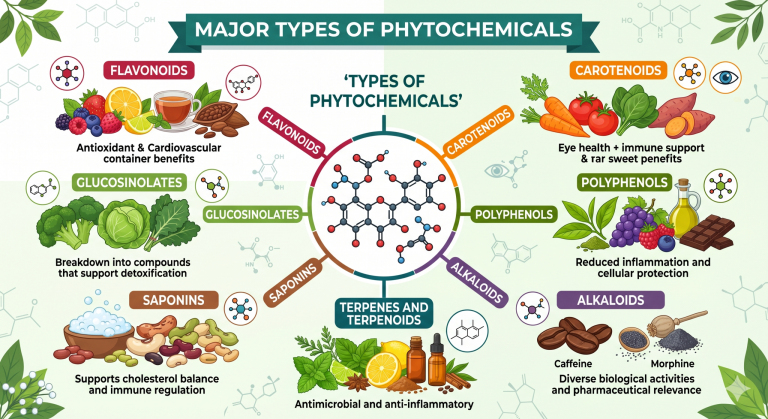
A 10:1 ratio describes a manufacturing relationship, while ≥5% ginsenosides describes measurable chemical content, and one cannot be converted into the other. Health Canada likewise treats ratio and marker standardization as separate characteristics. The difference shows up in our catalogue: Ginseng Extract Powder is listed as an extract powder, whereas Ginseng Extract 10–80% Ginsenosides is defined by its ginsenoside assay — as are other grades in our Standardized Extracts range, which are differentiated by botanical source, marker, assay level and method rather than by ratio. Depending on the botanical, the controlled marker may be polyphenols, flavonoids, anthocyanins, saponins, alkaloids, terpenoids or another defined constituent.
Does Standardized Mean Carrier-Free?
No — standardization and carrier content are separate attributes. An extract can be adjusted to a defined constituent level while still containing permitted excipients for standardization or technological reasons, and EMA documentation explicitly separates genuine extract from added excipients in standardized preparations. If carrier content matters for formulation, labeling or dose calculations, specify it separately.
Why Two 10:1 Botanical Extracts May Not Be Equivalent
Two ingredients can both show 10:1 and still be materially different extracts. Botanical variables — species, cultivar, plant part, origin and starting-material quality — shape the phytochemical profile before extraction begins, so a root extract should not be assumed equivalent to a leaf or aerial-part extract with the same ratio. Extraction variables — solvent system and strength, time, temperature, purification and concentration — decide which constituents are retained, so a 10:1 water extract and a 10:1 hydroethanolic extract can differ substantially. Finished-extract variables — native extract percentage, carrier, marker assay, method, fingerprint, moisture and physical properties — complete the picture.
For procurement, Specification & Grade Matching aligns botanical identity, plant part, ratio definition, solvent system, native extract content, carrier, assay, method and physical requirements rather than relying on the product name or ratio alone.
Can a Botanical Extract Ratio Be Verified on a COA?
Not in the same way as a marker assay. A ratio is derived from manufacturing inputs and yield, whereas an assay is produced by testing the material. The USP-associated review notes that Plant-to-Extract Ratio information may appear on COAs even though it cannot necessarily be verified by a single test on the finished powder. The batch COA still matters, but for a different purpose: the specification defines what the ingredient must meet, and the COA records how a lot performed against criteria such as identity, assay, moisture, microbiological limits and heavy metals. Our Quality & Testing page describes how these elements fit together.
When the ratio is commercially important, ask for supporting information: the ingredient specification, stated ratio and basis, native extract content, carrier declaration, extraction solvent, relevant manufacturing information, the batch COA and associated analytical results. The more useful procurement question is not “does the COA say 10:1?” but “what manufacturing basis supports the stated 10:1?”
How Should Buyers Compare Botanical Extracts?
A practical comparison works in three levels. First, identity: species, plant part, ingredient form and starting-material condition, so materials are botanically aligned before concentration is compared. Second, extraction: ratio and ratio basis, solvent, native extract content and carrier system, which explain how the ingredient was made and what the powder contains. Third, verification: marker or assay where applicable, analytical method, chromatographic fingerprint where relevant, lot-specific COA, identity testing and contaminant controls.
What Should a Complete Extract Specification State?
| Specification Parameter | Extract A | Extract B | Why It Matters |
|---|---|---|---|
| Botanical identity | Same verified species | Same verified species | Confirms botanical alignment |
| Plant part | Root | Root | Different parts may differ chemically |
| Starting basis | Dried | Dried | Clarifies ratio basis |
| Extract form | Dry extract | Dry extract | Defines ingredient form |
| Extract ratio | 10:1 | 10:1 | Same headline ratio |
| Ratio basis | Native extract | Finished powder | Changes interpretation |
| Extraction solvent | Water | Ethanol 50% | Different constituent selectivity |
| Native extract content | 100% | 70% | Changes finished composition |
| Carrier | None | Maltodextrin | Changes commercial powder |
| Marker specification | Defined | Not specified | Affects chemical comparison |
| Analytical method | HPLC | Not specified | Determines how assay is measured |
Illustrative comparison. Both materials can legitimately display 10:1 without being equivalent, and a specification that says only “10:1 botanical extract” leaves most of these variables undefined.
How to Choose the Right Botanical Extract Specification
There is no universally correct ratio; the right specification depends on the formulation and quality target — the phytochemical profile you need, any marker or assay requirement, dosage form and inclusion level, solvent, native extract and carrier limits, solubility or dispersibility, key physical properties and regulatory or documentation needs. A 20:1 extract may suit one formula and a lower-ratio material another, and for standardized extracts the marker content and method usually matter more than the ratio. For example, compare Ashwagandha Root Extract Powder with Ashwagandha Extract 2.5–10% Withanolides against your formulation’s actual requirement. The better sourcing question is which specification best matches the formulation and quality requirements, with the ratio treated as one line in that specification.
Key Takeaways
- A 5:1, 10:1 or 20:1 ratio describes the relationship between botanical starting material and extract; a larger number is not evidence of greater potency or quality.
- Starting-material basis, native vs finished extract, carrier content, solvent and standardization must be distinguished when comparing materials.
- Ratio is manufacturing-derived information and should not be read like an analytically measured assay.
- Compare the complete specification rather than the ratio alone.
Request a Specification or Sample
If you are comparing ratio extracts and standardized grades for a project, send us the botanical name, plant part, target ratio or assay, application and estimated quantity. We can review options from our Botanical Extracts and Standardized Extracts ranges, including ratio basis, carrier and supporting documents. Contact Essencefield Botanicals to request a specification, representative COA or sample.