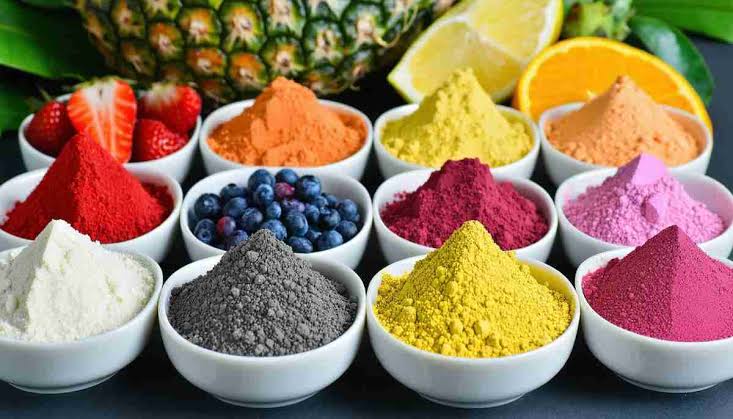
Polyphenols are naturally occurring plant compounds found in tea, fruits, seeds, herbs and vegetables. They span several chemical families with different structures, properties and uses in foods, supplements and botanical formulations — green tea contains catechins, grape seeds are known for proanthocyanidins, and pomegranate provides ellagitannins such as punicalagins. These differences shape how plant materials are extracted, standardized and used, so for manufacturers the chemical composition, analytical method and formulation performance matter as much as the botanical source.
What Are Polyphenols?
Polyphenols are a diverse group of plant-derived phenolic compounds, commonly discussed alongside flavonoids, phenolic acids, stilbenes, lignans and tannins. In food science the term is used broadly, and not every substance grouped under plant phenolics meets a narrow structural definition; some are small molecules, others complex oligomers or polymers. As Rong Tsao’s review Chemistry and Biochemistry of Dietary Polyphenols explains, molecular structure governs their occurrence, reactivity and behavior.
Their Role in Plants
Plants make phenolic substances through secondary metabolism, and they contribute to responses to UV radiation, pathogens and environmental stress. Anthocyanins produce much of the red, purple and blue color of certain fruits and flowers, while tannins contribute bitterness and astringency through interactions with proteins. Levels depend on species, plant part, maturity, growing conditions and post-harvest handling, so two batches of the same species can differ chemically — which is why commercial ingredients need clearly defined quality specifications as well as correct botanical identification.
Main Types of Polyphenols
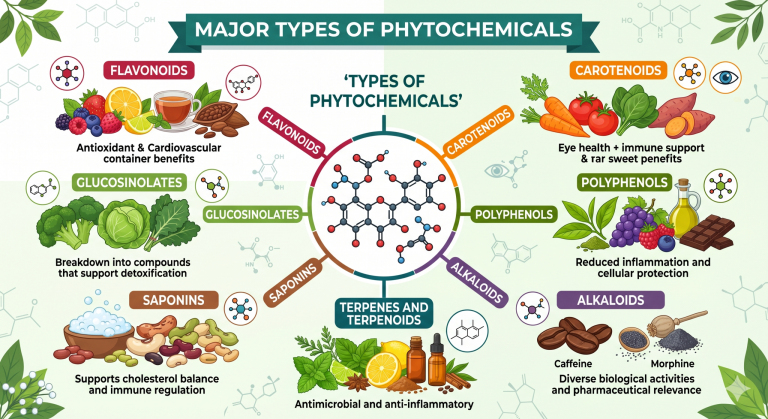
Plant phenolics are classified by chemical structure. The families most discussed in ingredient science are flavonoids, phenolic acids, stilbenes and lignans, plus tannin groups that partly overlap with other classes.
Flavonoids and Phenolic Acids
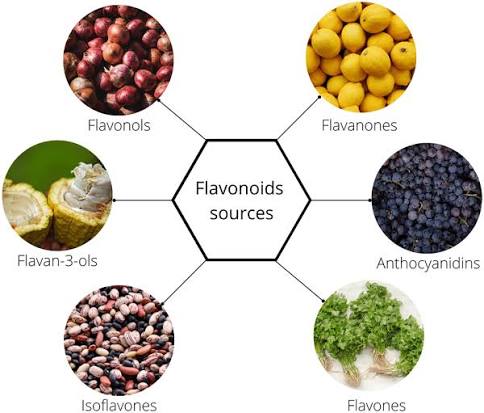
Flavonoids form a large family: flavan-3-ols include catechin, epicatechin and epigallocatechin gallate (EGCG), characteristic of green tea; flavonols include quercetin and kaempferol; anthocyanins pigment berries and other colorful tissues; and flavones, flavanones and isoflavones are further subclasses. Phenolic acids include hydroxybenzoic and hydroxycinnamic derivatives such as gallic, caffeic and ferulic acids, which occur in free, esterified, glycosylated or bound forms — affecting how they are extracted and measured.
Stilbenes, Lignans and Tannins
Stilbenes include resveratrol and pterostilbene; resveratrol occurs in grape skins and plants such as Japanese knotweed. Lignans are phenylpropanoid-derived constituents of seeds and grains, with flaxseed known for secoisolariciresinol diglucoside (SDG). Hydrolyzable tannins include ellagitannins such as pomegranate punicalagins, while condensed tannins such as grape seed proanthocyanidins are built from flavan-3-ol units and so overlap with flavonoids. Broader classifications also include some phenolic amides, such as avenanthramides in oats.
Major Classes at a Glance
| Chemical group | Representative compounds | Typical sources | Key distinction |
|---|---|---|---|
| Flavonoids | Catechin, EGCG, quercetin | Tea, fruits, vegetables | Includes flavanols, flavonols and pigments |
| Phenolic acids | Gallic acid, ferulic acid | Grains, fruits, herbs | Can occur in free or bound forms |
| Stilbenes | Resveratrol, pterostilbene | Grapes, Japanese knotweed | Distinct non-flavonoid structures |
| Lignans | Secoisolariciresinol | Flaxseed and other seeds | Phenylpropanoid-derived constituents |
| Hydrolyzable tannins | Punicalagins, gallotannins | Pomegranate and other plants | Complex phenolic structures |
| Condensed tannins | Proanthocyanidins | Grape seeds, pine bark | Flavan-3-ol oligomers and polymers |
Classification describes chemistry; it does not rank ingredients for efficacy, safety or formulation suitability. Purified single compounds such as Quercetin 98% or Trans-Resveratrol 99% sit in our Phytochemicals range, while multi-constituent extracts are specified by a marker group.
Common Plant Sources of Polyphenols
Tea, grapes, pomegranate, berries, cocoa, coffee and herbs are familiar sources, but the compounds present depend on the tissue as well as the species — grape seeds differ from grape skins, and pomegranate peel differs from its juice and seed oil.
Tea, Grapes and Pomegranate
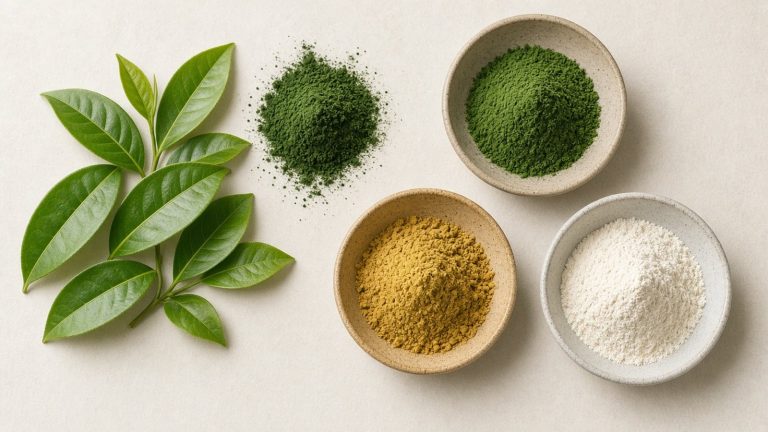
Green tea from Camellia sinensis leaves contains catechins such as EGCG, epigallocatechin, epicatechin gallate and epicatechin; black-tea oxidation produces theaflavins and thearubigins. Vitis vinifera seeds contain catechins and proanthocyanidin oligomers and polymers. Pomegranate (Punica granatum) contains ellagitannins, with punicalagins especially characteristic of the peel.
Berries, Cocoa and Everyday Foods
Bilberry (Vaccinium myrtillus) contains anthocyanin glycosides of cyanidin, delphinidin, malvidin and related pigments, and cocoa contains flavanols (catechin, epicatechin) and procyanidins. Coffee is known for chlorogenic acids, apples for flavonols, olive leaves for oleuropein, rosemary for rosmarinic acid and flaxseed for lignans; food variety and preparation change the amounts consumed.
Botanical Sources and Their Constituents
| Botanical source | Scientific name | Relevant part | Characteristic constituents |
|---|---|---|---|
| Green tea | Camellia sinensis | Leaves | Catechins, EGCG |
| Grape seed | Vitis vinifera | Seeds | Proanthocyanidins |
| Pomegranate | Punica granatum | Fruit tissues, particularly peel | Punicalagins, ellagic acid derivatives |
| Bilberry | Vaccinium myrtillus | Fruit | Anthocyanins |
| Cocoa | Theobroma cacao | Seeds | Flavanols and procyanidins |
| Coffee | Coffea spp. | Seeds | Chlorogenic acids |
| Olive leaf | Olea europaea | Leaves | Oleuropein and related phenolics |
| Rosemary | Salvia rosmarinus | Leaves | Rosmarinic acid |
| Flaxseed | Linum usitatissimum | Seeds | Lignans, including SDG |
| Oats | Avena sativa | Grains | Avenanthramides, phenolic acids |
Why Polyphenol Content Varies
The Phenol-Explorer database study compiled composition data for 502 phenolic compounds across 452 foods and beverages. Such data help identify dietary sources, but a per-100 g food value is not equivalent to the assay percentage of a concentrated extract. Variety, growing conditions, moisture, processing and analytical method all change reported values, and an antioxidant-capacity result does not measure the mass of a particular marker. For buyers, the relevant question is how the finished material has been characterized and standardized.
Polyphenols in Research: How to Read the Evidence
Polyphenols are widely studied for their antioxidant chemistry and possible interactions with oxidative stress, cardiometabolic processes and gut microorganisms. Test-tube, observational and human intervention findings need to be interpreted separately. Many phenolics take part in electron- and hydrogen-transfer reactions that explain laboratory antioxidant results, but after consumption absorption, metabolism and transformation into other molecules determine what actually reaches tissues; associations seen for a phenolic-rich diet cannot be assigned to an isolated extract, and high assay antioxidant activity does not demonstrate a health effect in humans.
Some constituents are absorbed in the small intestine while others are extensively transformed by gut microorganisms into metabolites with different identities and behavior. Gary Williamson’s review Bioavailability of Food Polyphenols: Current State of Knowledge explains why metabolism and individual variation matter. There is no established recommended daily intake for polyphenols as a whole, and dietary intake estimates should not be treated as doses for concentrated extracts; product-specific safety and any claims need evidence appropriate to the actual ingredient, exposure and population.
From Plant Sources to Standardized Extracts
Whole foods keep a broad matrix of water, fiber, minerals and other constituents; an extract separates and may concentrate selected substances; and a standardized grade goes further by specifying a measurable marker or marker group. These forms are not interchangeable — a standardized green tea extract is not finely milled tea leaf such as Green Tea Leaf Powder, and a total-polyphenol declaration is not a declaration of pure EGCG. Four published Essencefield products from our Standardized Extracts range show why the assay target matters more than the percentage.
Green Tea Extract
Green Tea Extract 40–98% Polyphenols is listed as a standardized ingredient from Camellia sinensis leaves. Its declared range concerns total polyphenols; total catechins, EGCG and caffeine are separate specification dimensions to evaluate if the formula needs them.
Grape Seed Extract
Grape Seed Extract 95% OPC comes from Vitis vinifera seeds. OPC is a group of related proanthocyanidins rather than one molecule, and the product page notes bitterness, astringency and partial water dispersibility, so physical and sensory testing matter for drinks and chewables.
Pomegranate Extract
Pomegranate Extract 20–40% Punicalagins is offered in several total-punicalagin grades. A punicalagin assay differs from an ellagic acid assay or a general total-phenolic measurement, so settle the marker and method before comparing quotations.
Bilberry Extract
Bilberry Extract 25% Anthocyanins is derived from Vaccinium myrtillus fruit. The specification concerns anthocyanins (glycosylated pigments) rather than anthocyanidins (their aglycones), and color, pH response and stability matter alongside assay.
Published Extract Grades Compared
| Ingredient | Published grade | Defined marker | Practical purchasing question |
|---|---|---|---|
| Green Tea Extract | 40–98% | Total polyphenols | Is a separate EGCG or caffeine requirement needed? |
| Grape Seed Extract | ≥95% OPC | Oligomeric proanthocyanidins | Which assay defines OPC, and how does the grade disperse? |
| Pomegranate Extract | 20–40% | Total punicalagins | Is the target punicalagins or ellagic acid? |
| Bilberry Extract | ≥25% | Total anthocyanins | Which anthocyanin method and color requirements apply? |
These are published commercial grade descriptions, not batch-specific laboratory results. Confirm the current specification and COA for the material offered.
A higher percentage is not a better ingredient when products measure different compounds, and grades with the same marker percentage can still differ in carrier, moisture, particle size, reporting basis or physical behavior.
How Polyphenols Behave in Formulations
Solubility, Taste and Color
Some extracts dissolve under suitable conditions while others only disperse or form haze and sediment. Catechin-rich materials can be bitter, proanthocyanidin-rich ones astringent, and anthocyanin-rich ones change color with pH. A material that works in a dry capsule may be hard to use in a clear beverage, and dispersibility in plain water may not hold in a protein-rich or mineral-fortified drink.
Stability and Ingredient Interactions
Oxygen, light, heat, pH and processing time can change sensitive compounds: tea catechins oxidize or transform, anthocyanins are sensitive to acidity, and tannins interact with proteins, affecting clarity and mouthfeel. Responses include pH adjustment, limiting oxygen or light, compatible carriers and suitable packaging. Encapsulation is another option — a 2025 Food Chemistry review examines encapsulation approaches for the handling, stability and delivery of certain phenolics — but results remain formulation-specific and need testing.
Applications in Food, Supplements and Cosmetics
Dietary Supplements and Nutraceuticals
In capsules, tablets, sachets and blended powders, formulators weigh marker concentration, flow, particle size, moisture and blend uniformity. Higher-assay grades can reduce the amount needed for a defined marker target, but concentration alone does not establish a safe intake or greater biological effect.
Functional Foods and Beverages
Dry mixes emphasize blend consistency and moisture control; ready-to-drink products need attention to taste, dispersion, pH, sedimentation and shelf life. Green tea extract can add bitterness to a lightly flavored drink and grape seed extract may add astringency or haze. Our Functional Beverages guidance covers water-soluble, water-dispersible and suspended ingredients; finished-product trials remain necessary because the full recipe determines performance.
Cosmetic and Personal Care Formulations
Tea-, grape- and other phenolic ingredients are also used or investigated in selected cosmetics, where compatibility with emulsifiers and surfactants, oxidation stability, color, odor and appearance matter. Laboratory antioxidant behavior does not by itself substantiate a finished cosmetic claim.
How Polyphenol Extracts Are Made and Tested
Extraction and Processing
Water, ethanol and hydroalcoholic mixtures are common for selected phenolics, with solvent composition, temperature, time and particle size governing recovery, followed by filtration, concentration, purification, drying and physical adjustment. The aim is reproducible composition rather than maximum yield, and a route that suits tea catechins may not suit every stilbene, tannin or anthocyanin. See our Processing & Standardization service for related capabilities.
Total Polyphenols and Specific Markers
A total-polyphenol specification and a compound-specific marker assay quantify different targets, and a 10:1 extract ratio describes a raw-material-to-extract relationship rather than 10% of any constituent. The specification should define identity, plant part, analyte, method, reporting basis and acceptance criteria to prevent misleading comparisons.
Folin–Ciocalteu and HPLC
The Folin–Ciocalteu assay estimates total phenolic-related reducing activity, often as gallic acid equivalents (GAE), but is not specific — ascorbic acid and other reducing substances also respond, as Sánchez-Rangel and colleagues explain in The Folin–Ciocalteu Assay Revisited. HPLC or UPLC can separate and quantify defined compounds when suitable standards and validated methods exist, and chromatographic fingerprinting supports identity and profile comparison without quantifying everything present.
| Method | Typical purpose | Important limitation |
|---|---|---|
| Folin–Ciocalteu | Estimate total phenolic-related reducing response | Interference from other reducing substances |
| HPLC / UPLC | Quantify selected markers or compound profiles | Requires suitable standards and validated procedures |
| UV–Vis spectrophotometry | Measure method-defined absorbance | Specificity depends on assay design |
| Chromatographic fingerprinting | Support identity and profile comparison | Does not quantify all constituents by itself |
The specification states required limits; the batch COA reports results for the material supplied. Qualification may also require microbiological, residual solvent, heavy metal, pesticide and other tests — see our Quality & Testing overview.
Choosing the Right Extract for Your Formulation
Start with the species, plant part and chemical group the product needs; compare grades by marker definition, assay method, carrier, particle size, moisture and water behavior; then evaluate the ingredient in the finished formulation rather than choosing the highest percentage. For a manufacturer developing both capsules and a ready-to-drink beverage, an OPC-standardized grape seed extract may suit the capsules but bring bitterness or dispersion challenges to the drink, while a bilberry extract offers a different anthocyanin profile that needs pH and color-stability testing. This is an illustrative scenario, not a report of completed customer trials.
Concentrated extracts also need ingredient- and market-specific safety assessment. The European Food Safety Authority’s assessment of green tea catechins found evidence of liver-related concerns in studies with supplemental EGCG at 800 mg/day or more and could not establish a generally safe supplemental dose; the figure is not a universal threshold. For U.S. dietary supplements, FDA’s guidance on structure/function claims requires claims to be truthful, non-misleading and substantiated. Safety, intended use and compliance must be assessed independently of an extract’s advertised assay.
Conclusion
Polyphenols differ in structure, botanical source and formulation behavior, and in commercial sourcing the marker definition, test method, documentation and application fit matter more than a single headline percentage.
Request Polyphenol Extract Specifications or Samples
To compare polyphenol-rich grades, send us the botanical, target marker and method, application and estimated quantity. Our Specification & Grade Matching service compares options, technical parameters and supporting documents before sampling. Contact Essencefield Botanicals to request a specification, representative COA or sample.
This article is intended for botanical ingredient education. Research findings do not establish the safety, efficacy or regulatory status of any commercial extract. Verify current specifications and finished-product requirements before use.