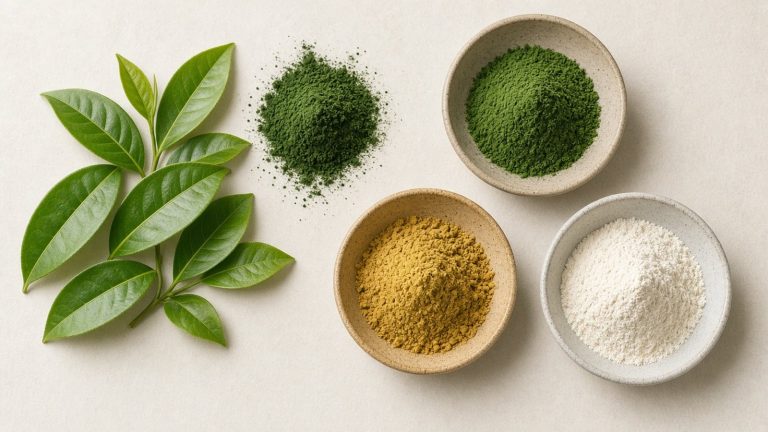
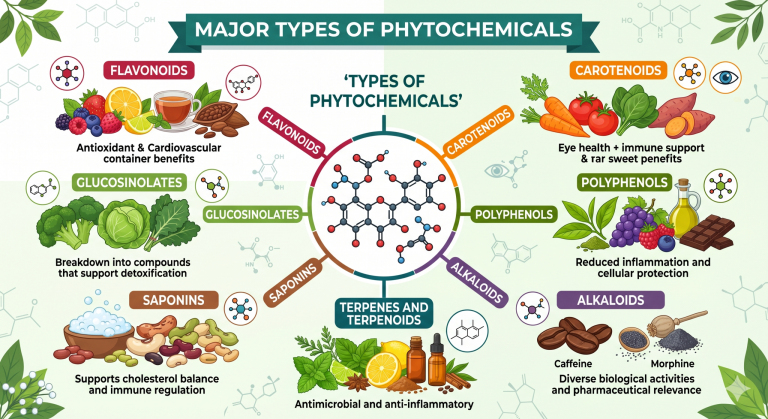
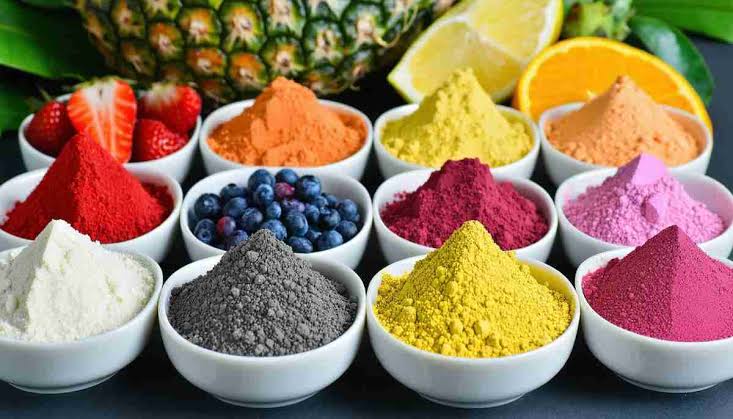
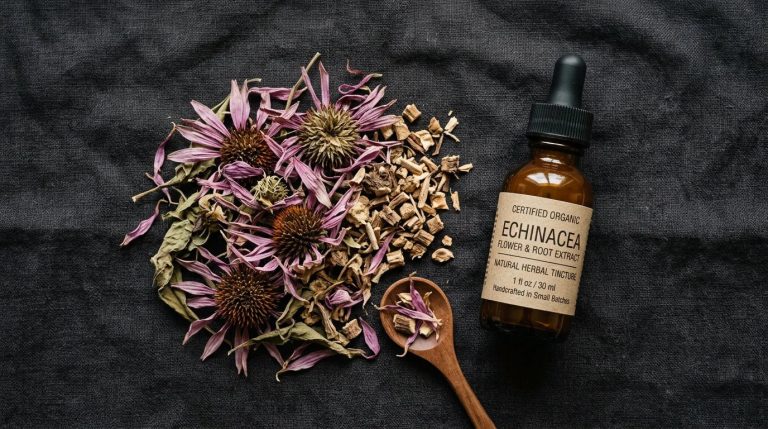
Flavonoids are plant polyphenols found in fruits, vegetables, tea leaves, flowers and other botanical materials. Their six major dietary subclasses are flavonols, flavones, flavanones, flavan-3-ols, anthocyanidins and isoflavones, and common sources include green tea, citrus peel, bilberries, grape seeds, soybeans and Sophora flower buds. Each source supplies a different combination of compounds with its own structure, extraction behavior and formulation properties.
For supplement manufacturers, food developers and ingredient buyers, those differences matter commercially. A purified quercetin powder, a rutin-standardized flower extract and a catechin-rich green tea extract share a broad classification, yet their specifications and applications differ considerably. Understanding the distinctions helps teams select ingredients by composition, analytical quality, formulation compatibility and intended use.
What Are Flavonoids?
Flavonoids are polyphenolic secondary metabolites involved in plant pigmentation, environmental adaptation and defense. Most share a C6-C3-C6 skeleton of two aromatic rings joined by a three-carbon unit, and differences in oxidation, hydroxylation, ring arrangement and sugar attachment create subclasses with distinct chemical and physical properties — which is why individual compounds behave differently in extraction, processing and formulation.
Flavonoids and Other Polyphenols
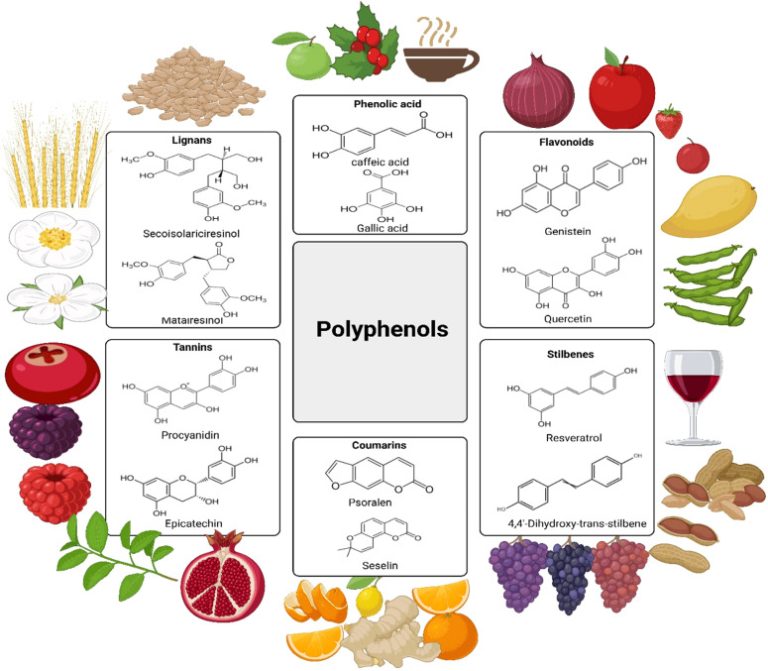
Polyphenols are a broad category of phenolic compounds; flavonoids are one major family within it, alongside phenolic acids, stilbenes and lignans. Quercetin is a flavonol and resveratrol a stilbene — both polyphenols, but structurally different. In standardization terms, an extract standardized to total polyphenols is not necessarily standardized to any particular flavonoid or subclass.
Aglycones and Glycosides
Many plant compounds occur as glycosides, with one or more sugars attached; the sugar-free structure is the aglycone. Quercetin is a flavonol aglycone and rutin is its glycoside, quercetin-3-O-rutinoside; naringenin is a flavanone aglycone and naringin a related glycoside. Sugar attachment changes molecular weight and can influence dissolution, stability and metabolism, so related compounds should be treated as different ingredient identities in specifications and dose calculations. For background on classification, sources and metabolism, see the flavonoid overview from the Linus Pauling Institute at Oregon State University.
Major Types and Their Key Compounds
Six subclasses are especially important in dietary research; broader chemical classifications also recognize groups such as chalcones.
| Flavonoid Class | Representative Compounds | Common Botanical Sources |
|---|---|---|
| Flavonols | Quercetin, kaempferol, rutin | Onions, Sophora flower buds |
| Flavones | Apigenin, luteolin, baicalein | Chamomile, parsley, Baikal skullcap |
| Flavanones | Hesperidin, naringin, naringenin | Oranges, grapefruit, citrus peel |
| Flavan-3-ols | Catechin, epicatechin, EGCG | Green tea, cocoa, grapes |
| Anthocyanidins and Anthocyanins | Cyanidin, delphinidin, related glycosides | Bilberry, blueberry, blackcurrant |
| Isoflavones | Genistein, daidzein, glycitein | Soybeans and selected legumes |
Flavonols and flavanols are easily confused: flavonols include quercetin and kaempferol, while flavanols (flavan-3-ols) include catechin, epicatechin and EGCG.
Flavonols: Quercetin, Kaempferol and Rutin
Flavonols occur in fruits, vegetables, flowers and medicinal plants. Quercetin and kaempferol are common aglycones — available as Quercetin 98% and Kaempferol 98% — and rutin is a naturally occurring quercetin glycoside. Japanese pagoda tree flower buds, sold as Sophora japonica and botanically accepted as Styphnolobium japonicum, are an important rutin source. Quercetin and rutin differ in molecular weight, aqueous behavior and analytical identity, which matters when comparing grades or calculating inclusion.
Flavones: Apigenin, Luteolin and Baicalein
Flavones are widespread among herbs. Apigenin occurs in chamomile and parsley (see Apigenin 98%), luteolin across several plant families, and baicalein is associated with Scutellaria baicalensis (see Scutellaria Baicalensis Extract Powder). These constituents are studied for their biochemical properties and can act as characteristic markers, so commercial evaluation should name the species, plant part and specific compound measured rather than relying on a general “flavonoid” description.
Flavanones: Hesperidin and Naringin
Flavanones are closely associated with citrus: hesperidin with oranges and related fruit, naringin with grapefruit (see Hesperidin 98% and Naringin 98%). Citrus peel also contains compounds from other subclasses — Citrus reticulata peel contains flavanone glycosides alongside polymethoxylated flavones such as nobiletin and tangeretin — which matters when comparing a conventional citrus extract with a marker-standardized ingredient. Our Tangerine Peel Extract Powder shows the difference, with published 4:1, 5:1 and 10:1 ratio grades alongside options defined by selected citrus markers. A ratio describes the relationship between starting material and finished extract; it does not establish the percentage of hesperidin, nobiletin or tangeretin.
Flavan-3-ols: Catechins, EGCG and Proanthocyanidins
Flavan-3-ols include catechin, epicatechin, epigallocatechin and their gallates. Green tea (Camellia sinensis) is an important commercial source, with EGCG among its principal catechins. The group also includes proanthocyanidins built from linked flavan-3-ol units: grape seeds contain characteristic proanthocyanidin fractions, and black tea processing generates further polyphenols such as theaflavins and thearubigins. Grape Seed Extract 95% OPC, from Vitis vinifera seeds, is one example; OPC refers to a group of oligomeric proanthocyanidins rather than one molecule, so a 95% OPC specification should be read against its defined method and constituent basis.
Anthocyanins and Anthocyanidins
Anthocyanins are the pigments behind many red, purple and blue plant colors. They are glycosylated derivatives of anthocyanidins such as cyanidin, delphinidin, malvidin, peonidin and petunidin. Bilberry (Vaccinium myrtillus) has a characteristic mixture of anthocyanin glycosides that differs from other berries, so identity and chromatographic composition are important for standardized bilberry extracts. Anthocyanin stability depends on pH, temperature, light, oxygen and the surrounding matrix, which is particularly relevant to beverages, gummies and powdered nutrition.
Isoflavones: Genistein and Daidzein
Isoflavones differ from other dietary subclasses in where their aromatic ring attaches. Soybeans (Glycine max) are the best-known source, supplying genistein, daidzein and glycitein (see Soybean Extract Powder and Genistein 98%). These occur in free and conjugated forms whose distribution changes with fermentation or hydrolysis, so a standardized soybean extract’s assay should define the isoflavone forms measured and the calculation basis.
Common Botanical Sources
Flavonoid composition depends on species, plant part, genetics, maturity, growing conditions and post-harvest handling. Green tea leaves supply catechins, citrus peels flavanone glycosides and other citrus constituents, bilberries anthocyanins, grape seeds proanthocyanidins, soybeans isoflavones and Sophora flower buds rutin. Choosing the right species, though, is only the first step.
Why Plant Part and Processing Matter
Leaves, fruits, flowers, roots and seeds of the same species can have different chemical profiles, and manufacturing determines how much of the original matrix remains. Whole botanical powders retain most of it; conventional extracts concentrate selected fractions; standardized extracts are controlled against defined analytical criteria; and purified phytochemicals are enriched toward a single compound. Two extracts from the same species can therefore differ substantially by plant part, solvent, purification or carrier. Botanical identity establishes the source; the finished specification establishes what is actually being purchased.
Commercial Extract Grades and Specifications
Commercial ingredients are distinguished by target compound, method, assay level, physical characteristics and intended use. The examples below reflect published Essencefield Botanicals product information.
| Ingredient | Botanical or Chemical Source | Published Commercial Specification | Main Technical Consideration |
|---|---|---|---|
| Quercetin 98% | Quercetin aglycone | ≥98% quercetin | Chemical form and poor aqueous solubility |
| Sophora Japonica Flower Extract | Styphnolobium japonicum flower buds | Rutin ≥95%; 98% option | Glycoside identity and dispersion |
| Green Tea Extract Powder | Camellia sinensis leaves | 98% polyphenols / 80% catechins / 50% EGCG | Different UV and HPLC assay targets |
| Bilberry Extract Powder | Vaccinium myrtillus fruit | 25% or 36% anthocyanins | Multi-component HPLC profile and pigment stability |
These are published commercial grades, not verified batch results. Confirm specifications, methods, chemical forms and availability against current product documentation.
Understanding Differences Between Commercial Grades
Quercetin 98% needs attention to chemical form, since anhydrous quercetin and quercetin dihydrate have different molecular weights and reporting conventions. Rutin-standardized Sophora extract (and Rutin 98%) is defined by a different molecule; rutin contains a quercetin-derived structure, but its glycoside identity changes its specification and physical behavior. Green tea shows several analytical targets in one material: the high-marker Green Tea Extract Powder grade specifies 98% tea polyphenols by UV, 80% total catechins by HPLC and 50% EGCG by HPLC — related but distinct quantities. Bilberry Extract Powder is standardized to a mixture of anthocyanin glycosides, and its 25% and 36% HPLC grades should be read with the method and analyte definition. In every case, a percentage becomes meaningful only when the measured constituent, method, reporting basis and ingredient form are understood together.
Extraction and Processing
Water, ethanol and water–ethanol mixtures are common solvents because their polarity can be tuned to recover different constituents. Conventional methods include maceration, percolation and heated solvent extraction; newer approaches include ultrasound-assisted, microwave-assisted and pressurized liquid extraction, and supercritical fluid extraction with suitable modifiers. No single method suits every material.
From Raw Material to Finished Extract
A typical route runs from identity verification and material preparation through extraction, filtration, concentration, purification or standardization, drying and testing, though not every ingredient needs every stage. A conventional extract may keep a broad phytochemical profile, while an enriched fraction or purified compound needs more selective processing. Solvent composition, temperature, time, oxygen exposure and pH influence recovery and stability, and a higher yield does not necessarily mean more of the intended marker, because non-target constituents are extracted too. The Frontiers in Chemistry review Extraction of Flavonoids From Natural Sources Using Modern Techniques explains how these variables shape method selection. Commercially, processing and standardization should be judged against the required chemical profile, physical format, analytical specification and batch repeatability.
Testing and Standardization
Standardization gives measurable criteria for comparing ingredients, referring to an individual compound, a defined group or a characteristic profile — but an assay percentage is only useful when its analytical basis is clear.
Total Flavonoid Content vs. Individual Marker Assays
Total Flavonoid Content (TFC) is often estimated by colorimetric methods such as aluminum chloride procedures, with results expressed as quercetin or rutin equivalents. Different structures respond differently, and results depend on calibration standard, reaction conditions and matrix, so a colorimetric figure should not be read as the combined mass of all flavonoids present. HPLC separates compounds before identification or quantification and, with suitable standards and validated procedures, gives more specific measurements of individual markers or defined groups.
| Specification or Method | What It Represents | Main Interpretation |
|---|---|---|
| Total flavonoids by colorimetry | Method-defined response, often expressed as reference-compound equivalents | Not necessarily the combined mass of all flavonoids |
| HPLC marker assay | Individual compound or defined constituent group | Requires appropriate standards and calculations |
| Total tea polyphenols by UV | Broader phenolic fraction under a specified method | Different from total catechins or EGCG |
| Extract ratio, such as 10:1 | Defined relationship between botanical starting material and finished extract | Does not establish marker purity |
| Anthocyanins by HPLC | Defined multi-component pigment fraction | Analyte terminology and reporting basis matter |
A 2025 Analytical Biochemistry review, Total Flavonoid Content Revised, examines the limitations of conventional TFC measurement and argues for better analytical standardization.
Why Similar Assay Percentages May Differ
Take two hypothetical ingredients: Extract A at 40% total flavonoids by colorimetry and Extract B at 40% quercetin by HPLC. Both say 40%, but A reports a method-dependent response for a broad group and B an individual compound. The same applies to 50% total catechins versus 50% EGCG. If a capsule needs 50 mg EGCG and the ingredient contains 50% EGCG as is, theoretical inclusion is 50 mg ÷ 0.50 = 100 mg extract, assuming the material meets its assay and ignoring processing losses or stability overages. Using a 50% total-polyphenol specification for the same calculation would be wrong.
Marker Assays and Chemical Fingerprinting
A marker assay measures one selected constituent; fingerprinting examines a broader pattern of compounds characteristic of the botanical, so two extracts can meet the same marker specification and still differ in the rest of their profile. Bilberry’s anthocyanin pattern, for example, supports identification of Vaccinium myrtillus alongside quantitative pigment analysis. HPLC or HPTLC may be used to compare profiles with reference materials, as described in the United States Pharmacopeia’s guidance on botanical identification by HPTLC. Fingerprinting complements quantitative assays and other identity tests; it does not establish every quality attribute on its own.
Reviewing a Botanical Extract COA
A Certificate of Analysis documents results for a defined lot against an established specification. Review should establish what was tested, how critical results were measured and whether the batch meets the approved purchasing requirements.
| Quality Parameter | What Buyers Should Verify |
|---|---|
| Botanical identity | Scientific name, plant part, and suitable identification tests |
| Marker specification | Defined analyte, constituent group, and acceptance criteria |
| Analytical method | HPLC, UV-Vis, or another appropriate procedure |
| Batch result | Actual value and reporting basis |
| Physical characteristics | Moisture, particle size, density, solubility or dispersibility where applicable |
| Contaminant controls | Relevant heavy metals, pesticides, microbiology, and residual solvents |
| Traceability | Lot identification and supporting records |
The required panel depends on material, processing history, application and market, and a passing COA does not establish suitability for every formulation or jurisdiction. For a practical walkthrough, see How to Read a Botanical Extract COA: What Buyers Should Check.
Applications and Formulation Challenges
Flavonoid-rich extracts are used in dietary supplements, functional foods, beverages and some cosmetic products; suitability depends on composition, physical properties, processing and finished-product requirements.
Dietary Supplements and Powdered Nutrition
Capsules and tablets are common formats for standardized extracts and purified phytochemicals. Higher marker levels can reduce the quantity needed for a target inclusion, but flow, bulk density, particle size, moisture and blend uniformity still matter. Powdered drinks add wetting, dispersion, sedimentation and sensory requirements, and some constituents bring bitterness, astringency, color or odor that shape development.
Bioaccessibility and Bioavailability
These terms describe different things. Solubility is a compound’s ability to dissolve in a given medium; bioaccessibility is the fraction released from its matrix during digestion and potentially available for absorption; bioavailability concerns absorption and subsequent availability of the compound or its metabolites. Structure, glycosylation, intestinal metabolism and food interactions all play a role. Quercetin research shows that better dissolution or dispersion does not necessarily mean greater human absorption: a 2025 systematic review and meta-analysis of human quercetin intervention studies examined how chemical form, formulation technology and food composition influence bioavailability. Developers should keep analytical purity, physical performance and absorption evidence separate rather than assuming one implies the others.
Functional Beverages and Gummies
Liquid formats demand aqueous compatibility. Quercetin’s poor water solubility can cause precipitation in clear drinks; green tea catechins can add bitterness or astringency and are sensitive to heat, oxygen and pH; and anthocyanin colors shift with their environment. Proteins, lipids, carbohydrates and other ingredients can affect release, stability and digestive behavior, while gummies and chewables add heat, acidity, water activity and flavor-system effects. Evaluate these in representative finished formulations rather than inferring them from raw-ingredient data.
Cosmetic and Personal-Care Products
Some plant polyphenols are investigated for cosmetic use, where compatibility with emulsions, solvents, emulsifiers, preservatives and packaging matters, as do color, oxidation sensitivity, odor and physical stability. Research on isolated compounds does not establish efficacy claims for commercial cosmetics; suitability and permitted claims need product-specific evaluation.
Application-Specific Ingredient Evaluation
| Product Format | Main Technical Priority | Recommended Evaluation |
|---|---|---|
| Capsules | Consistent marker delivery | Assay, dose loading, powder flow |
| Tablets | Manufacturing consistency | Compression, moisture, particle size |
| Powdered drinks | Reconstitution and sensory quality | Wetting, dispersion, sedimentation, taste |
| Clear beverages | Aqueous compatibility | Solubility, haze, precipitation, pH |
| Gummies | Processing and storage stability | Heat, acidity, color, flavor interactions |
| Cosmetics | Formulation compatibility | Carrier system, oxidation, appearance |
Formulation Example: Quercetin vs. Bilberry Extract
Imagine a manufacturer developing an acidic functional beverage. High-purity quercetin may need extra formulation work because of limited aqueous solubility, so dissolution, precipitation and storage behavior must be checked if the drink is meant to be clear. An anthocyanin-rich bilberry extract poses a different challenge: its pigments add color, but final appearance and stability depend on pH, heat treatment, oxygen and packaging. The right choice depends on the formulation, target constituent, sensory profile and physical stability required. The review Factors Affecting the Stability of Anthocyanins and Strategies for Improving Their Stability covers the processing and environmental factors involved. Before commercial approval, test representative formulations for marker retention, color change, precipitation, sensory properties and physical stability under relevant conditions. This example illustrates formulation considerations and does not represent completed commercial trials.
Choosing the Right Extract
Selecting a commercial ingredient means aligning chemical identity, assay requirements, formulation performance, documentation and supply. A practical evaluation runs in five stages:
- Confirm botanical identity — scientific name, accepted synonyms and plant part, since materials sharing a common name can come from different sources or processes.
- Define the target specification — purified compound, standardized extract, ratio extract or conventional material, with a clear analyte, method, acceptance criteria and reporting basis.
- Review quality documentation — specification, COA, technical data sheet and declarations, plus identity data, carrier information, contaminant testing and traceability where relevant.
- Evaluate a representative sample under use-relevant conditions: processing, blending, dissolution or dispersion, storage stability and sensory fit.
- Confirm commercial suitability — grade, packaging, order quantity, timing, documentation and repeat-supply arrangements.
A good sourcing brief names the ingredient, target assay, analytical requirements, application, quantity and destination market, giving a far better basis for supplier qualification than a product name or purity figure. Our Specification & Grade Matching service works from exactly this kind of brief.
Safety and Regulatory Considerations
A compound’s natural presence in ordinary foods does not establish the safety of every concentrated extract or supplemental intake. Green tea extract is the clearest example: the European Food Safety Authority’s scientific opinion on green tea catechins identified liver-related safety concerns with high supplemental EGCG intakes, and in the EU Commission Regulation (EU) 2022/2340 sets restrictions and labeling requirements for certain green tea extracts containing EGCG. For products in scope, the daily portion must contain less than 800 mg EGCG, with applicable labeling conditions and specified exclusions. That threshold is not a general safety guarantee — EFSA did not establish a generally safe EGCG dose for all concentrated extracts and consumers. Manufacturers should assess composition, daily intake, format, target population, labeling and destination-market rules; a high assay result establishes neither a safe serving level nor regulatory authorization.
Conclusion
Flavonoids are a diverse family of plant polyphenols with different structures, sources and uses, and their differences go well beyond botanical origin: extraction, chemical form, analytical target, specification, solubility and bioavailability all shape how an ingredient should be evaluated. Effective selection connects botanical identity with appropriate testing, formulation performance, reliable documentation and applicable safety requirements.
Editorial note: This article is for scientific education and B2B ingredient evaluation. Published commercial specifications do not replace current batch COAs or approved technical documentation, and safety, regulatory suitability and finished-product claims require application-specific verification.
Request Flavonoid Ingredient Specifications or Samples
Browse our Phytochemicals and Standardized Extracts categories, then send us your target compound, assay and method, application, estimated quantity and documentation needs. Contact Essencefield Botanicals to request a specification, representative COA or sample.