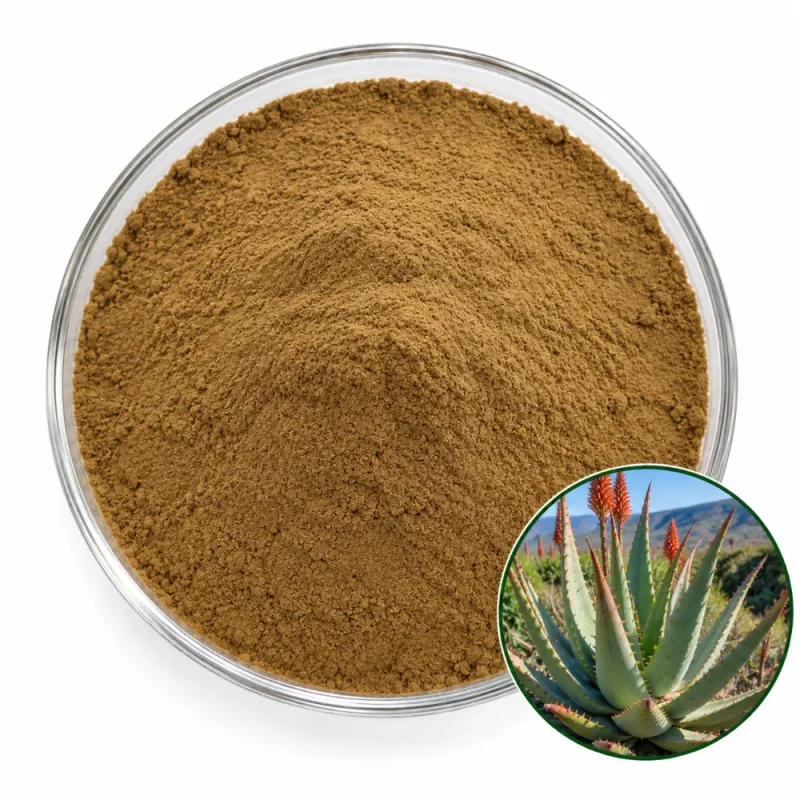
Aloe Ferox Extract Powder

Aloe ferox extract powder comes from the leaf of Cape aloe, a tall South African aloe known for its bitter leaf exudate. The leaf is extracted with water, concentrated and dried to a light yellow powder. The species and the part are the identity statement.

The product is a 10:1 ratio extract with no marker percentage attached. It is water dispersible and milled to 80 mesh. The data for this botanical lists no powdered or standardized sibling, so the ratio extract is the only form described.

Aloe ferox Identity & Plant Part

The botanical entity is Aloe ferox Mill., family Asphodelaceae, known as Cape aloe or bitter aloe. The part used in this Aloe ferox extract is the leaf; roots, flowers and stems are not part of the product.

Identity and processing are worth reading closely. Aloe leaves carry two distinct materials: the clear inner gel, and a yellow latex lying just under the rind. The latex is rich in anthraquinones such as aloin, and the amount in Aloe ferox is reported to be far higher than in Aloe vera leaf. Hydroxyanthracene derivatives are regulated in several markets, and a buyer needs to review those rules for the target region. A buyer comparing Aloe ferox extract with other aloe offers therefore needs the species, the plant part and the processing route stated together, because aloe materials differ sharply depending on whether gel, latex or whole leaf is used.

What 10:1 Means for Aloe ferox

The 10:1 figure is a concentration ratio of the starting leaf, not a statement about aloin, aloesin or polysaccharide content. The data lists no standardized extract, powder or isolated compound of Aloe ferox among the siblings, so the ratio extract is the only form described.

Choose it when species identity and a water extract of the leaf are the requirement. Because gel, latex and whole-leaf materials behave differently and are regulated differently, the plant part in the table is the line that matters. No claim about decolorization or anthraquinone removal is made here, and any such claim would need its own evidence.

Typical Specifications

Specification ItemProduct Information
Latin NameAloe ferox
Plant PartLeaf & Herb
ProcessingWater Extraction
Common NameCape Aloe, Bitter Aloe
Ingredient TypeRatio Extract
Extract Ratio10:1
AppearanceLight Yellow powder
Solubility / DispersibilityWater Dispersible
Quality Parameters
Moisture (LOD)≤5.0%
Total Ash≤5.0%
Particle Size80 mesh
Heavy MetalsLead ≤2 ppm · Arsenic ≤1 ppm · Cadmium ≤1 ppm · Mercury ≤0.1 ppm
MicrobiologyTPC ≤1,000 cfu/g · Yeast & Mold ≤100 cfu/g · E. coli Negative · Salmonella Negative/25 g
Shelf Life24 months in unopened original packaging, cool and dry storage

Application Areas

Pale Yellow Capsule Fills

The light yellow Aloe ferox powder is hidden by standard shells. Aloe extracts are hygroscopic and can become sticky, so run a flow check on the lot and weigh capsules at intervals to catch drift across the run.

Tropical-Style Drink Powders

In drink powders the extract gives a faint bitter-sweet aloe note and a pale yellow tint. It suits pineapple, lime or coconut-style flavors, so taste a plain-water sample first, because the bitterness is strong in clear drinks.

Instant Sachets with Aloe

Sachets can combine the extract with fruit powders in a tropical-style blend. Screen the powders first and match particle sizes so the pale tint is even, and compare the first and last sachets of each filling run.

Chewable Tablets

A chewable tablet exposes the bitterness of the extract directly, so a sweetener and fruit flavor system is needed. Compress at low humidity and chew-test finished tablets, since sticky aloe powders can adhere to tablet punches.

Aloe Gummies

In gummies the extract adds a pale yellow tint and a light aloe note that suits lime, melon and coconut flavors. Add it after cooking and cooling slightly, and test gel set and bitterness on the finished piece.

Formulation Notes

The extract is a light yellow powder with a faint, characteristic aloe aroma and a bitter taste. It disperses in water to a pale yellow, lightly hazy liquid. The bitterness is the main sensory limit, so taste work should be done early and in the real formula. Aloe extracts are strongly hygroscopic. Weigh the powder promptly, keep the container sealed between uses, and premix with part of the filler before the main blend to prevent sticky lumps. Light and air can darken the yellow, so compare an opened lot with a retained sample.

Packaging & Commercial Supply

Essencefield supports product evaluation, formulation trials, commercial orders, and ongoing ingredient supply. Packaging, storage, and shipping arrangements are determined by product characteristics, order quantity, stability requirements, and destination-market needs.

Supply ItemGeneral Information
SampleAvailable upon request for formulation, testing, and supplier evaluation
Order Quantities100 g · 1 kg · 5 kg · 25 kg · 100 kg · 500 kg · Bulk
Sample Lead TimeTypically 5–7 days after sample confirmation
Production Lead TimeTypically 15–30 days after order and specification confirmation
PackagingSuitable protective inner packaging with bags, cartons, drums, or other appropriate outer packaging
StorageStore in tightly sealed, suitable protective packaging in a cool, dry environment. Protect from moisture, heat, and direct sunlight. Specific storage conditions follow the approved product specification.
DocumentationCOA · Product Specification · TDS · SDS · Applicable declarations (as applicable)

Final order quantities, lead times, packaging, documentation, and shipping arrangements are confirmed according to the selected product and commercial requirements.

Request Ingredient Specifications & Quote

Share your target specification, application, quantity, and documentation needs. We’ll help confirm suitable options, samples, and commercial supply details.