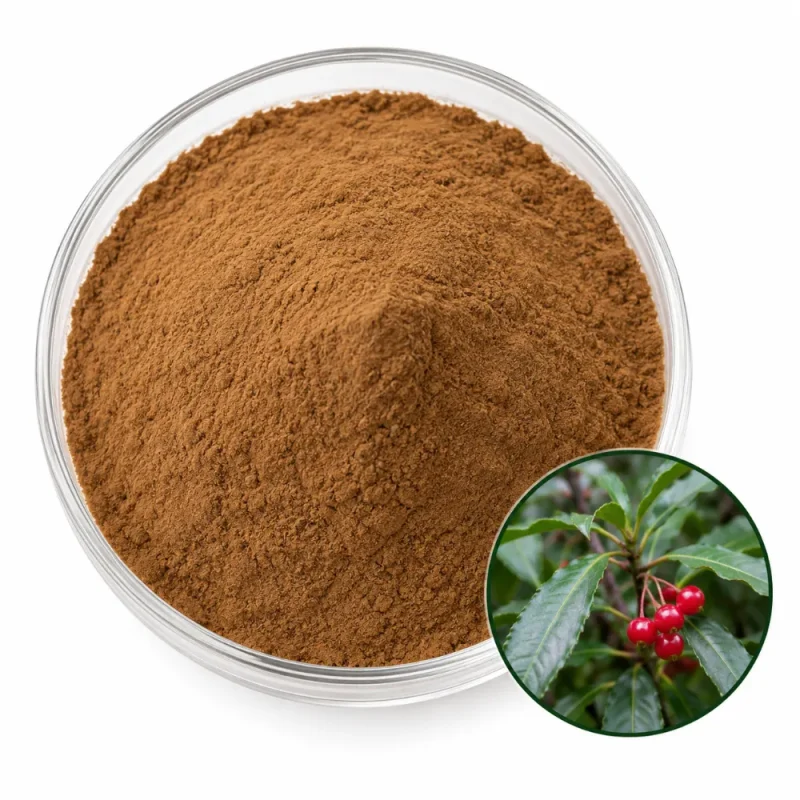
Ardisia Japonica Extract Powder

Ardisia japonica, a low evergreen shrub of the primrose family (Primulaceae), is used here as the whole plant. Stems, leaves and roots are extracted together in water, and the liquor is dried to a light brown powder. Berries are not a separate raw material in this product.

This ardisia japonica extract is a 10:1 ratio extract without a marker assay. The 80 mesh powder disperses in water. No bergenin percentage or other constituent figure is stated, so the product is defined by plant, part and ratio only.

Ardisia japonica Whole Plant Source & Identity

The botanical entity is Ardisia japonica (Thunb.) Blume, a creeping, shade-loving shrub with glossy leaves and red berries, known in Chinese herbal practice as zijinniu. The part used is the whole plant, meaning stems, leaves and roots together. The family was formerly called Myrsinaceae and is now placed in Primulaceae.

Ardisia crenata, the coral ardisia, is a taller relative with persistent red berries and is sold as a separate herb. The name bergenin, a gallic-acid-derived C-glycoside reported from A. japonica, resembles Bergenia, but the two plants belong to different families.

Phenolics, bergenin and triterpenoid saponins are the constituent families to expect.

What 10:1 Means for Ardisia japonica

The 10:1 ratio of this ardisia japonica extract is a concentration of the starting plant, not a bergenin or saponin figure. With a whole-plant extract it carries the soluble compounds from every part, which is useful when the specification names the species and the plant form without a single analyte.

The choice is therefore one of identity, not potency. Whole-plant material also means the leaf and root fractions are present together, which a root-only or leaf-only extract would not provide. A buyer who needs a declared marker percentage must look beyond a plain ratio extract, because this product makes no such claim. Its definition is Ardisia japonica, whole plant, water extraction.

Typical Specifications

Specification ItemProduct Information
Latin NameArdisia japonica
Plant PartWhole Plant
ProcessingWater Extraction
Common NameJapanese Ardisia, Marlberry
Ingredient TypeRatio Extract
Extract Ratio10:1
AppearanceLight Brown powder
Solubility / DispersibilityWater Dispersible
Quality Parameters
Moisture (LOD)≤5.0%
Total Ash≤5.0%
Particle Size80 mesh
Heavy MetalsLead ≤2 ppm · Arsenic ≤1 ppm · Cadmium ≤1 ppm · Mercury ≤0.1 ppm
MicrobiologyTPC ≤1,000 cfu/g · Yeast & Mold ≤100 cfu/g · E. coli Negative · Salmonella Negative/25 g
Shelf Life24 months in unopened original packaging, cool and dry storage

Application Areas

Capsules for Whole-Plant Extracts

A whole-plant extract blends the stem, leaf and root fractions, so lots can show small colour differences in the powder. Capsules hide this completely, which makes them the simplest format for a plant sold with several tissue types in one extract. Check flow at 80 mesh and add a glidant only if the powder bridges in the hopper.

Tablet Premixes with Dry Binder

Phenolic-rich water extracts darken slowly in contact with alkaline excipients. Choose neutral fillers for ardisia japonica extract tablets, and test the colour of the core after storage, not only at pressing. A neutral coating keeps the ardisia japonica extract away from humid air.

Drink Powder Sachets

The extract disperses in water to a brown, slightly hazy liquid. Sachets for tea-style drinks suit the colour, while clear flavoured waters show the haze. Pair the earthy flavour with a roasted or fruit-tea base, and dissolve a test cup at the planned dose before choosing the sachet fill weight.

Dry Mixes for Powder Sticks

Single-serve sticks take the extract with a maltodextrin or sugar carrier. Pre-sieve the ardisia japonica extract into the carrier to avoid pockets of dark powder in the sachet. A light carrier evens out the brown tone.

Formulation Notes

Ardisia japonica extract is a light brown powder from a plant that carries phenolic compounds and saponins, and both show in practice. In water the powder gives a tan dispersion with some haze, and agitation brings foam from the saponin fraction. The taste is plant-like and slightly bitter, a trait that flavours with roasted, spiced or fruit notes cover well.

Because phenolics react with iron and some alkaline salts, avoid rust-prone equipment and stainless steel that is badly scratched when dispersing the powder. For dry blends, premix with a carrier by sieving. Once opened, close the liner tightly after each use and keep the drum off damp floors.

Packaging & Commercial Supply

Essencefield supports product evaluation, formulation trials, commercial orders, and ongoing ingredient supply. Packaging, storage, and shipping arrangements are determined by product characteristics, order quantity, stability requirements, and destination-market needs.

Supply ItemGeneral Information
SampleAvailable upon request for formulation, testing, and supplier evaluation
Order Quantities100 g · 1 kg · 5 kg · 25 kg · 100 kg · 500 kg · Bulk
Sample Lead TimeTypically 5–7 days after sample confirmation
Production Lead TimeTypically 15–30 days after order and specification confirmation
PackagingSuitable protective inner packaging with bags, cartons, drums, or other appropriate outer packaging
StorageStore in tightly sealed, suitable protective packaging in a cool, dry environment. Protect from moisture, heat, and direct sunlight. Specific storage conditions follow the approved product specification.
DocumentationCOA · Product Specification · TDS · SDS · Applicable declarations (as applicable)

Final order quantities, lead times, packaging, documentation, and shipping arrangements are confirmed according to the selected product and commercial requirements.

Request Ingredient Specifications & Quote

Share your target specification, application, quantity, and documentation needs. We’ll help confirm suitable options, samples, and commercial supply details.