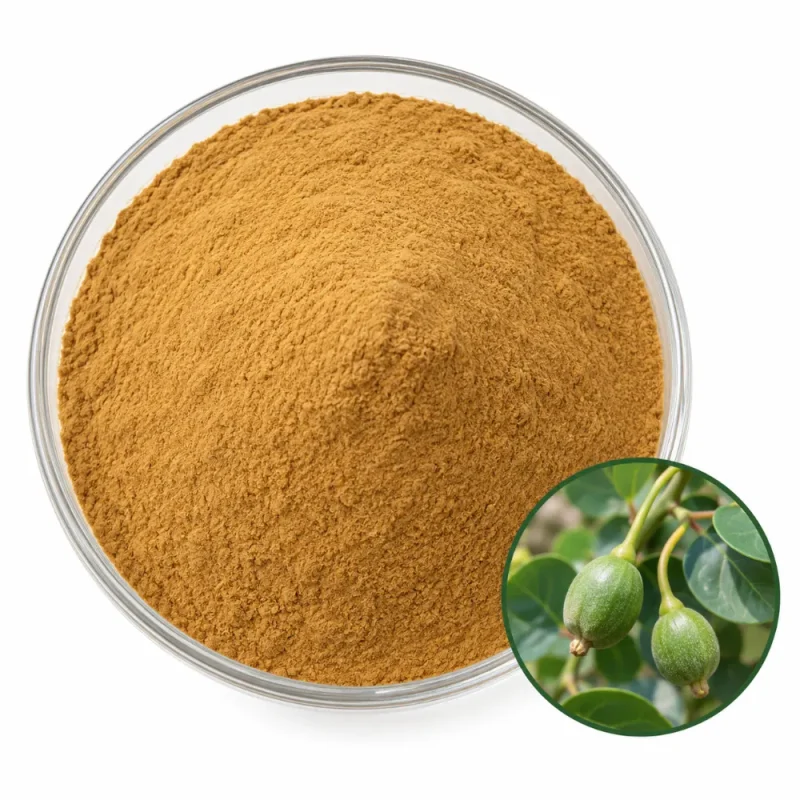
Caper Extract Powder

Unopened flower buds of Capparis spinosa, the Mediterranean caper bush, supply this caper extract, and the fruit sold as caperberries and the leaves are not used. Water extraction concentrates the soluble bud fraction, and the liquor is dried into a light brown powder that disperses in water.

The grade is a 10:1 ratio extract at 80 mesh, with no marker percentage. No standardized extract, powder or isolated compound of this species is listed alongside it, so this ratio extract is the single caper ingredient, with no declared flavonol or glucosinolate figure.

Capparis spinosa Identity & Plant Part

The botanical entity is Capparis spinosa L., a trailing perennial shrub of the Capparaceae family, native to the dry rocky slopes of the Mediterranean and western Asia. The part used is the flower bud, picked before it opens. Open flowers, the fruit, leaves, roots and bark are not part of this ingredient.

Several caper materials share the name. The pickled or salted buds sold in jars are the well-known culinary form, while caperberries are the olive-sized fruit with seeds. This extract refers to the bud as plant material and is not a food-grade preserved caper.

Caper buds are known for flavonol glycosides, notably rutin and quercetin and kaempferol derivatives, and for the glucosinolate glucocapparin, which gives caper its mustard-like pungency once the plant enzyme acts on it.

What 10:1 Means for Caper

A 10:1 ratio records how much caper bud went into the extract. It is not a content figure for rutin, quercetin or glucocapparin, and no such figure is attached to this product. The ratio describes concentration only, and it is read beside the bud as the plant part and water as the extraction medium.

Rutin dissolves only sparingly in cold water but more freely in hot water, and it may crystallize out of a concentrated liquor as it cools. Glucosinolates are altered by heat, so the caper extract’s pungency is mild beside that of the fresh bud. The extract is therefore described by identity and handling, not by a flavonol number.

Typical Specifications

Specification ItemProduct Information
Latin NameCapparis spinosa
Plant PartFlower
ProcessingWater Extraction
Common NameCaper Bud
Ingredient TypeRatio Extract
Extract Ratio10:1
AppearanceLight Brown powder
Solubility / DispersibilityWater Dispersible
Quality Parameters
Moisture (LOD)≤5.0%
Total Ash≤5.0%
Particle Size80 mesh
Heavy MetalsLead ≤2 ppm · Arsenic ≤1 ppm · Cadmium ≤1 ppm · Mercury ≤0.1 ppm
MicrobiologyTPC ≤1,000 cfu/g · Yeast & Mold ≤100 cfu/g · E. coli Negative · Salmonella Negative/25 g
Shelf Life24 months in unopened original packaging, cool and dry storage

Application Areas

Herbal Tea-Style Mixes

Caper extract belongs in herbal drink mixes with lemon, olive-leaf or herbal flavors that suit its faint resinous note. It disperses to a hazy tan cup with mild bitterness, and a sweetener brings the cup into balance.

Two-Piece Capsule Lots

Caper extract goes into two-piece capsules after it is blended with a flow aid. The light brown powder does not dissolve, so test disintegration of the filled capsule and weigh fills at the start of a run.

Film-Coated Tablet Cores

Caper extract can be pressed once microcrystalline cellulose and a disintegrant are blended in. A film coat conceals the brown core, and desiccated packs protect the flavonol-bearing powder from humidity during storage. A coating also hides the faint sulfurous note of the buds and limits moisture uptake in storage, which keeps the tablet surface smooth.

Single-Dose Sachet Blends

Sachets pair the extract with a dispersible carrier. Matched particle size keeps the fine powder from sifting out of a coarser base, and a dry filling room prevents lumping before the seal closes. Film that blocks humidity keeps the powder free-flowing until the sachet is opened.

Formulation Notes

The powder is light brown with a faint resinous, slightly sulfurous aroma and a bitter, mildly pungent taste. In water it disperses to a hazy tan liquid, with fine material settling on standing.

Flavonol glycosides are sensitive to alkaline conditions and to iron, which darken them, so keep drinks near neutral or slightly acidic and avoid iron contact surfaces. Caper extract bridges in the hopper unless it is premixed with a carrier. After opening, reseal the liner at every draw, since a damp caper extract cakes and its aroma sharpens. Caper extract shows a faint mustard-like note when wetted, because the glucosinolate system partly survives drying. A sweet or acidic base keeps that note in the background.

Packaging & Commercial Supply

Essencefield supports product evaluation, formulation trials, commercial orders, and ongoing ingredient supply. Packaging, storage, and shipping arrangements are determined by product characteristics, order quantity, stability requirements, and destination-market needs.

Supply ItemGeneral Information
SampleAvailable upon request for formulation, testing, and supplier evaluation
Order Quantities100 g · 1 kg · 5 kg · 25 kg · 100 kg · 500 kg · Bulk
Sample Lead TimeTypically 5–7 days after sample confirmation
Production Lead TimeTypically 15–30 days after order and specification confirmation
PackagingSuitable protective inner packaging with bags, cartons, drums, or other appropriate outer packaging
StorageStore in tightly sealed, suitable protective packaging in a cool, dry environment. Protect from moisture, heat, and direct sunlight. Specific storage conditions follow the approved product specification.
DocumentationCOA · Product Specification · TDS · SDS · Applicable declarations (as applicable)

Final order quantities, lead times, packaging, documentation, and shipping arrangements are confirmed according to the selected product and commercial requirements.

Request Ingredient Specifications & Quote

Share your target specification, application, quantity, and documentation needs. We’ll help confirm suitable options, samples, and commercial supply details.