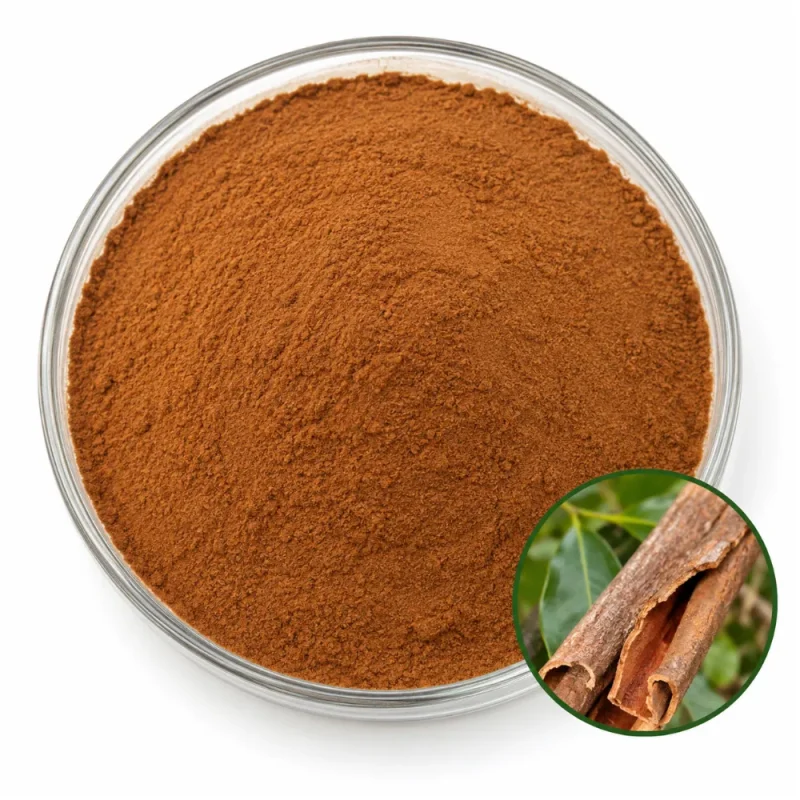
Cinnamon Bark Extract Powder

Cinnamon bark extract starts from the dried bark of Cinnamomum cassia, the Chinese cassia tree, and not from Ceylon cinnamon or the twig. Water extraction concentrates the soluble bark fraction, and the liquor is dried to a brown powder at a 10:1 ratio. Leaf, bud and root are left out of this cinnamon extract.

The 10:1 ratio carries no polyphenol or cinnamaldehyde percentage. The powder is brown, ground to 80 mesh and water dispersible. A polyphenol-graded cinnamon extract and plain cinnamon bark powder are separate products, and Ceylon cinnamon, Cinnamomum verum, is a different species.

Cinnamomum cassia Identity & Plant Part

The botanical entity is Cinnamomum cassia, also catalogued as Cinnamomum aromaticum Nees, an evergreen tree of the laurel family, Lauraceae. The part used is the dried bark. Leaves, buds and twigs are not added to this cinnamon bark extract.

Ceylon cinnamon, Cinnamomum verum, comes from the thin inner bark of another species, and a specification that says only “cinnamon” does not tell a buyer which tree is meant. Cassia bark is thicker and rolls as a single layer, while Ceylon quills are fine and wound in many layers. Cassia bark carries tannin-type polyphenols, a volatile aldehyde fraction and coumarin. After harvest the bark is dried and cut before it goes to the extraction vessel, so the powder reflects the bark layer only.

Cinnamon Extract vs Powder & Standardized Grades

FormWhat It IsChoose It When
10:1 Cinnamon Bark ExtractWater-extracted, concentrated and dried C. cassia barkA dispersible bark extract without a marker is wanted
Cinnamon Extract 10–30% PolyphenolsExtract with a defined polyphenol rangeThe specification names a polyphenol figure
Cinnamon Bark PowderDried, milled barkWhole-bark fiber and a coarse spice profile are wanted

Read the 10:1 on a cinnamon label as a concentration ratio of the starting bark. It says nothing about polyphenols or cinnamaldehyde, and because water extraction leaves much of the volatile aldehyde fraction behind, this powder is not a flavor ingredient.

Where a label has to declare polyphenols, the graded cinnamon extract is the product to use. The ratio extract suits blends that need cassia identity in a water-dispersible, low-fiber form, and the milled bark suits applications where fiber and visible bark particles are acceptable.

Typical Specifications

Specification ItemProduct Information
Latin NameCinnamomum cassia
Plant PartBark & Stem
ProcessingWater Extraction
Common NameCassia Cinnamon, Chinese Cinnamon
Ingredient TypeRatio Extract
Extract Ratio10:1
AppearanceBrown powder
Solubility / DispersibilityWater Dispersible
Quality Parameters
Moisture (LOD)≤5.0%
Total Ash≤5.0%
Particle Size80 mesh
Heavy MetalsLead ≤2 ppm · Arsenic ≤1 ppm · Cadmium ≤1 ppm · Mercury ≤0.1 ppm
MicrobiologyTPC ≤1,000 cfu/g · Yeast & Mold ≤100 cfu/g · E. coli Negative · Salmonella Negative/25 g
Shelf Life24 months in unopened original packaging, cool and dry storage

Application Areas

Warm-Toned Drink Powders

Cinnamon bark extract goes into dry drink mixes that already carry a brown base such as cocoa, chai-style spice or coffee substitutes. It disperses without the grit of milled bark, and its tannin-type bitterness is balanced with sweetener in the mix. Spice-forward drink flavors help the brown color look intended rather than muddy.

Capsule and Tablet Fills

Capsules and tablets take the extract as a dry, brown blend component. Cassia tannins can darken the fill when moisture is present, so dried excipients and tight fill-line humidity control keep the batch color even. Tablet makers check hardness and disintegration, because soluble extract solids bind firmly under compression.

Spiced Powder Sticks

Single-serve sticks combine the extract with sweetener and a flavored carrier. Because the volatile aldehyde fraction is mostly absent after water extraction, any cinnamon aroma in the stick comes from a separate flavor. The extract supplies body, color and bark identity, while the flavor supplies the smell a consumer expects from cinnamon.

Brown Gummy Premixes

Gummy premixes accept cinnamon extract late in the cook, once the mass has cooled, to avoid a muddy shade. Its brown color suits caramel, apple or cola-flavored pieces more than pale fruit colors. Fruit acid in the base can sharpen the tannin note, so acid is dosed in after the extract is dispersed.

Formulation Notes

The powder is brown with a mild woody, faintly sweet aroma and a tannic, astringent taste. In water it disperses to a brown, slightly turbid liquid, and settling over time is normal for a bark extract. Tannin-type polyphenols can react with iron to give darker shades, so stainless contact surfaces are preferred over carbon steel. In an acidic drink the same tannins can form a light sediment on standing, which a stabilizer or a short shake-before-use instruction handles. Hot-fill and long hold times deepen the brown further, so beverage trials include a storage check at the intended pH.

Premix the extract with part of the sweetener or filler before the main blend to prevent lumps and color streaks. Soluble extract solids attract moisture, so the powder cakes once its liner is left open. After opening, press out the air, reseal tightly and return the drum to a dry area.

Packaging & Commercial Supply

Essencefield supports product evaluation, formulation trials, commercial orders, and ongoing ingredient supply. Packaging, storage, and shipping arrangements are determined by product characteristics, order quantity, stability requirements, and destination-market needs.

Supply ItemGeneral Information
SampleAvailable upon request for formulation, testing, and supplier evaluation
Order Quantities100 g · 1 kg · 5 kg · 25 kg · 100 kg · 500 kg · Bulk
Sample Lead TimeTypically 5–7 days after sample confirmation
Production Lead TimeTypically 15–30 days after order and specification confirmation
PackagingSuitable protective inner packaging with bags, cartons, drums, or other appropriate outer packaging
StorageStore in tightly sealed, suitable protective packaging in a cool, dry environment. Protect from moisture, heat, and direct sunlight. Specific storage conditions follow the approved product specification.
DocumentationCOA · Product Specification · TDS · SDS · Applicable declarations (as applicable)

Final order quantities, lead times, packaging, documentation, and shipping arrangements are confirmed according to the selected product and commercial requirements.

Request Ingredient Specifications & Quote

Share your target specification, application, quantity, and documentation needs. We’ll help confirm suitable options, samples, and commercial supply details.