Fenugreek Galactomannan Powder

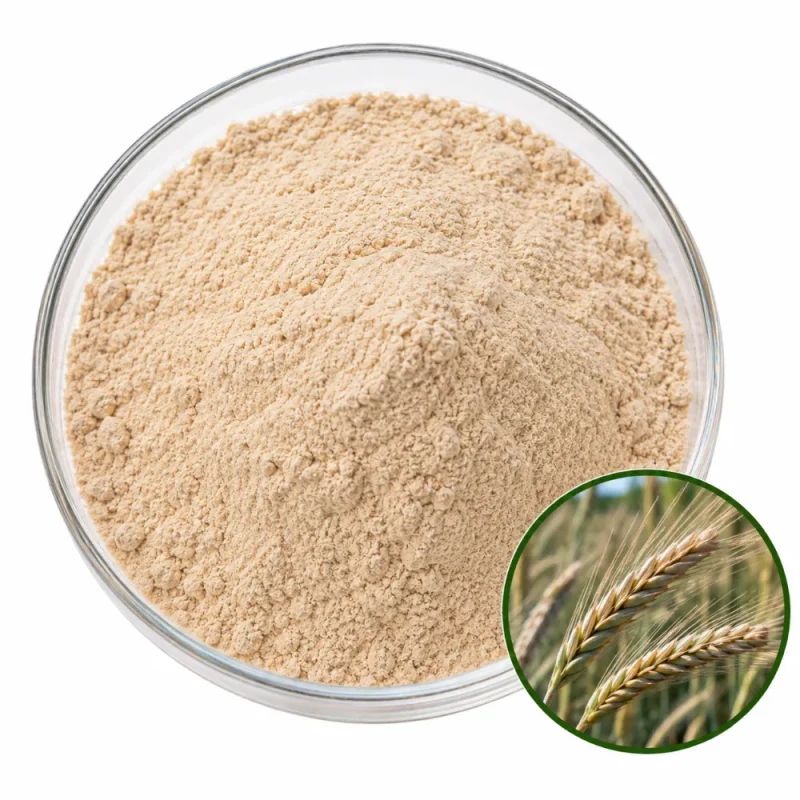
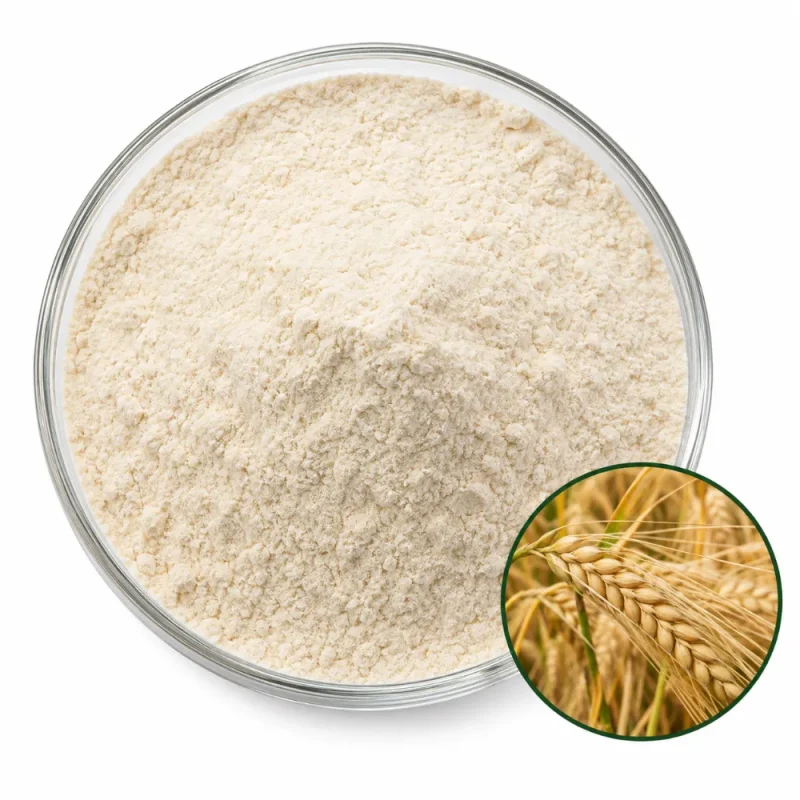
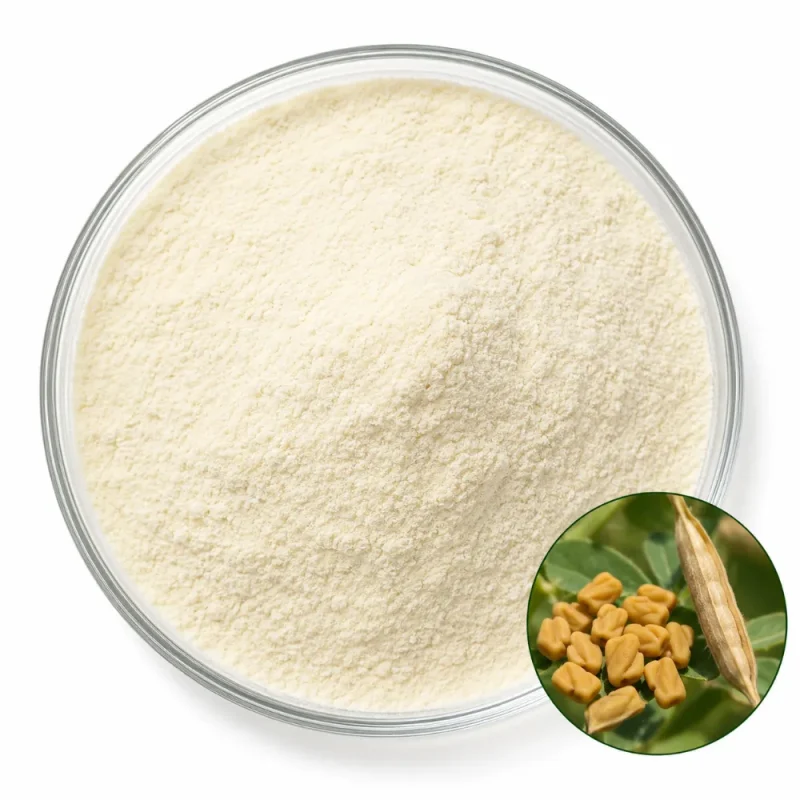
The gum fraction of the seed of Trigonella foenum-graecum L., separated by water extraction and ethanol precipitation, then dried and milled, becomes fenugreek galactomannan powder. The light yellow powder disperses in water into a viscous, smooth solution and is a texture and polysaccharide ingredient, not a spice.

Polysaccharide content is ≥30% by UV-Vis (phenol–sulfuric, as glucose), moisture and total ash are each ≤5.0%, and particle size is 80 mesh. The percentage is always read with its method, and no viscosity value is stated for this grade.

Fenugreek Polysaccharide Identity

The source is the seed of Trigonella foenum-graecum L., fenugreek, an annual legume of the family Fabaceae. The seed is the only plant part used. Fenugreek leaf, sold as methi or kasuri methi, is a different raw material that does not carry a comparable amount of gum, and the whole seed spice and the fiber-rich husk are separate products. Fenugreek galactomannan is stored in the endosperm that surrounds the embryo, a thick reserve layer that swells strongly in water.

A galactomannan has a backbone of mannose units with single galactose units attached along the chain. Fenugreek galactomannan is unusual among the seed gums because it carries a high degree of galactose substitution, with roughly one galactose for each mannose. Guar has about one galactose for every two mannose units, and locust bean gum has about one for every four, so the fenugreek gum is the most heavily substituted and the most readily water-soluble of the three.

Seed extraction also brings out saponins, the alkaloid trigonelline, 4-hydroxyisoleucine and protein. Ethanol precipitation keeps the large gum molecules and leaves most of those small compounds in the supernatant. Fenugreek galactomannan therefore differs from the whole-seed extracts in composition and flavor, and the powder has little of the strong, maple-like aroma of the spice.

Related fenugreek materials serve other questions. Fenugreek Extract Powder is the whole water extract, Fenugreek Extract 50% Saponins is the saponin-standardized grade, and Trigonelline 98% is the isolated alkaloid.

Polysaccharide Content & Test Method

As fenugreek is processed, polysaccharides ≥30% by UV-Vis is a total-carbohydrate reading. The phenol–sulfuric reaction releases mannose and galactose in hot acid, converts both into a colored product and reports them as glucose equivalents. The two sugars give a slightly different color yield than glucose, which is one reason the result is stated as glucose and not as galactomannan.

The reading is not a purity of galactomannan. Seed extracts also contain free sugars, small amounts of starch-like material and protein that either react in the assay or co-precipitate with the gum, and a separate galactose and mannose analysis would be needed to quantify the gum alone. A 30% value at this level shows that the powder is a carbohydrate-rich fraction while saying nothing about viscosity.

Viscosity is the property that buyers of galactomannan care about most, and it depends on molecular weight, not only on content. A gum that has been degraded by heat or enzymes can read the same by UV-Vis and yet thicken far less. For that reason the assay is paired with a hydration test in the end-use base, and no viscosity number is published for this grade.

Compare the figure only with other UV-Vis results that use glucose as the reference. It cannot be set against gravimetric gum yields, against enzymatic β-glucan assays, or against the saponin percentage of a fenugreek extract.

Typical Specifications

Specification ItemProduct Information
Latin NameTrigonella foenum-graecum
Plant PartSeed & Grain
ProcessingWater Extraction & Purification
Common NameFenugreek
Ingredient TypePolysaccharide Extract
Polysaccharide TypeGalactomannan
ContentPolysaccharides ≥30% (UV-Vis, as glucose)
AppearanceLight Yellow powder
Solubility / DispersibilityWater Dispersible
Quality Parameters
Moisture≤5.0% (LOD)
Total Ash≤5.0%
Particle Size80 mesh
Heavy MetalsLead ≤2 ppm · Arsenic ≤1 ppm · Cadmium ≤1 ppm · Mercury ≤0.1 ppm
MicrobiologyTPC ≤1,000 cfu/g · Yeast & Mold ≤100 cfu/g · E. coli Negative · Salmonella Negative/25 g
Shelf Life24 months in unopened original packaging, cool and dry storage

Fenugreek Galactomannan Solution Behavior

Fenugreek galactomannan hydrates in cold water, which sets it apart from locust bean gum that needs heat. The powder swells and forms a smooth, viscous dispersion, and the rate of hydration depends on how well the particles are wetted. Poured straight into water, it forms lumps with a dry core, so it is pre-blended with sugar or other dry ingredients or sifted slowly into a vortex.

Viscosity builds with concentration and rises steeply once the gum is fully hydrated, so the dose in a drink or sauce is kept low and tested stepwise. Because the polymer is non-ionic, fenugreek galactomannan tolerates acid, salt and a broad pH range better than charged gums. It stays stable through pasteurization, though prolonged high heat at low pH slowly cleaves the backbone and thins the liquid.

The gum interacts with other hydrocolloids. Xanthan gum raises viscosity above the sum of the parts, and the extent of that synergy depends on the galactose content, which is high in fenugreek. Starches and proteins also change the texture, so a trial with the real base is the only reliable guide.

The solution is light yellow and nearly neutral in taste. In the fenugreek case, dry powder is hygroscopic and cakes in open air, so drums are resealed after each draw.

Application Areas

Thickened Beverages and Shake Powders

Dry shake and drink mixes use fenugreek galactomannan to build body and slow settling of fiber, protein and cocoa. It hydrates in cold liquid with shaking, and the dose is tuned in small steps, since a slight overdose makes a drink slimy.

Sauce, Dressing and Soup Stabilizers

Sauces, dressings and soups take the gum to hold oil droplets and solids in suspension. The polymer tolerates acid and salt, and a pre-blend with sugar or starch avoids lumps when it is dispersed in the cold premix.

Plant-Based Dairy and Frozen Desserts

Plant-based milks, creamers and frozen desserts use the gum for creaminess and to limit ice crystal growth. Its cold-water hydration helps in processes with little heat, and the final texture is tested after freezing and thawing. A short pilot with fenugreek confirms flavor and appearance before the full run.

Bakery, Noodle and Dough Mixes

Doughs and noodle mixes include the gum to hold water and improve softness over shelf life. The hydrocolloid competes with flour proteins for water, so hydration is increased slightly, and the mix is tested for stickiness during sheeting.

Capsules and Tablet Binders

Capsule blends and tablets use the powder as a carbohydrate-rich fill or binder. The surface becomes sticky when wetted, so granulation conditions are controlled, and tablets are tested for disintegration since the gum swells and can slow release.

Packaging & Commercial Supply

Essencefield supports product evaluation, formulation trials, commercial orders, and ongoing ingredient supply. Packaging, storage, and shipping arrangements are determined by product characteristics, order quantity, stability requirements, and destination-market needs.

Supply ItemGeneral Information
SampleAvailable upon request for formulation, testing, and supplier evaluation
Order Quantities100 g · 1 kg · 5 kg · 25 kg · 100 kg · 500 kg · Bulk
Sample Lead TimeTypically 5–7 days after sample confirmation
Production Lead TimeTypically 15–30 days after order and specification confirmation
PackagingSuitable protective inner packaging with bags, cartons, drums, or other appropriate outer packaging
StorageStore in tightly sealed, suitable protective packaging in a cool, dry environment. Protect from moisture, heat, and direct sunlight. Specific storage conditions follow the approved product specification.
DocumentationCOA · Product Specification · TDS · SDS · Applicable declarations (as applicable)

Final order quantities, lead times, packaging, documentation, and shipping arrangements are confirmed according to the selected product and commercial requirements.

Request Ingredient Specifications & Quote

Share your target specification, application, quantity, and documentation needs. We’ll help confirm suitable options, samples, and commercial supply details.