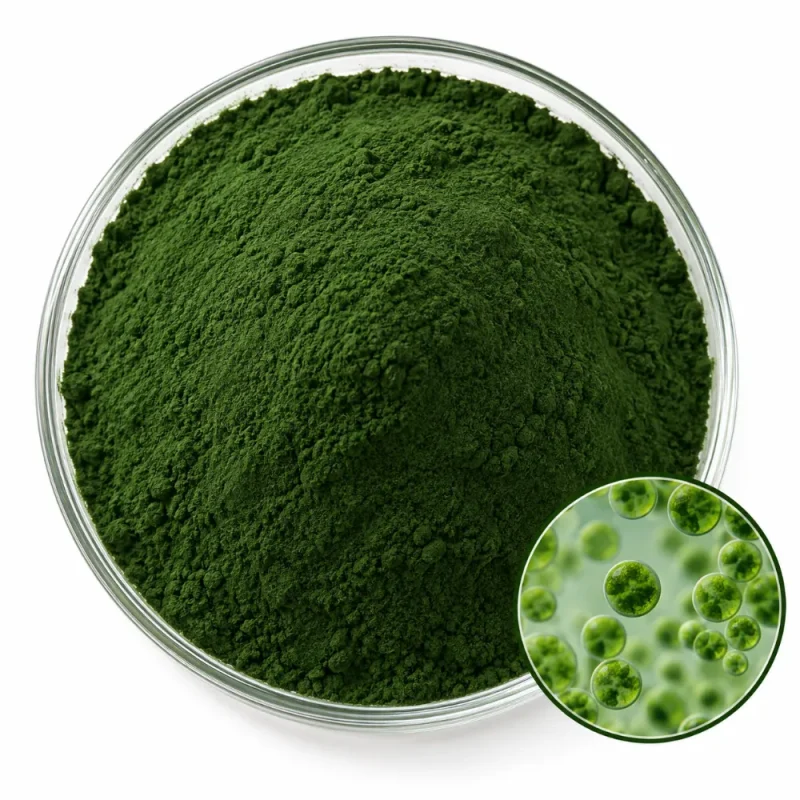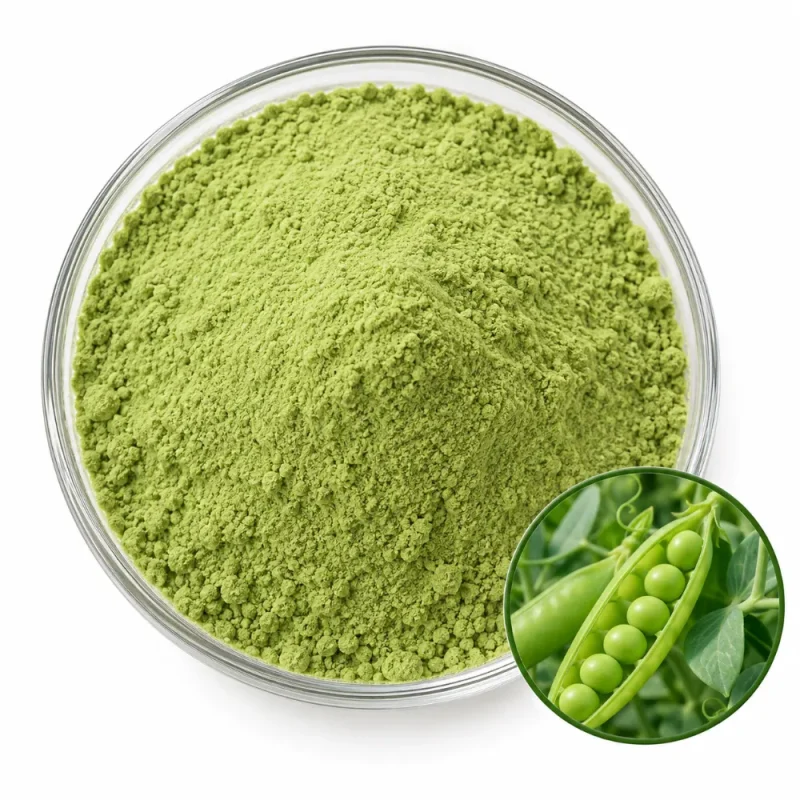
Green Pea Powder

Milled from the seed of Pisum sativum, green pea powder is a dry, light-green legume powder with a mild, grassy pea note. It is milled to 80 mesh and disperses in water without dissolving, so it behaves as a suspended solid in soups, batters and drinks.

The specification covers the species, the green-type seed raw material, the 80-mesh grind, a light-green appearance and moisture limited to ≤8.0%. It is supplied for plant-based foods, bakery, soups and dry blends, where color, body and protein-rich solids matter more than solubility.

Green Pea Raw Material Profile

Green pea powder is made from the seed of Pisum sativum L., the garden pea, which some databases now list as Lathyrus oleraceus. The seed is the raw material, taken from the pod; the pod wall, vine and leaf are not used. Green and yellow peas are the same species and differ in the pigments that remain in the seed’s cotyledons, and the green type keeps chlorophyll that fades in yellow types.

A pea seed is a legume cotyledon, and its dry matter is mostly starch, with a protein fraction that makes it a common plant-protein base and a layer of cell-wall fiber that provides body. The protein is made of two main storage families, vicilin and legumin, which are globulins that hydrate poorly in cold water and thicken on heating.

The color of the powder follows the pigment. Chlorophyll gives the light-green tone and is sensitive to heat, light and acid, which is why green pea powder fades toward olive or yellow-brown when it is stored in light or cooked in acid. The powder keeps the whole cotyledon, so its flavor, color and behavior are those of a pea seed milled and not of an isolated protein.
Green Pea Composition & Milling

FormWhat It IsChoose It When
Green Pea PowderMilled green-type pea seedGreen color and whole-seed body
Yellow Pea PowderMilled yellow-type pea seedA neutral cream color is wanted
Pea Peptide PowderEnzymatic hydrolysate of pea proteinA soluble protein-based ingredient is wanted

A pea cotyledon is a starch-protein composite, and milling cracks the cell walls and releases starch granules together with protein bodies. The result is a powder with good water uptake and a smooth texture. Because peas hold little oil, the powder does not smear as oil-rich seeds do, and the 80-mesh grind flows freely and disperses with little grit.

Flavor is shaped during milling. Cracking the seed brings enzymes, especially lipoxygenase, into contact with the small amount of lipid in the seed, and the oxidation products give the typical grassy or beany note. The note is stronger when the powder is made from unprocessed seed and softer when it is made from seed that has been heat-treated, and a buyer who needs a neutral flavor should treat that as a requirement.

The comparison table separates green pea powder from two other pea products. Yellow pea powder differs by pigment, and pea peptide is a soluble hydrolysate of the protein, so neither is a replacement for the whole seed in a formula.

Typical Specifications

Specification ItemProduct Information
Latin NamePisum sativum
Plant PartSeed & Grain
ProcessingMilled
Common NameGreen pea
Raw MaterialPea seed (green type)
Ingredient TypeMilled Powder
AppearanceLight Green powder
FlavorMild, green, pea-like
Solubility / DispersibilityWater Dispersible
Quality Parameters
Moisture≤8.0% (LOD)
Particle Size80 mesh
Heavy MetalsLead ≤2 ppm · Arsenic ≤1 ppm · Cadmium ≤1 ppm · Mercury ≤0.1 ppm
MicrobiologyTPC ≤10,000 cfu/g · Yeast & Mold ≤1,000 cfu/g · E. coli Negative · Salmonella Negative/25 g
Shelf Life24 months in unopened original packaging, cool and dry storage

Application Areas

Plant-Based Savory Foods

In plant-based patties, nuggets and fillings, green pea powder adds binding, body and a green hue. Starch gelatinizes on cooking and holds moisture, while the protein sets as it heats, so the powder helps hold the shape of the cooked piece.

Soups, Sauces and Dips

Dry soup mixes and dip bases use the powder to thicken and color. It hydrates quickly in warm liquid, so it is stirred in with the flour or starch to prevent lumps, and the green tone is protected by keeping the cook time short and the pH close to neutral.

Bakery and Noodle Doughs

In noodles, flatbreads and crackers, the powder replaces part of the flour and brings a pale green color and a mild pea flavor. It dilutes the dough’s own protein network, so water, mixing time and added binders are adjusted against the control.

Extruded Snacks and Cereal Pieces

Expanded snacks and cereal pieces carry the powder as a starch and protein source. Extrusion cooks the starch and denatures the protein, which also tones down the beany note, and the color shifts toward yellow-green under heat.

Handling Notes

Green pea powder takes up water quickly, and in humid air it cakes and loses its free flow. Containers should be closed after use, and the powder weighed out promptly. If lumps form, they are sifted out before use, because they hydrate slowly and survive as hard spots in a finished soup or dough.

Color is the main storage concern. Chlorophyll is degraded by light, heat and oxygen, so the powder should be kept in a sealed, opaque container in a cool, dry place, and the green tone should be checked against a retained sample after storage. Finished foods made with the powder fade in clear packs in the same way.

In production, the powder disperses best when it is blended with other dry ingredients before liquid is added. Added to hot liquid on its own, the outer layer of each particle gels and traps dry powder inside, so lumps form quickly. Dust is light and spreads in open handling, which calls for normal dust control around mixers.

Packaging & Commercial Supply

Essencefield supports product evaluation, formulation trials, commercial orders, and ongoing ingredient supply. Packaging, storage, and shipping arrangements are determined by product characteristics, order quantity, stability requirements, and destination-market needs.

Supply ItemGeneral Information
SampleAvailable upon request for formulation, testing, and supplier evaluation
Order Quantities100 g · 1 kg · 5 kg · 25 kg · 100 kg · 500 kg · Bulk
Sample Lead TimeTypically 5–7 days after sample confirmation
Production Lead TimeTypically 15–30 days after order and specification confirmation
PackagingSuitable protective inner packaging with bags, cartons, drums, or other appropriate outer packaging
StorageStore in tightly sealed, suitable protective packaging in a cool, dry environment. Protect from moisture, heat, and direct sunlight. Specific storage conditions follow the approved product specification.
DocumentationCOA · Product Specification · TDS · SDS · Applicable declarations (as applicable)

Final order quantities, lead times, packaging, documentation, and shipping arrangements are confirmed according to the selected product and commercial requirements.

Request Ingredient Specifications & Quote

Share your target specification, application, quantity, and documentation needs. We’ll help confirm suitable options, samples, and commercial supply details.