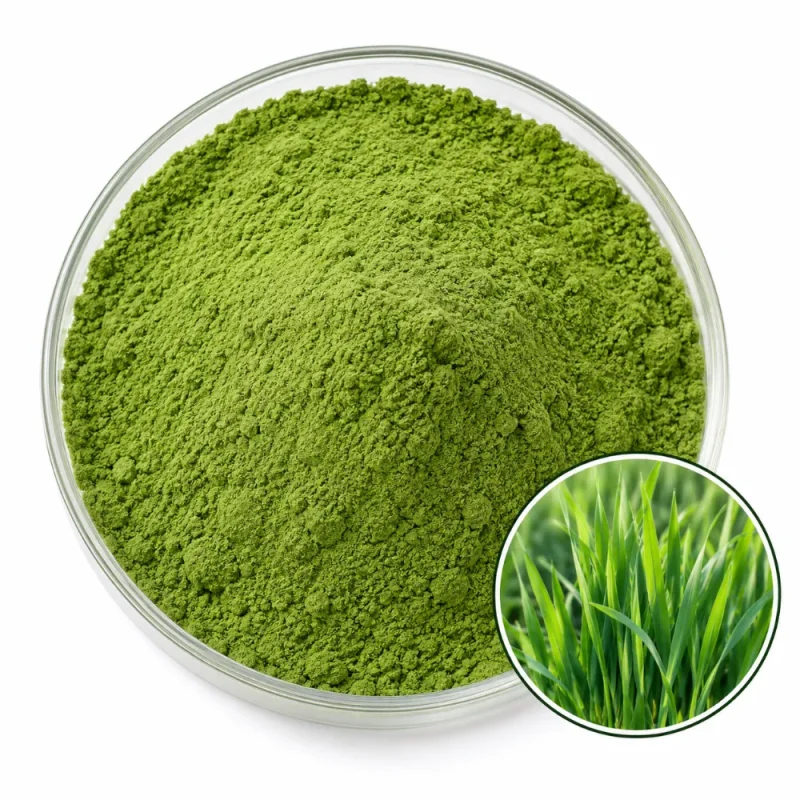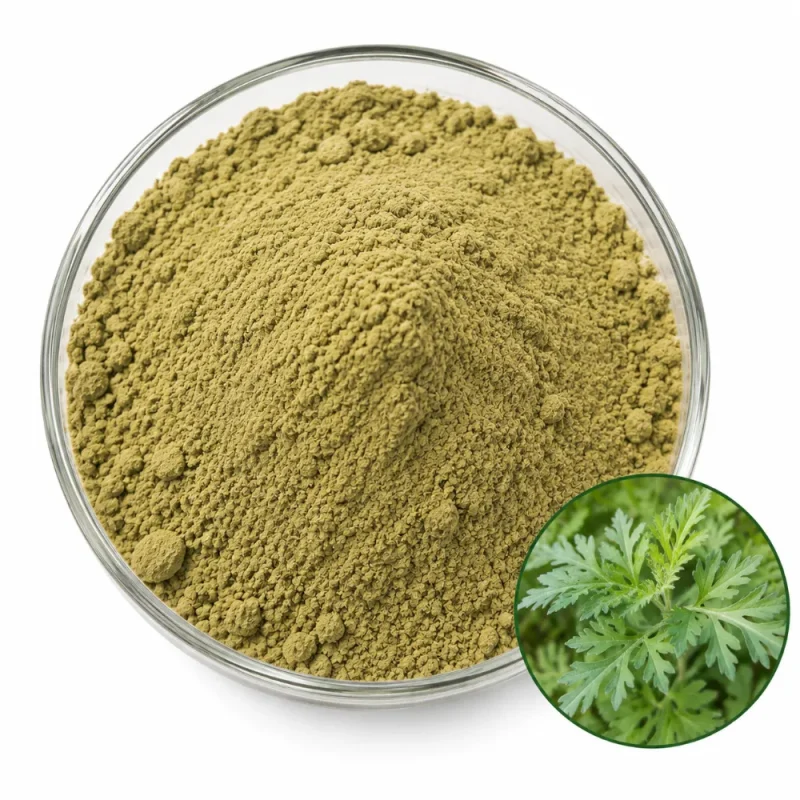
Sweet Wormwood Herb Powder

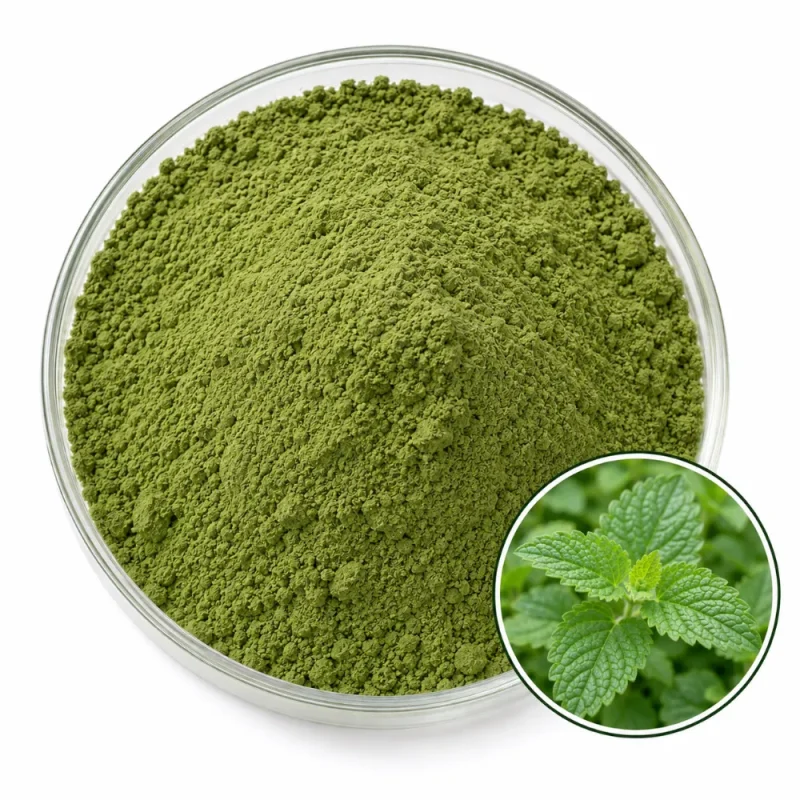
Sweet wormwood, the tall annual Artemisia annua known in Chinese trade as qing hao, is cut at its leafy, early-flowering stage, dried and milled into this green powder with a sharp, resinous and slightly camphoraceous aroma. The aerial parts are used, so the root and the mature woody stems are not part of the material.

Sweet wormwood herb powder is supplied at 80 mesh, with 40, 60 and 100 mesh optional, and has a penetrating, herbal odor with a bitter, aromatic taste. It is raw milled herb rather than an extract, so inclusion rates are higher and the aromatic oil is stronger than in the extract form.

Artemisia annua Raw Material & Plant Part

The botanical name is Artemisia annua L., family Asteraceae, known as sweet wormwood, sweet annie, annual wormwood or qing hao. The raw material is the dried aerial part of the plant, meaning the finely divided leaves and the flowering tips, harvested in summer, dried and milled. Roots and the thick, woody lower stems are not included.

The genus Artemisia includes many look-alikes. Artemisia absinthium is wormwood, the bitter herb of absinthe, with a different chemistry and a different regulatory status. Artemisia vulgaris is the common mugwort, and Artemisia argyi is the Chinese mugwort used for rice cakes and other spring foods. Artemisia apiacea, a close relative, is a separate plant in Chinese pharmacopoeial practice. The species name is what sets sweet wormwood apart.

The herb is known for sesquiterpene lactones, including artemisinin, which dissolve poorly in water, for flavonoids, for coumarins such as scopoletin and for an essential oil. The powder is a botanical raw material and carries no stated content of any single compound.

Harvest time shapes the aroma. The fine, feathery leaves are rich in oil before the plant is in full flower, while the late-season stem is woody and much less aromatic, so the leafy fraction defines the quality of the milled sweet wormwood herb powder.

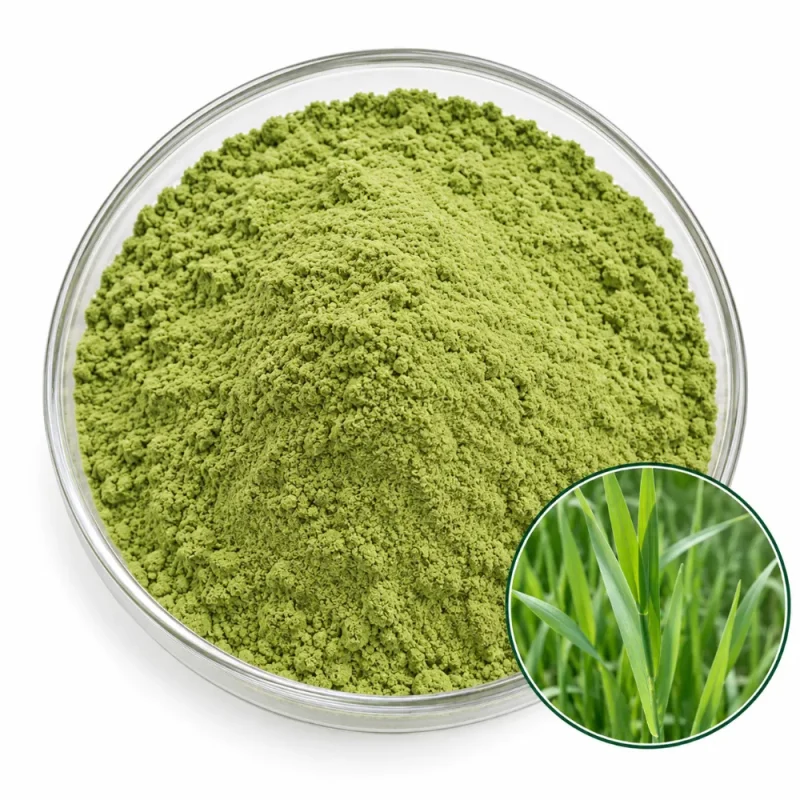
Sweet Wormwood Herb Powder vs Extract

FormWhat It IsChoose It When
Sweet Wormwood Herb PowderMilled dried aerial parts with their oil and fiberWhole-herb aroma and fiber in dry blends
Artemisia Annua Extract PowderWater-extracted herb with the fiber removedA soluble format with a milder aroma
Scopoletin 98%Purified single coumarin reference gradeAn isolated compound is needed
Scopolin 98%Purified single coumarin glycoside reference gradeAn isolated glycoside is needed

The herb powder keeps the aromatic oil, the chlorophyll and the full fiber at their natural, lower concentration. Inclusion rates are higher than for an extract, the aroma is strong and resinous, and the powder only disperses in liquids.

A water extract of sweet wormwood is a different product. The poorly water-soluble sesquiterpene lactones and most of the volatile oil stay behind in the plant material, so the extract powder is paler, milder and dominated by water-soluble phenolics. Scopoletin and scopolin are single coumarin compounds sold as reference-grade ingredients. Choose the herb powder when the whole dried herb is the specification.

In sensory terms the powder is intensely aromatic and bitter, while the extract is flat and brown. That difference decides the application: seasonings and herb mixes need the powder, and soluble bases use the extract.

For a buyer, sweet wormwood herb powder is the whole dried herb, and sweet wormwood extract powder is a water-soluble fraction of it. The two are not alternatives in an aroma-driven recipe, because the sharp scent of sweet wormwood belongs to the oil that stays in the powder and not to the extract.

Typical Specifications

Specification ItemProduct Information
Latin NameArtemisia annua
Plant PartLeaf & Herb
ProcessingMilled
Common NameSweet wormwood, sweet annie, qing hao
Raw MaterialDried aerial parts
Ingredient TypeMilled Powder
AppearanceGreen powder (natural color of the dried material)
Odor & TastePenetrating, resinous, camphoraceous odor; bitter, aromatic taste
Solubility / DispersibilityWater Dispersible
Quality Parameters
Moisture (LOD)≤8.0%
Particle Size80 mesh (40 / 60 / 100 mesh optional)
Heavy MetalsLead ≤2 ppm · Arsenic ≤1 ppm · Cadmium ≤1 ppm · Mercury ≤0.1 ppm
MicrobiologyTPC ≤10,000 cfu/g · Yeast & Mold ≤1,000 cfu/g · E. coli Negative · Salmonella Negative/25 g
Shelf Life24 months in unopened original packaging, cool and dry storage

Application Areas

Herbal tea and decoction blends

Sweet wormwood herb is blended in small amounts with mint, licorice or chrysanthemum for a bitter, aromatic tea. Coarse 40 and 60 mesh grades stay in the bag, and the strong aroma means that the inclusion level is kept low.

Aromatic herb seasoning blends

Dry herb blends use the powder as a minor, aromatic and bitter accent, much like other wormwood-type herbs in regional bitters. A very low share is enough, and trial blends are tasted at serving temperature because the bitterness builds.

Capsule and tablet fills

Capsule and tablet fills take the herb as a light, aromatic green material. The bulk density limits the weight per shell, odor escapes from open bottles, and tablets need a binder and a coating that holds back the smell.

Dry bitter drink mixes

Dry mixes for bitter-style drinks use a small share of the powder with citrus, ginger and sweet spices. The aroma dominates quickly, so the herb is premixed with a carrier to avoid hot spots in the pack.

Handling & Blending Notes

Sweet wormwood herb powder is light and fluffy, with fine leaf fragments that float at open scoops and hoppers and cling to surfaces through static charge. Closed transfer, extraction at the scoop and anti-static tools contain the green dust, which is bitter and irritating when airborne.

The aroma is strong and travels. It passes to neighboring materials and packaging and lingers on equipment and in rooms, so dedicated scoops, separate storage and closed hoppers are used, and used containers are aired before reuse. The volatile oil also fades with warmth, light and air, so a fresh pack smells sharp and resinous, and a flat odor suggests age.

Chlorophyll fades under light and acid, so opaque packs and a cool store protect the green tone. Moisture uptake is moderate and lumps form in open bags, so barrier bags and dry rooms are used. Dry blends and capsules use 80 mesh, and steeping bags use the coarser 40 or 60 mesh. Opened containers are resealed at once.

Sweet wormwood powder is best stored in small, tightly sealed containers away from other aromatic materials. Because the scent is strong, opened packs are resealed straight away, and a dedicated weighing area for sweet wormwood avoids odor transfer to neighboring lines.

Packaging & Commercial Supply

Essencefield supports product evaluation, formulation trials, commercial orders, and ongoing ingredient supply. Packaging, storage, and shipping arrangements are determined by product characteristics, order quantity, stability requirements, and destination-market needs.

Supply ItemGeneral Information
SampleAvailable upon request for formulation, testing, and supplier evaluation
Order Quantities100 g · 1 kg · 5 kg · 25 kg · 100 kg · 500 kg · Bulk
Sample Lead TimeTypically 5–7 days after sample confirmation
Production Lead TimeTypically 15–30 days after order and specification confirmation
PackagingSuitable protective inner packaging with bags, cartons, drums, or other appropriate outer packaging
StorageStore in tightly sealed, suitable protective packaging in a cool, dry environment. Protect from moisture, heat, and direct sunlight. Specific storage conditions follow the approved product specification.
DocumentationCOA · Product Specification · TDS · SDS · Applicable declarations (as applicable)

Final order quantities, lead times, packaging, documentation, and shipping arrangements are confirmed according to the selected product and commercial requirements.

Request Ingredient Specifications & Quote

Share your target specification, application, quantity, and documentation needs. We’ll help confirm suitable options, samples, and commercial supply details.