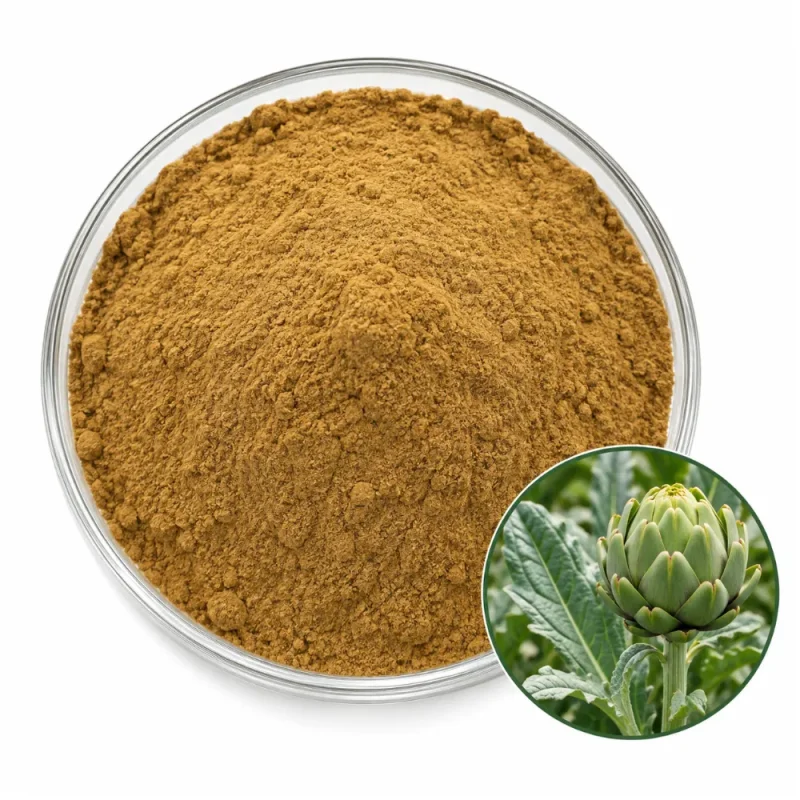
Artichoke Extract Powder

Artichoke extract comes from the large, silvery-green basal leaves of Cynara scolymus, not from the edible flower bud. Water extraction concentrates the soluble leaf fraction, and the liquor is dried to a light brown powder. Bracts and hearts, the food parts of the plant, are left out.

The 10:1 ratio extract of artichoke carries no cynarin or caffeoylquinic acid percentage. The 80 mesh powder disperses in water. A cynarin-graded extract, the plain leaf powder and an isolated dicaffeoylquinic acid are separate products with their own specifications.

Cynara scolymus Leaf Identity & Plant Part

The botanical entity is Cynara scolymus L., the globe artichoke, a perennial thistle of the daisy family, Asteraceae. Many authors treat it as Cynara cardunculus var. scolymus, the domesticated form of the wild cardoon. The part used is the leaf: arching, deeply lobed basal foliage that can reach roughly half a metre or more in length, cut and dried. The whole plant stands 1.4 to 2 m tall, and the leaf is not a food part, since diners discard the fibrous upper leaf and eat only the fleshy base of the bracts.

Names collide in this category. Jerusalem artichoke is Helianthus tuberosus, an unrelated plant grown for its tubers. A specification that says only “artichoke extract” may mean leaf or bud, and a listing under C. cardunculus may refer to cardoon, which belongs to the same species as the globe artichoke.

Artichoke Extract vs Powder & Grade

FormWhat It IsChoose It When
10:1 Artichoke Leaf ExtractWater-extracted, concentrated and dried C. scolymus leafA dispersible leaf extract without a marker is wanted
Artichoke Extract 0.5–5% CynarinStandardized extract with a defined cynarin rangeThe specification names a cynarin figure
Artichoke Leaf PowderDried, milled leaf with no extractionWhole-leaf fiber and bulk are acceptable
1,3-Dicaffeoylquinic Acid 98%Isolated single caffeoylquinic esterA pure single compound is required

Ten parts of artichoke leaf stand behind each part of this powder, and that is all the ratio says. Because cynarin is only one of several caffeoylquinic esters in the leaf, the ratio extract cannot be read as a cynarin product.

A buyer who wants the cynarin molecule itself should look at the isolated acid and not at this extract. If a label must name cynarin, the standardized extract applies, and single-compound work calls for the isolated acid. The ratio extract suits formulas that need artichoke leaf identity in a dispersible form with a bitter profile. The leaf powder is the whole-material option and brings fiber together with the full bitter profile.

Typical Specifications

Specification ItemProduct Information
Latin NameCynara scolymus
Plant PartLeaf & Herb
ProcessingWater Extraction
Common NameArtichoke, Globe Artichoke
Ingredient TypeRatio Extract
Extract Ratio10:1
AppearanceLight Brown powder
Solubility / DispersibilityWater Dispersible
Quality Parameters
Moisture (LOD)≤5.0%
Total Ash≤5.0%
Particle Size80 mesh
Heavy MetalsLead ≤2 ppm · Arsenic ≤1 ppm · Cadmium ≤1 ppm · Mercury ≤0.1 ppm
MicrobiologyTPC ≤1,000 cfu/g · Yeast & Mold ≤100 cfu/g · E. coli Negative · Salmonella Negative/25 g
Shelf Life24 months in unopened original packaging, cool and dry storage

Application Areas

Bitter Leaf Capsule Fills

Capsule shells contain the intense bitterness of artichoke leaf, so the extract is rarely tasted. The 80 mesh powder is checked for flow before filling, and the 10:1 concentration keeps the fill weight below that of milled leaf, which holds capsule size manageable.

Coated Bitter-Leaf Tablets

Tablets carrying artichoke extract are film coated, because a tablet that breaks in the mouth releases a strong bitter taste and the powder takes up water. Hardness and disintegration are tested after several weeks of storage, since compacts made with hygroscopic extracts soften slowly.

Bitter-Herb Tea Blends

Instant tea blends set artichoke extract beside dandelion, peppermint and fennel. The powder dissolves in hot water without leaving leaf fragments, and the sweet, aromatic herbs offset its bitter, slightly grassy character so the cup stays drinkable.

Citrus-Masked Drink Sticks

Drink sticks mask the bitterness with citrus acids, sweetener and a flavored carrier. The masking system goes into the blend early, so that the finished serving is judged on the full recipe rather than on the extract alone. Citrus also keeps the infusion in the mildly acidic range where the caffeoylquinic esters are steadier.

Formulation Notes

The powder is light brown with a faint green, vegetal aroma and a pronounced bitter taste that lingers. In water it disperses to a pale amber, lightly hazy liquid. Caffeoylquinic esters respond to heat, light, oxygen and alkaline pH, so drinks stay best at a mildly acidic to neutral pH and out of strong light.

Bitterness is the first design problem. Strong flavors, sweeteners and, where suitable, a bitter blocker are added early so that taste is judged on the whole recipe. Disperse the artichoke extract in a small share of the filler before charging the main mixer, and screen soft lumps out before filling.

These phenolic esters brown when they meet air and moisture, and iron or copper contact deepens the color. After opening, reseal the liner firmly so the powder stays pale and free-flowing, and keep scoops of stainless steel or plastic.

Packaging & Commercial Supply

Essencefield supports product evaluation, formulation trials, commercial orders, and ongoing ingredient supply. Packaging, storage, and shipping arrangements are determined by product characteristics, order quantity, stability requirements, and destination-market needs.

Supply ItemGeneral Information
SampleAvailable upon request for formulation, testing, and supplier evaluation
Order Quantities100 g · 1 kg · 5 kg · 25 kg · 100 kg · 500 kg · Bulk
Sample Lead TimeTypically 5–7 days after sample confirmation
Production Lead TimeTypically 15–30 days after order and specification confirmation
PackagingSuitable protective inner packaging with bags, cartons, drums, or other appropriate outer packaging
StorageStore in tightly sealed, suitable protective packaging in a cool, dry environment. Protect from moisture, heat, and direct sunlight. Specific storage conditions follow the approved product specification.
DocumentationCOA · Product Specification · TDS · SDS · Applicable declarations (as applicable)

Final order quantities, lead times, packaging, documentation, and shipping arrangements are confirmed according to the selected product and commercial requirements.

Request Ingredient Specifications & Quote

Share your target specification, application, quantity, and documentation needs. We’ll help confirm suitable options, samples, and commercial supply details.