
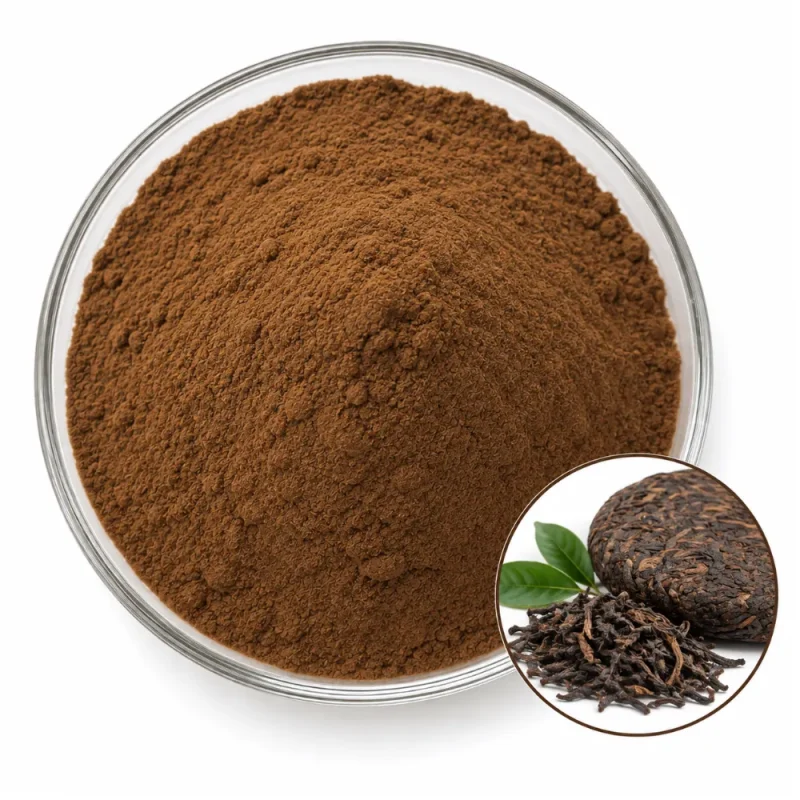
Camellia sinensis Identity & Plant Part
The botanical entity is Camellia sinensis (L.) Kuntze, family Theaceae. The part used is the leaf; stems, flowers and seeds are not part of this pu-erh tea extract. Pu-erh names a processing route, not a separate species: the dried leaf is aged or piled so that microorganisms transform its polyphenols, which gives a darker, rounder liquor than green tea. Raw pu-erh matures slowly with age, while ripe pu-erh is produced by accelerated piling of moistened leaf. Pu-erh is traditionally tied to Yunnan large-leaf tea plants.
Buyers should not confuse pu-erh tea with black tea, which is oxidized by the leaf’s own enzymes rather than by microbial fermentation. A pu-erh tea extract is also not a green tea extract with a different label, because the fermentation step changes the polyphenol profile before extraction begins.


