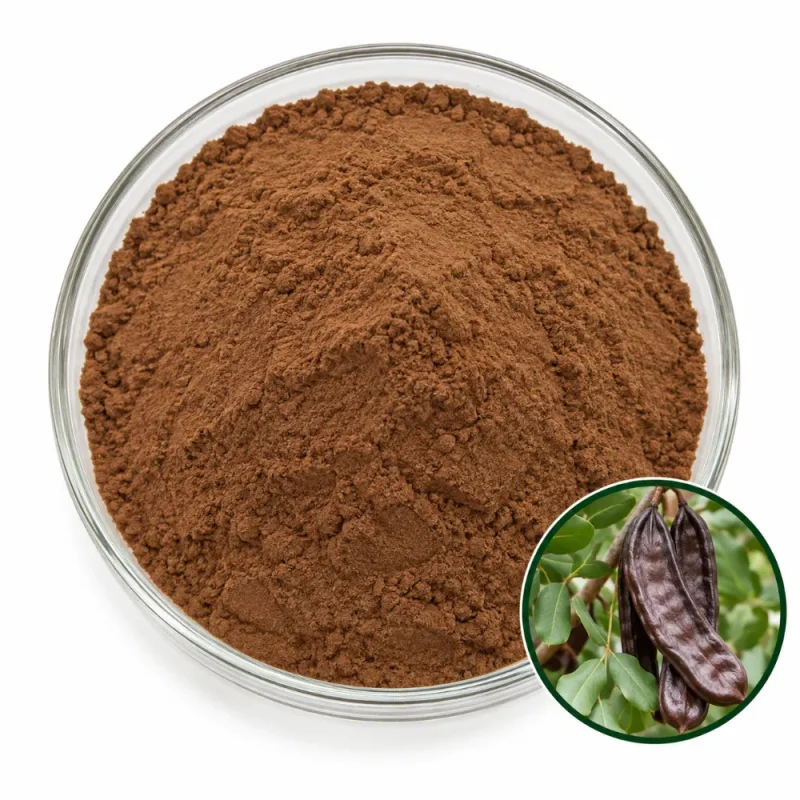
Carob Extract Powder

The fruit pod of Ceratonia siliqua, the carob tree of the Mediterranean, is the only plant material behind this extract. The pods are extracted in water, concentrated and dried to a light brown powder. The seeds, which are the source of locust bean gum, are not part of the material.

This carob extract is a 10:1 ratio extract with no marker assay and no pinitol or polyphenol figure. The powder is milled to 80 mesh and disperses in water. A pure D-pinitol grade, found in carob pods, is listed as a separate product.

Ceratonia siliqua Pod Source & Identity

The botanical entity is Ceratonia siliqua L., an evergreen tree of the legume family, Fabaceae, grown around the Mediterranean for its long, leathery brown pods. The part used is the pod, whose sweet pulp is the traditional cocoa substitute. The hard seeds inside, which yield locust bean gum, and the leaves are not part of this carob extract.

Carob pod and carob seed are very different raw materials. The pod is sugary, with tannins and polyphenols, while the seed is rich in galactomannan gum. Carob should also not be confused with the South American locust bean-like pods of Hymenaea, or with chocolate, which comes from Theobroma cacao.

Sugars, polyphenols and tannins, and the cyclitol D-pinitol are the main constituent families of the pod.

Carob Extract vs Pure D-Pinitol

FormWhat It IsChoose It When
10:1 Carob Pod ExtractWater extract of the whole pod, ratio-definedA whole-pod extract profile without a marker figure is needed
D-PinitolSingle-compound grade of the cyclitol found in carob podThe brief names D-pinitol as the ingredient

The 10:1 ratio measures pod going into the extract. It is not a pinitol assay. A water extract of the pod holds sugars, tannins and polyphenols together with pinitol, so its character is sweet and mildly astringent, unlike a purified single compound.

For carob, the two rows are two specification bases. The ratio extract is defined by species, part and solvent, and the single-compound grade is defined by one chemical.

Typical Specifications

Specification ItemProduct Information
Latin NameCeratonia siliqua
Plant PartFruit & Berry
ProcessingWater Extraction
Common NameCarob, Locust Bean Pod, St John’s Bread
Ingredient TypeRatio Extract
Extract Ratio10:1
AppearanceLight Brown powder
Solubility / DispersibilityWater Dispersible
Quality Parameters
Moisture (LOD)≤5.0%
Total Ash≤5.0%
Particle Size80 mesh
Heavy MetalsLead ≤2 ppm · Arsenic ≤1 ppm · Cadmium ≤1 ppm · Mercury ≤0.1 ppm
MicrobiologyTPC ≤1,000 cfu/g · Yeast & Mold ≤100 cfu/g · E. coli Negative · Salmonella Negative/25 g
Shelf Life24 months in unopened original packaging, cool and dry storage

Application Areas

Capsules for a Sugary Extract

Carob extract fills hard capsules after a flow check at 80 mesh. The sugar content of the pod makes the dried powder sticky and hygroscopic, so fill in a controlled-humidity room and keep the hopper covered. A glidant is usually needed because the powder bridges.

Tablets with Anti-Caking Care

Tablets from a sugar-rich extract soften quickly. Use a dry binder, an anti-caking agent and a film coat that acts as a moisture barrier, then compare hardness at pressing and after a week of storage in the final pack.

Cocoa-Style Drink Sticks

Carob has a long use as a caramel-like, cocoa-like flavour, so sticks for warm drinks suit the extract. It disperses to a tan, mildly sweet liquid. Pair it with milk-style, vanilla or cinnamon flavours, and test sweetness at the planned dose, since the pod’s own sugars count toward the taste.

Sachet Blends

Sachets carry carob extract in a fibre carrier. Sieve the powder into the carrier before filling, because sugary powders form soft lumps when poured, and check dose uniformity at the start, middle and end of the filling run.

Bar and Gummy Premixes

Mix the carob extract into the dry base of a bar before the binder warms it. Its sweet, caramel-like note fits oat, nut and date bars, and its tannin content gives a mild astringency that fades in a sweetened base.

Formulation Notes

Carob extract is a light brown powder with a sweet, caramel-like smell. In water it forms a tan, mildly viscous dispersion, because the soluble sugars and pectin-like matter of the pod hold water. The tannin fraction can bind to proteins, so milk and soy drinks should be trialled for haze or sediment.

Dissolution trials go better when the carob powder is wetted first and then diluted under stirring. Dry blending works best when the carob extract is first rubbed through a sieve with some of the carrier. For carob, keep opened drums sealed between uses, shelved off the floor and away from steam and heat.

Packaging & Commercial Supply

Essencefield supports product evaluation, formulation trials, commercial orders, and ongoing ingredient supply. Packaging, storage, and shipping arrangements are determined by product characteristics, order quantity, stability requirements, and destination-market needs.

Supply ItemGeneral Information
SampleAvailable upon request for formulation, testing, and supplier evaluation
Order Quantities100 g · 1 kg · 5 kg · 25 kg · 100 kg · 500 kg · Bulk
Sample Lead TimeTypically 5–7 days after sample confirmation
Production Lead TimeTypically 15–30 days after order and specification confirmation
PackagingSuitable protective inner packaging with bags, cartons, drums, or other appropriate outer packaging
StorageStore in tightly sealed, suitable protective packaging in a cool, dry environment. Protect from moisture, heat, and direct sunlight. Specific storage conditions follow the approved product specification.
DocumentationCOA · Product Specification · TDS · SDS · Applicable declarations (as applicable)

Final order quantities, lead times, packaging, documentation, and shipping arrangements are confirmed according to the selected product and commercial requirements.

Request Ingredient Specifications & Quote

Share your target specification, application, quantity, and documentation needs. We’ll help confirm suitable options, samples, and commercial supply details.