
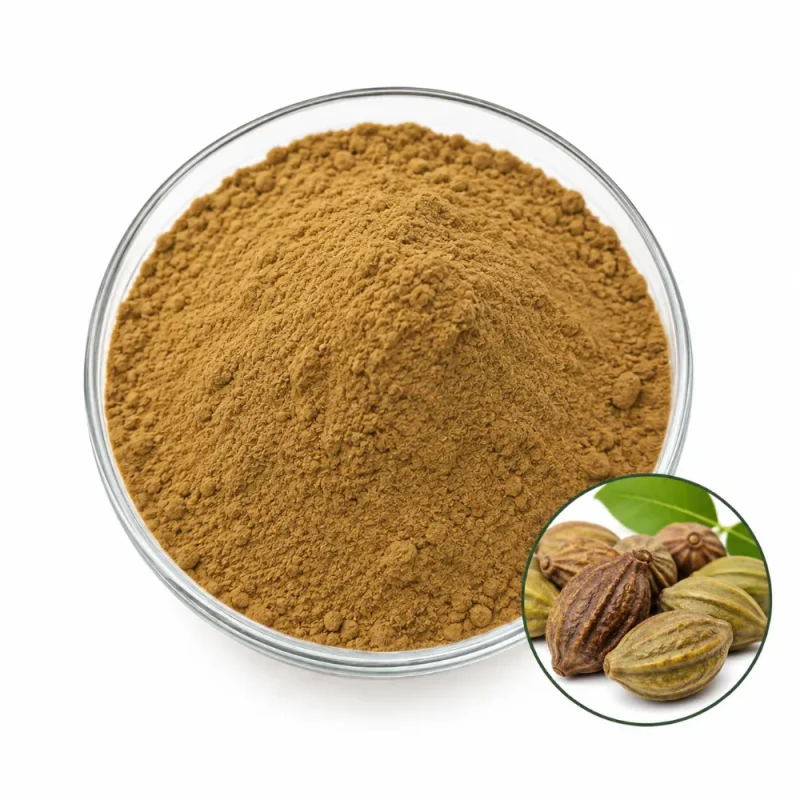
Chebulic Myrobalan Identity & Plant Part
Terminalia chebula Retz. is a tree of the Combretaceae, and the part used is its dried fruit, called haritaki in Indian trade and chebulic myrobalan in English. Leaves, bark and wood are not used. Other myrobalans are sold under similar names: beleric myrobalan is Terminalia bellirica, and amla is Phyllanthus emblica, a different family. Together with chebula, those two fruits make up triphala. The chebula fruit is rich in hydrolyzable tannins such as chebulagic and chebulinic acids, plus gallic acid and related phenolic compounds. They are named as a family only, because this extract carries no tannin claim.
Chebula fruit is sold in several maturity grades, and the master data describes this product only as the fruit, so the extract is specified by part and ratio rather than by grade.


