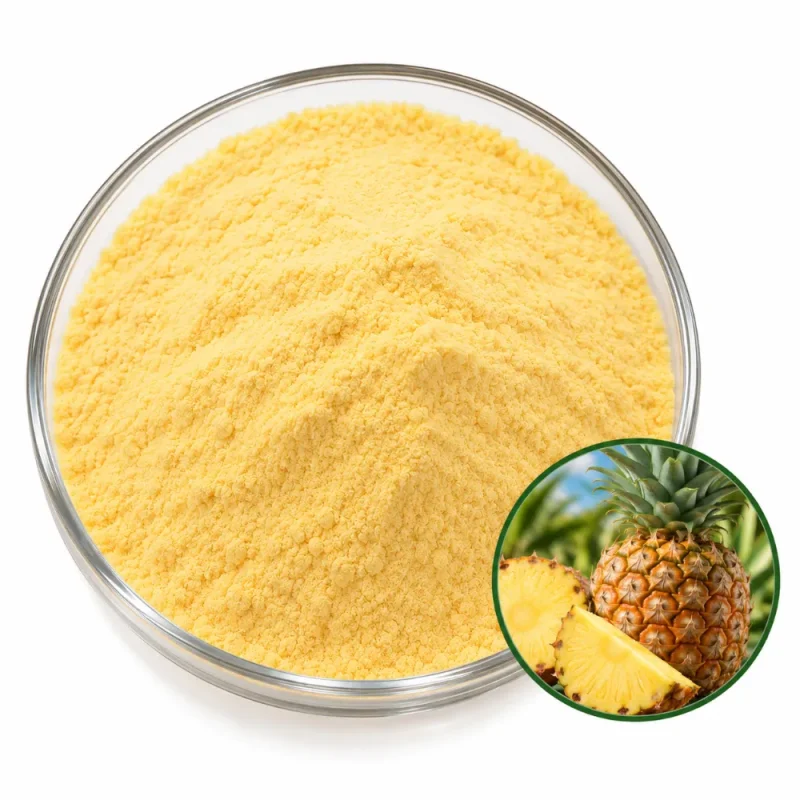
Pineapple Juice Powder Processing
The species is Ananas comosus (L.) Merr., a low rosette plant of the bromeliad family (Bromeliaceae) native to South America. The fruit is a fused cluster of many berries, which is why its surface is scaled. Pineapple is not related to the apple or the pine, although the name borrows from both. The part used here is the ripe fruit flesh and its juice.
The raw material is pineapple juice concentrate. The flesh is crushed and pressed, coarse fiber and core material are strained out, and the juice is concentrated by evaporation. Maltodextrin is added as the carrier before atomization in a spray dryer. The carrier makes the powder soluble and free-flowing and softens the sharp acidity of the pressed juice.
Pineapple juice is acidic and sugar-rich, and solids of that kind stick to dryer walls, so a juice powder from this fruit generally needs a generous carrier share. That is a general feature of acidic fruit juices and not a value stated for this product.
Fruit ripens only on the plant and does not sweeten after picking, so quality for juicing depends on harvest at full color. Common commercial cultivars differ in acidity and sweetness, and the concentrate is a blend, so the powder is described by flavor and not by cultivar name.
Bromelain sits mainly in the stem and core, which are excluded here, and in lower amounts in the flesh. That is one more reason the juice route gives a milder, more predictable ingredient than a whole-fruit or stem-derived material, and why the powder is sold for taste and acid alone.