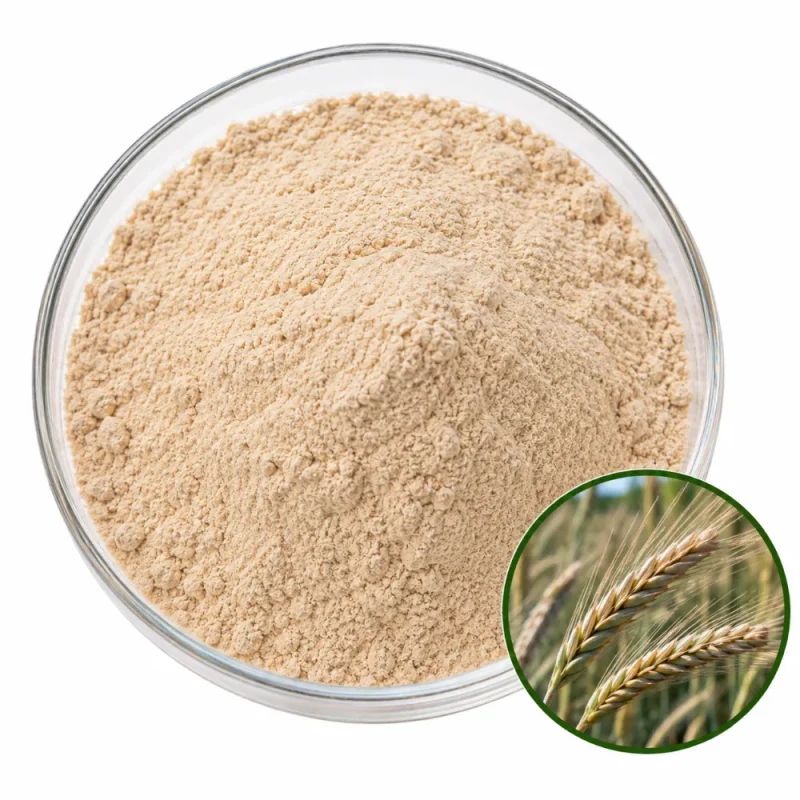
Wheat Beta-Glucan Identity
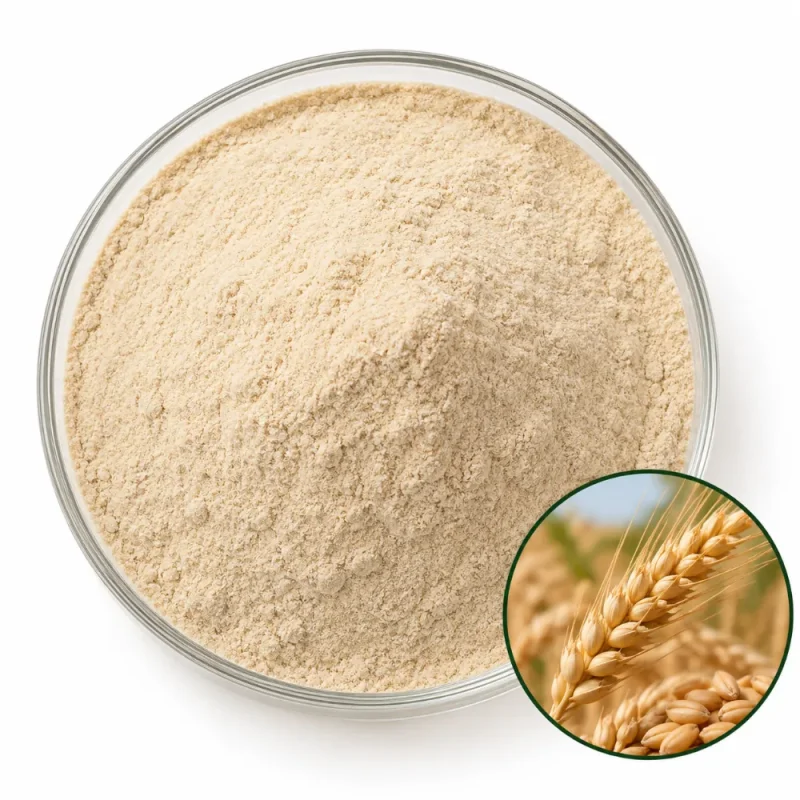
Wheat beta-glucan powder is made from the grain of Triticum aestivum L., common bread wheat. The glucan occurs in the cell walls of the starchy endosperm and in the aleurone layer, in much smaller amounts than in barley or oats, and the purified powder is built from this minor wall component. Wheat is better known for its protein and starch than for its glucan.
The wall of wheat endosperm is dominated by arabinoxylan, with β-glucan as a secondary partner. The β-glucan has the same mixed-linkage structure as in other cereals, with β-(1→4) runs of three or four glucose units separated by single β-(1→3) bonds. Because arabinoxylan, starch and protein co-extract with it, the purification has to remove far more material than in a barley product.
Extraction in warm water, enzyme treatment to remove starch, protein and arabinoxylan, and ethanol precipitation yield a fraction in which the glucan is the majority component. Wheat β-glucan is therefore a concentrate with very little in common with flour or bran, in which the glucan is a minor share of a starch-rich mass.
Three related wheat products work differently. Whole Wheat Powder is the milled grain, Wheat Peptide Powder is an enzymatic hydrolysate of wheat protein, and Wheatgrass Extract Powder comes from the young leaf, a different part of the plant.