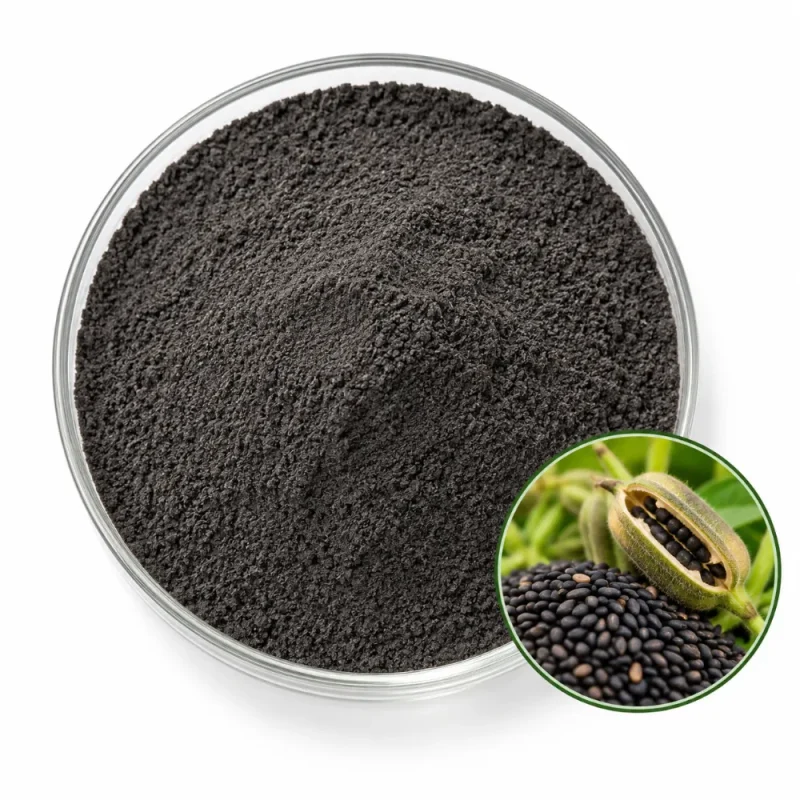
Black Sesame Raw Material Profile
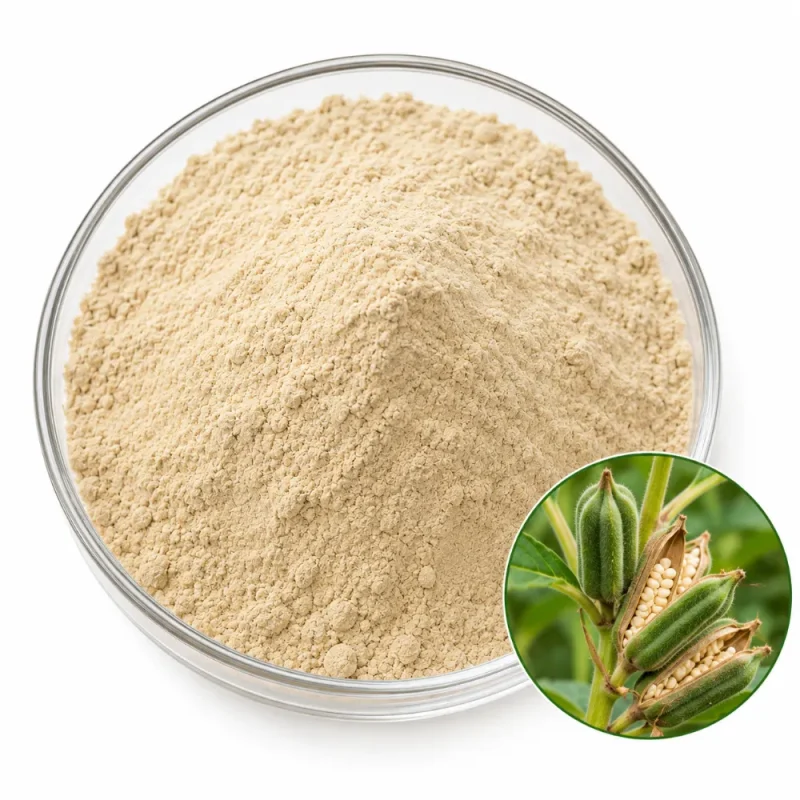
Black sesame powder is made from the seed of Sesamum indicum L., the cultivated sesame, in its black-seeded form. The seed is the raw material: the pod, stalk and leaf are not used. Sesame is native to warm regions of Africa and Asia and is grown as an oilseed, and black and white seeds belong to the same species and differ in seed-coat pigment and in flavor intensity.
The black color sits in the seed coat. It comes from dark pigments that survive roasting and milling, which is why black sesame powder appears dark brown or grey-brown and not the creamy tone of powders from white seed. The coat also carries more fiber than the kernel, so black seed gives a coarser, more fibrous powder than hulled white seed does.
Sesame is harvested as the pods dry on the plant and split, and the seeds are cleaned of pod material, stones and dust before milling. Black seed is often sold unhulled, so it carries the full seed coat, and cleaning removes sand and pod fragments that would otherwise show as grit in the powder.
A large share of a sesame seed is oil, and the seed also holds protein, fiber and a group of lignans, the best known being sesamin and sesamolin, which are the cause of the unusual oxidative stability of sesame oil. The powder keeps the oil in the matrix, so its handling is closer to that of a nut paste than of a cereal flour.