
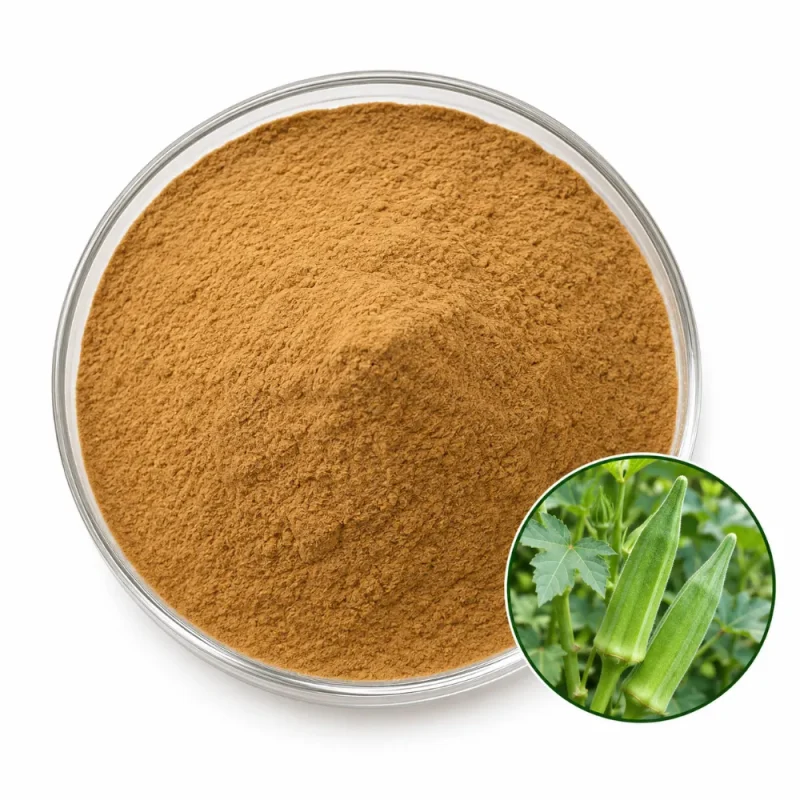
Okra Fruit Source & Identity
The plant is Abelmoschus esculentus (L.) Moench, a tall annual of the mallow family, also sold as lady’s finger and gumbo. Its old botanical synonym, Hibiscus esculentus, still appears in older catalogs. The part used here is the fruit, the immature pod picked while it is still tender. The seeds are sold separately as a seed powder, and the leaves, flowers and roots are not used. A different species, Abelmoschus manihot, is a flower-based herb of Chinese trade and should not be mixed up with the vegetable. Okra pods contain mucilage polysaccharides of the pectin type, flavonoid glycosides, phenolic acids and fiber. No figure is attached to any of them. Okra pods are eaten as a vegetable in many cuisines, but this okra powder is a concentrated ingredient, not a dried vegetable. The pod’s slimy texture comes from the mucilage, which is the main reason okra behaves differently from other fruit powders in water.


