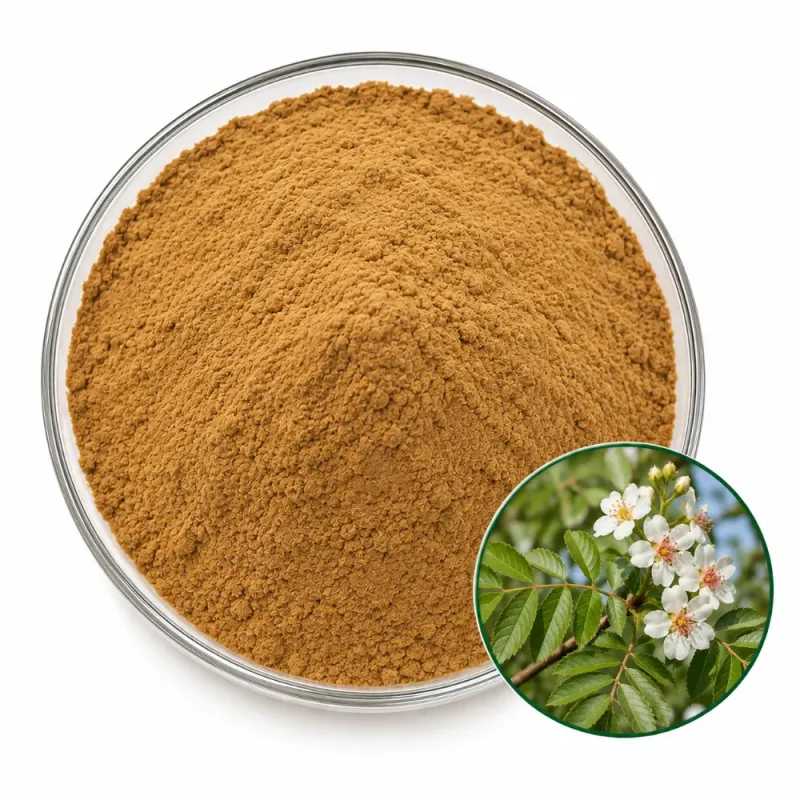
Yellowhorn Extract Powder

Yellowhorn extract is made from the fruit of Xanthoceras sorbifolium, the Chinese goldenhorn shrub, and not from its leaves, flowers or the oil pressed from the seed kernel. Water extraction concentrates the soluble fruit fraction. The liquor is then dried to a light brown powder.

The extract ratio is 10:1; the powder is 80 mesh and water dispersible. This yellowhorn extract carries no saponin percentage, and there is no powder or standardized sibling of the same fruit in the range to compare it with.

Xanthoceras sorbifolium Fruit Source & Identity

The botanical entity is Xanthoceras sorbifolium Bunge, a deciduous shrub or small tree of the soapberry family, Sapindaceae, native to northern China, which carries showy white flowers and a large, thick-walled fruit capsule. The part used is the fruit, as recorded in the specification. Leaves, flowers, twigs and the pressed seed oil are not included in this yellowhorn extract. The name is spelled with different endings in trade documents, sorbifolium or sorbifolia, and the shrub is called goldenhorn or wen guan guo. The fruit husk and its stalk are known for triterpenoid saponins, and the seed kernel is rich in oil, so the exact part matters.

The tree flowers in spring, and the large, thick-walled fruit capsules split open when ripe, releasing dark seeds.

What 10:1 Means for Yellowhorn

The 10:1 figure describes how much dried fruit goes into the extract and is not a content of any one compound. A water extraction takes up saponins, sugars and phenolics and leaves most of the oil from the kernel behind, so the powder behaves like a soluble herbal solid and not like a fatty seed meal. The range holds no yellowhorn powder and no standardized grade, which makes the ratio extract the one form on offer. Few suppliers list a dried yellowhorn extract at all, so a buyer picks it when the formula names the plant and needs a dispersible, free-flowing solid.

Typical Specifications

Specification ItemProduct Information
Latin NameXanthoceras sorbifolium
Plant PartFruit & Berry
ProcessingWater Extraction
Common NameYellowhorn, Goldenhorn, Wen Guan Guo
Ingredient TypeRatio Extract
Extract Ratio10:1
AppearanceLight Brown powder
Solubility / DispersibilityWater Dispersible
Quality Parameters
Moisture (LOD)≤5.0%
Total Ash≤5.0%
Particle Size80 mesh
Heavy MetalsLead ≤2 ppm · Arsenic ≤1 ppm · Cadmium ≤1 ppm · Mercury ≤0.1 ppm
MicrobiologyTPC ≤1,000 cfu/g · Yeast & Mold ≤100 cfu/g · E. coli Negative · Salmonella Negative/25 g
Shelf Life24 months in unopened original packaging, cool and dry storage

Application Areas

Saponin-Aware Capsules

Saponins are surface-active, so the yellowhorn extract can wet unevenly in a humid tablet press or filling room. A glidant and a dry room improve flow, and capsules should be sealed promptly after filling. A weight check per lot catches density changes between fruit lots.

Foam-Managed Drink Sticks

Powder sticks carry the extract with citrus, honey or tea flavors. The solution foams when stirred, so a stick for shaker bottles should be poured gently into the liquid, and weight-based dosing keeps the hazy tan cup consistent.

Nutty-Tone Bars

For bars, the extract is mixed into the powders ahead of the warm binder. Nut, cereal and honey bases match its tone, and the fine powder spreads through the matrix more evenly than milled husk, which would carry woody particles.

Pale Brown Gummies

Gummies take the extract after the main cook, because heat deepens its brown color and saponins can foam in the cooking pot. Caramel and apple flavors suit the tone, and the dispersible solid keeps the gel free of specks.

Formulation Notes

The yellowhorn extract is a light brown powder with a faint woody-sweet odor and a mildly bitter, astringent taste. Stirred in water, it forms a hazy tan liquid with a foam head, since saponins are natural surfactants and polysaccharide fragments remain partly suspended. Exposure to humid air is the main storage risk for the powder, leaving a sticky surface layer on open containers.

Add the yellowhorn extract slowly below the liquid surface to limit foam, which slows deaeration and filling on drink lines. Weigh from a sieved portion, and fold it into a portion of the carrier ahead of the final mix. Because few reference specifications exist for this fruit, compare each lot with a retained sample for color, foam and taste. Following each weighing, reseal the liner against the powder and keep the drum on a dry pallet. A color and foam check against a retained sample is advisable for each lot, because reference specifications for this fruit are scarce.

Packaging & Commercial Supply

Essencefield supports product evaluation, formulation trials, commercial orders, and ongoing ingredient supply. Packaging, storage, and shipping arrangements are determined by product characteristics, order quantity, stability requirements, and destination-market needs.

Supply ItemGeneral Information
SampleAvailable upon request for formulation, testing, and supplier evaluation
Order Quantities100 g · 1 kg · 5 kg · 25 kg · 100 kg · 500 kg · Bulk
Sample Lead TimeTypically 5–7 days after sample confirmation
Production Lead TimeTypically 15–30 days after order and specification confirmation
PackagingSuitable protective inner packaging with bags, cartons, drums, or other appropriate outer packaging
StorageStore in tightly sealed, suitable protective packaging in a cool, dry environment. Protect from moisture, heat, and direct sunlight. Specific storage conditions follow the approved product specification.
DocumentationCOA · Product Specification · TDS · SDS · Applicable declarations (as applicable)

Final order quantities, lead times, packaging, documentation, and shipping arrangements are confirmed according to the selected product and commercial requirements.

Request Ingredient Specifications & Quote

Share your target specification, application, quantity, and documentation needs. We’ll help confirm suitable options, samples, and commercial supply details.