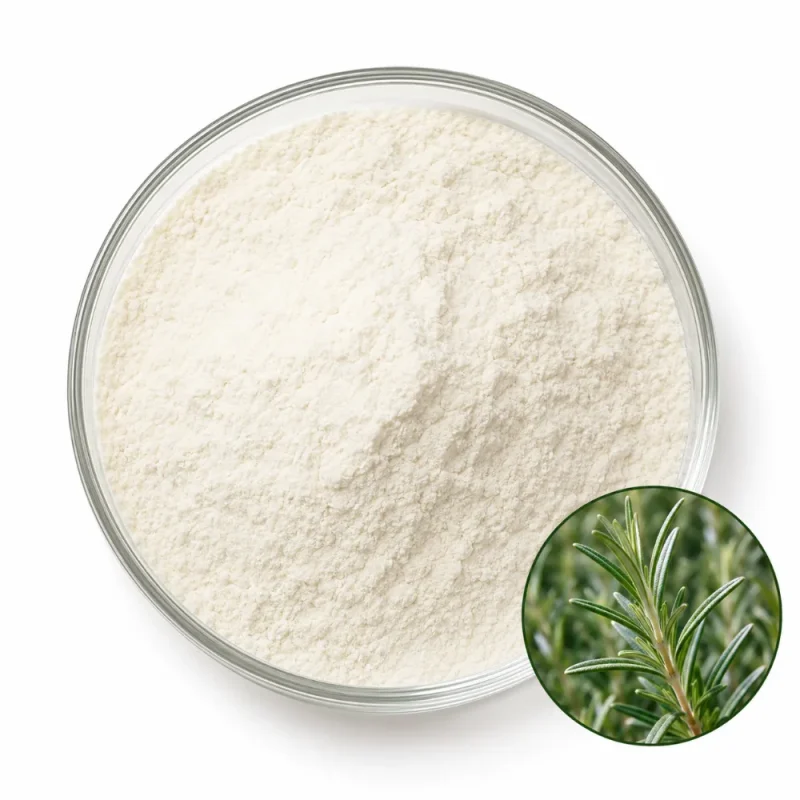
Rosmarinic Acid Chemical Identity
Rosmarinic acid has the molecular formula C18H16O8 and a molecular weight of 360.3. It is built from two phenylpropanoid units: caffeic acid supplies one catechol ring and a double bond, while 3,4-dihydroxyphenyllactic acid supplies the second ring and the free carboxyl group. The molecule has one stereocenter, the (R) form is natural, and the trans double bond of the caffeoyl portion is the stable one.
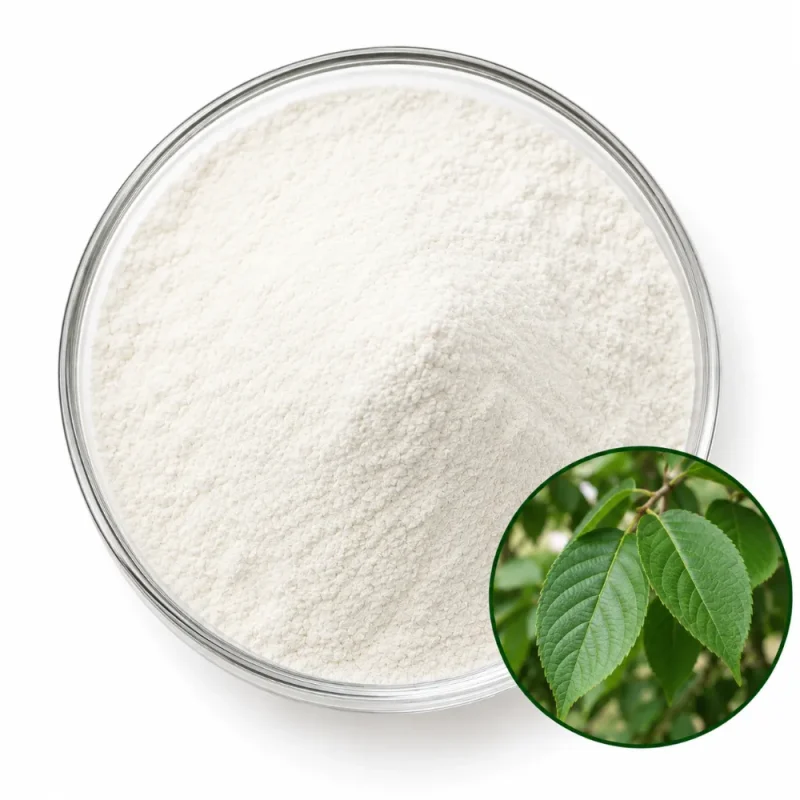
The natural source is the leaf of Salvia rosmarinus Spenn., the species formerly called Rosmarinus officinalis. Rosmarinic acid is not unique to rosemary. It occurs across the mint family, including sage, lemon balm, basil and perilla, so the botanical source and plant part belong beside the name. Rosemary is supplied in several forms: Rosemary Extract 5–20% Carnosic Acid, the 10:1 Rosemary Extract Powder and the milled Rosemary Powder. The carnosic acid extract is defined by a lipophilic diterpene and not by this water-soluble phenolic acid, and the two are not interchangeable.