Active compounds are botanical constituents associated with biological activity, while marker compounds are selected for identification, measurement or quality control. A constituent can play both roles, but its measured concentration does not by itself establish the biological efficacy of the whole extract. For ingredient buyers, the distinction shapes how specifications are read, how standardized grades are compared and which quality documents are needed before approval.
An extract labeled “95% curcuminoids” or “80% silymarin” looks straightforward, yet the meaning of that percentage depends on which compounds were measured, by which method, and on the characteristics of the finished ingredient.
Key takeaways
- Active compounds are associated with biological effects; markers provide measurable information for identification, standardization or quality control. The roles can overlap.
- A higher marker percentage does not automatically mean greater biological activity, better quality or clinical efficacy.
- Reliable comparisons need defined analytes, appropriate methods, confirmed botanical identity and batch-specific evidence.
What Makes a Botanical Compound Active?
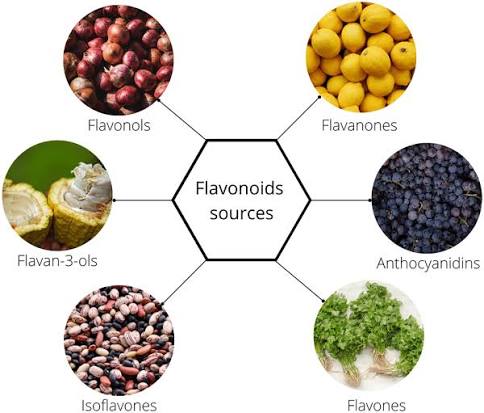
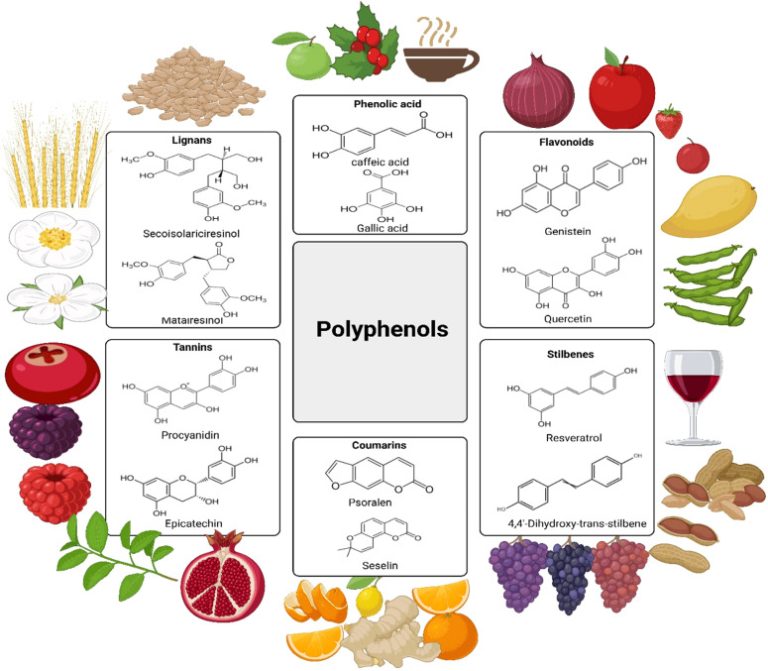
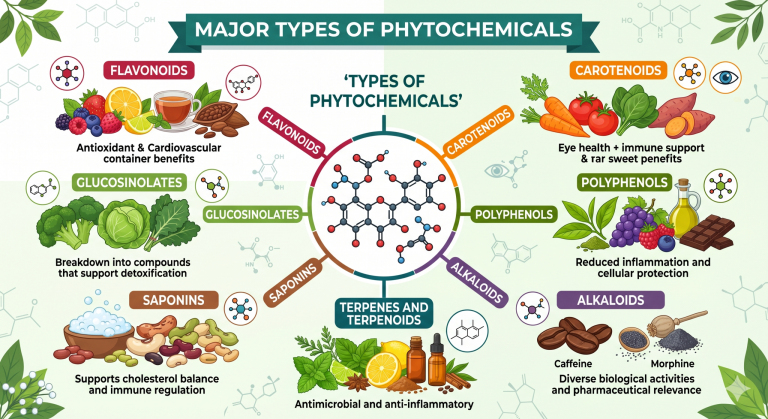
An active compound is a constituent associated with a biological effect. In the scientific literature, bioactive constituent is used broadly for compounds that show activity under experimental conditions, while some herbal medicine frameworks reserve active compound for constituents with stronger evidence linking them to the activity of the complete preparation. Constituents investigated for activity include flavonoids, alkaloids, phenolic acids, terpenoids, saponins and other secondary metabolites — for example curcuminoids from turmeric, catechins from green tea and withanolides from ashwagandha.
Biological Activity Is Not Clinical Efficacy
Activity is studied through biochemical assays, cell experiments, animal studies and human trials, and each provides a different kind of evidence. A compound with antioxidant activity in vitro has not necessarily been shown to benefit health in humans; absorption, metabolism, dose and formulation all affect whether a lab finding is relevant in practice.
Extracts also contain many constituents that may contribute to their overall properties, and plant origin, harvest conditions, extraction solvent and processing all change composition. Concentrating one substance can alter an extract without improving its overall performance. For manufacturers, the useful question is whether a given constituent and concentration are relevant to the intended formulation.
What Is a Marker Compound?
A marker compound is a chemically defined constituent, or group of constituents, chosen to support identification, quantitative analysis or quality control. Commercial extracts are usually specified by selected phytochemicals rather than their full composition, and marker measurements give a practical way to set defined analytical requirements: confirming a batch meets its declared assay, identifying characteristic chemical features, or tracking consistency between lots. A single marker, however, cannot necessarily establish authenticity, overall composition or efficacy.
Why Marker Selection Matters
The World Health Organization’s guidelines for selecting marker substances set out principles for choosing chemical indicators for herbal medicine quality control. Selection should reflect the botanical material, the analytical objective and the reliability of the procedure. The most abundant constituent is not always the most informative: a compound present in several related species may suit quantitative testing but cannot confirm identity, so a marker assay may need to be supplemented with chromatographic fingerprinting or other identification methods. Establish the purpose of a measurement before using it to compare commercial ingredients.
How Active and Marker Compounds Differ
The difference concerns biological relevance versus analytical function, and the categories are not mutually exclusive.
| Comparison | Active Compound | Marker Compound |
|---|---|---|
| Primary role | Biological activity | Analytical measurement |
| Main purpose | Understanding biological effects | Identification, assay, or consistency |
| Biological relevance | Central to the designation | Not necessarily established |
| Typical evaluation | Biological studies and supporting evidence | Chemical analysis and suitable analytical procedures |
| Quality-control function | May support activity-related specifications | Provides measurable quality parameters |
| Main limitation | Experimental activity may not establish clinical efficacy | Marker content may not predict biological activity |
Curcumin, for instance, is investigated for biological activity and also serves as an analytical target in turmeric ingredients. Other constituents are chosen mainly because they are characteristic, stable or easy to measure, even when their biological contribution is uncertain.
How to Determine a Compound’s Role
- What is being measured? An individual molecule, a defined group of related compounds, or a broader chemical class.
- What is known about its activity? Separate laboratory observations from evidence linking the constituent to a particular effect.
- Why is it in the specification? Quantitative standardization, identification, or another quality-control requirement.
These questions keep buyers from assuming every quantified phytochemical is a clinically established active ingredient.
Active Markers and Analytical Markers
The European Medicines Agency’s guideline on herbal medicinal-product quality distinguishes two kinds of marker within its regulatory framework.
Active Markers
Active markers are constituents or groups generally accepted to contribute to therapeutic activity. Measuring them helps characterize a preparation when the link between constituent and activity is recognized, although an active marker need not account for every property of the complete preparation.
Analytical Markers
Analytical markers are chosen for analytical purposes irrespective of any pharmacological activity, and are particularly useful when the constituents responsible for activity are not well characterized. The label describes the purpose of measurement; it does not prove the marker is biologically inactive.
Regulatory and Commercial Terminology
The EMA also distinguishes standardized, quantified and other herbal preparations within its medicinal-product framework, whereas commercial suppliers often use standardized extract more broadly for material supplied against an agreed constituent specification. These meanings are not interchangeable: a commercial extract that meets a marker assay does not automatically satisfy a medicinal-product classification. The applicable standard, destination market and intended use should guide interpretation — particularly when a supplier presents a marker percentage as evidence of potency. An assay describes what was measured; its biological significance has to be established separately.
Does More Marker Content Mean Greater Biological Activity?
Not necessarily. A higher marker percentage means more of the measured analyte under the stated test conditions, but it does not by itself establish stronger activity or clinical efficacy. That depends on whether the constituent contributes to the intended effect and how well the relationship has been studied.
What Scientific Research Shows
In a peer-reviewed PLOS ONE study by Guillermo G. Ruiz and colleagues, researchers examined whether commonly used marker compounds could predict measured biological activity across eight botanical materials, and found that marker concentrations did not consistently predict the in vitro responses. The study illustrates the limits of single markers as universal predictors of bioactivity. It did not establish clinical efficacy or inefficacy in humans, nor does it suggest standardization lacks value; it shows that chemical consistency and biological effectiveness need different types of evidence.
Does a Matching Marker Percentage Establish Clinical Equivalence?
A commercial extract with the same marker percentage as an ingredient used in a clinical study is not necessarily equivalent to that preparation: species, plant part, solvent, process, chemical profile, dose and formulation may all differ. Two ashwagandha extracts labeled 5% total withanolides can contain different proportions of individual withanolides or come from different extraction processes, so matching the total assay does not establish equivalent outcomes. The U.S. FDA’s Botanical Drug Development guidance discusses the difficulty of establishing quality and consistency for complex botanical preparations; although it addresses drug development rather than all supplement ingredients, its emphasis on comprehensive characterization explains why marker percentages alone cannot establish equivalence.
When Higher Marker Content Is Useful
A higher assay is useful when a formulation needs a defined constituent concentration or a supplier must meet an established technical specification — a concentrated ingredient can reduce the powder needed to deliver a set amount of analyte in a capsule. Raising one constituent may, however, change the broader phytochemical profile, physical properties or processing needs, so interpret marker targets alongside composition, manufacturing conditions and evidence relevant to the application.
How Markers Are Selected, Measured, and Standardized
A meaningful marker specification depends on both the constituent chosen and the procedure used to measure it; the goal is dependable analytical information about the material.
Selecting a Suitable Marker
| Selection Factor | Why It Matters |
|---|---|
| Botanical relevance | The marker should provide information about the intended botanical material |
| Biological relevance | Its relationship to activity should be understood where applicable |
| Analytical specificity | The method should distinguish the intended analyte sufficiently |
| Reference standards | Suitable standards support reliable measurement |
| Stability | The marker should remain suitable during relevant processing and storage |
| Reproducibility | Results should be dependable under defined testing conditions |
A constituent suited to quantitative standardization may not be enough for authentication. Where several constituents matter, a multi-marker assay gives more information; where identity or adulteration risk is significant, a characteristic chromatographic fingerprint and complementary methods may be appropriate.
Comparing Common Analytical Methods
| Method | Typical Application | Main Consideration |
|---|---|---|
| HPLC | Quantification of individual compounds or defined groups | Analyte definition and separation specificity |
| HPTLC | Botanical identity and fingerprint comparison | Characteristic chemical patterns |
| LC-MS | Compound identification, confirmation, and suitable quantitative analysis | Method suitability and reference materials |
| UV-Vis | Selected spectrophotometric assays | Potential interference from related compounds |
| Chromatographic fingerprinting | Broader compositional comparison | Complements specific quantitative assays |
HPLC is widely used to separate and measure selected phytochemicals; UV-Vis may suit certain compound-group assays but with different specificity. Total tea polyphenols by UV and individual EGCG by HPLC are different analytical targets, so before comparing percentages, confirm the results refer to equivalent analytes, compatible procedures and the same reporting basis.
Why Method Validation and Sampling Matter
Even two HPLC results are not automatically comparable: sample preparation, chromatographic conditions, reference standards, calibration and calculation can all shift reported values. The ICH Q2(R2) guideline on analytical procedure validation provides a recognized framework covering specificity, accuracy, precision and range; its regulatory scope is mainly pharmaceutical, so it should not be described as mandatory for every botanical food ingredient. Sampling matters too — a good method cannot compensate for an unrepresentative sample, so homogeneity, sampling procedure and batch identification should be considered whenever assay results support qualification or release.
Standardization, Stability, and Extract Ratios
Standardization helps control selected characteristics despite natural variation in raw material. An extract ratio describes the relationship between botanical input and extract output under a defined convention and does not establish the concentration of any constituent, so a 10:1 extract and a grade standardized to 10% of a marker describe different properties. Marker stability also matters: green tea catechins, for example, can change under unfavorable pH, temperature and oxygen, so a passing release assay does not guarantee unchanged levels in every storage or formulation environment. Where stability is important, review storage requirements and supporting data. For more on extraction variables and commercial standardization, see our Processing & Standardization service.
What Real Extract Specifications Tell Buyers
Published grades from Essencefield Botanicals show why the identity of the measured constituent matters as much as its percentage. These are commercial specifications, not verified results for particular lots.
| Ingredient | Published Specification | Analytical Target |
|---|---|---|
| Turmeric Extract | ≥95% Total Curcuminoids, HPLC | Curcuminoid group |
| Curcumin 98% | ≥98% Individual Curcumin, HPLC | Single compound |
| Green Tea Extract | 98% Polyphenols (UV), 80% Catechins (HPLC), 50% EGCG (HPLC) | Different groups and individual EGCG |
| Milk Thistle Extract | 80% Silymarin, UV | Silymarin assay |
| Ashwagandha Root Extract | 2.5%, 5%, or 10% Total Withanolides, HPLC | Withanolide group |
Specification Limits vs. Typical Values vs. Batch Results
| Information Type | Meaning | Example |
|---|---|---|
| Specification limit | Agreed acceptance criterion for a parameter | ≥95% Total Curcuminoids |
| Typical constituent profile | Expected or representative composition | Characteristic proportions of individual curcuminoids |
| Actual batch result | Measurement associated with an identified lot | The assay value reported on its COA |
A specification sets an acceptance requirement, a typical profile is descriptive, and a batch result documents a specific lot, so the three should not be treated as interchangeable.
Turmeric Extract vs. Curcumin: Total Assay and Individual Purity
Turmeric (Curcuma longa L.) contains several related curcuminoids, mainly curcumin, demethoxycurcumin and bisdemethoxycurcumin. Our Turmeric Extract Powder is specified at not less than 95% total curcuminoids by HPLC, with a published typical profile of about 70–80% curcumin, 15–25% demethoxycurcumin and 2.5–6.5% bisdemethoxycurcumin. Those ranges describe a representative distribution and are not batch-release limits unless they appear in the approved specification. Our Curcumin 98%, by contrast, is defined by at least 98% individual curcumin, also by HPLC. The percentages are close, but one describes a combined fraction and the other a single molecule, which affects constituent calculations, related-compound profiles and grade selection; the choice should follow the required composition rather than a comparison of 95 with 98.
Green Tea: Polyphenols, Catechins, and EGCG
Our Green Tea Extract Powder (Camellia sinensis) is characterized by three separate measurements: tea polyphenols, a broad group; total catechins, a narrower class; and EGCG, an individual catechin. They are related but not interchangeable — a high total-polyphenol value does not establish EGCG content or the distribution of other catechins. Caffeine content and formulation needs also matter when choosing between high-marker, low-caffeine and water-compatible grades.
Milk Thistle: Why UV and HPLC Results Differ
Milk thistle (Silybum marianum) contains silymarin, a flavonolignan complex including silybin A and B, isosilybin A and B, silychristin and silydianin. Our Milk Thistle Extract Powder lists a conventional 80% silymarin specification by UV, while its product information also describes HPLC-standardized materials commonly positioned around 45–50% total silymarin. Because UV and HPLC differ in selectivity, constituent coverage, reference standards and calculation, an 80% UV result cannot be read as containing more of the same defined constituents than a 50% HPLC result. Confirm the analytical basis and constituent profile before approving an alternative grade.
Ashwagandha: Total Withanolides and Plant-Part Identity
Our Ashwagandha Root Extract (Withania somnifera) is offered in mature-root grades of 2.5%, 5% and 10% total withanolides, with HPLC as the primary assay. These figures describe a constituent group rather than the purity of one compound, and two 5% materials may still differ in individual withanolide distribution, extraction method and carrier. Plant part matters as well: root-derived ingredients should not be treated as equivalent to preparations containing leaves or other aerial parts. An assay percentage becomes meaningful only when its chemical target and analytical basis are clear, and the same applies when comparing suppliers.
How to Evaluate a Botanical Extract Specification
A reliable comparison starts by confirming that the offered materials meet the same technical requirements, with the marker assay read alongside identity, broader composition and other quality evidence.
What Can a Marker Assay Actually Establish?
| Buyer Question | Appropriate Evidence | What It Cannot Establish Alone |
|---|---|---|
| Does the batch meet its marker specification? | Suitable lot-specific quantitative assay | Complete botanical identity |
| Is the intended botanical material present? | Appropriate authentication and identity testing | Clinical efficacy |
| Is the broader chemical profile consistent? | Multi-marker analysis or chromatographic fingerprinting | Clinical equivalence |
| Are successive batches consistent? | Comparable results across multiple lots | Future stability in every environment |
| Is it comparable to a clinically studied preparation? | Botanical, extraction, compositional, formulation, and relevant research evidence | Equivalent clinical outcomes from matching marker content alone |
Each piece of evidence answers a different question, and their value comes from reading them together.
Why Matching Percentages Can Be Misleading
| Evaluation Parameter | Supplier A | Supplier B |
|---|---|---|
| Declared Silymarin | 80% | 80% |
| Analytical Method | UV-Vis | HPLC |
| Detailed Constituent Profile | Not supplied | Available |
| Carrier Information | Not disclosed | Declared |
| Batch Documentation | General specification only | Lot-specific COA available |
| Initial Buyer Action | Request clarification | Continue technical evaluation |
Illustrative example only; not actual supplier or production-batch data.
Both hypothetical suppliers declare 80% silymarin, but the materials cannot be assumed analytically equivalent. Supplier B gives more to work with, yet the buyer still has to establish that both meet the same approved requirements, using comparable assays and documentation.
Specification Sheet vs. Batch COA
A specification sheet defines the agreed requirements; a batch Certificate of Analysis reports results for an identified lot against them. When reviewing a COA, check botanical identity, batch number, analyte definition, method, acceptance limits, actual results and other agreed parameters. Depending on the ingredient and market, further tests may cover microbiological quality, heavy metals, pesticides, residual solvents, moisture or physical properties. For a step-by-step procedure, see How to Read a Botanical Extract COA.
Why Long-Term Batch Consistency Matters
One passing COA documents conformity for that lot; it does not demonstrate long-term consistency. For repeat procurement, comparable results across successive lots help reveal unusual shifts in marker level or composition, and changes in source, plant part, solvent, carrier or method may require reassessment before an approved specification still applies. Buyers can request historical batch data, updated specifications or qualification samples where appropriate.
Can an Extract Pass Its Assay but Have Identity Problems?
Yes. A material can meet a selected marker target while differing in broader composition, and some adulteration involves substitution, dilution or undeclared fortification with marker-rich substances. A Journal of Natural Products review by Stefan Gafner and colleagues examines attempts to deceive common botanical authentication methods. That is why fingerprinting and complementary identity tests matter where specific adulteration risks exist — no single procedure detects every problem.
Match the Specification to the Intended Application
Chemical conformity does not guarantee formulation suitability. Capsules and tablets may need suitable particle size, flow, bulk density and blending behavior; functional beverages need dispersibility, solubility, pH compatibility, sensory acceptability and processing stability; and a high-purity phytochemical can behave very differently from a broader extract even when both meet their specifications. Before requesting samples, define the species, plant part, target marker, method, reporting basis, application and expected quantity. Our Specification & Grade Matching service supports comparisons covering identity, constituent targets, methods, extract ratios, carriers, physical characteristics and sourcing requirements.
Conclusion
Separating active compounds from marker compounds helps buyers distinguish biological relevance from analytical measurement. Marker assays are valuable for defining and comparing ingredients, but should be read alongside identity, composition, analytical reliability, batch consistency and formulation needs. The most suitable extract is the one whose specification and supporting evidence best fit the application, which is not always the one with the highest marker percentage.
Regulatory note: EMA, FDA and ICH frameworks are discussed within their respective scopes and should not be read as mandatory requirements for every botanical food ingredient or dietary supplement in every market.
Request Specifications, COAs or Samples
If your project needs a defined marker target or comparable grades, browse our Standardized Extracts and high-purity Phytochemicals, then send us the botanical name, target marker and method, application and estimated quantity. Contact Essencefield Botanicals to request a specification, representative COA or sample.