Botanical extracts are made by preparing identified plant material, extracting selected constituents with a suitable solvent, separating the plant solids, concentrating the liquid, standardizing or purifying it where required, drying it into a stable form and testing the finished batch against a defined specification. Each stage affects composition, physical properties and consistency. Commercial extraction is a controlled sequence that turns naturally variable plant material into an ingredient with defined chemical and physical characteristics, and understanding that sequence explains why extracts from the same botanical can differ. The FDA’s Botanical Drug Development Guidance reflects the same challenge in its emphasis on raw-material controls, chemical characterization, manufacturing controls and batch consistency for complex botanicals.
Botanical Extract Manufacturing Process at a Glance
| Step | What Happens | What It Can Influence |
|---|---|---|
| 1. Raw Material Preparation | Identity confirmation, cleaning, drying and milling | Starting chemical profile and processing consistency |
| 2. Solvent & Method Selection | A suitable extraction system is selected | Which compounds are preferentially recovered |
| 3. Extraction | Plant material contacts the solvent under controlled conditions | Yield and chemical profile |
| 4. Separation & Concentration | Plant solids are removed and the liquid extract is concentrated | Solids content, purity and thermal exposure |
| 5. Purification & Standardization | Selected fractions may be enriched, blended or adjusted | Marker level and batch consistency |
| 6. Drying & Finishing | Concentrated extract is converted into a commercial powder | Moisture, flow, stability and dispersibility |
| 7. Testing & Release | Finished material is evaluated against specification | Identity, composition, contaminants and release status |
Not every ingredient needs every stage: a ratio extract, a marker-standardized ingredient and a purified phytochemical can come from the same plant by different downstream routes. Our Processing & Standardization service connects raw-material preparation with extraction, filtration, concentration, standardization, drying, physical adjustment, testing and scale-up in the same way.
Raw Botanical, Native Extract and Finished Extract
The raw botanical material is the defined plant material before extraction — root, leaf, bark, fruit, seed, flower or aerial part. The native extract generally means the extractive solids from it before carriers or formulation aids are added. The finished extract is the commercial ingredient supplied against a specification, which may be standardized to a marker, blended for consistency, combined with a carrier or adjusted to physical requirements. These distinctions matter when comparing ratios, assays, carrier levels and grades (see Botanical Extract Ratios Explained).
Step 1: Selecting and Preparing the Botanical Raw Material
Botanical Identity and Plant Part
A commercial botanical should be identified by more than its common name: scientific name, species, plant part, origin and a suitable identity method may all be relevant. Plant part matters especially, since roots, leaves, fruits, seeds, bark and flowers of one species can differ substantially in phytochemistry. Identity should stay connected to production and batch records, which our Sourcing & Traceability page describes as linking identity and origin with incoming lots, processing batches, finished material and release documents.
Cleaning, Drying and Milling
Raw material may be cleaned of foreign matter, dried under suitable conditions and cut, crushed or milled. Smaller particles improve solvent contact, but over-milling can complicate filtration and handling, so particle size balances extraction efficiency against practical processing. A peer-reviewed review of advanced extraction techniques likewise lists raw-material characteristics, solvent, time, temperature and particle size among the variables that shape recovery and composition.
Why Raw-Material Variability Matters
Plants vary naturally with growing conditions, harvest timing, maturity, moisture, post-harvest handling and storage, so identical processing does not guarantee identical output when incoming material changes. Consistency may require qualified lots to be managed or blended within defined controls before extraction — the aim being to keep avoidable raw-material differences from becoming uncontrolled finished-batch variation, rather than to eliminate natural variation.
Step 2: Choosing the Extraction Solvent and Method
Extraction selectively transfers compounds from the plant matrix into a liquid or other medium, and the solvent matters because constituents differ in polarity and solubility.
Water Extraction
Water is common where relatively polar or water-soluble constituents are targeted — depending on the botanical, some polysaccharides, glycosides, organic acids and phenolics. Time and temperature must suit the desired composition, since stronger heat can improve recovery of some compounds while degrading others, and aqueous processing can favor microbial growth unless time, temperature, hygiene and downstream handling are controlled.
Ethanol and Hydroethanolic Extraction
Ethanol-water mixtures offer adjustable polarity and are widely used commercially. Changing ethanol concentration changes which constituents are preferentially recovered, so extracts of the same plant made with different solvent systems should not be assumed equivalent. See Water vs Ethanol Extraction for detail.
Supercritical CO₂ and Other Specialized Methods
Supercritical CO₂ is used for selected non-polar and lipophilic constituents, with temperature and pressure adjusting density and selectivity (see Supercritical CO₂ Extraction and this peer-reviewed review of supercritical fluid extraction). Ultrasound-, microwave- and enzyme-assisted methods can improve mass transfer or efficiency in suitable cases. No single technology fits every botanical and target; our hub on Botanical Extraction Methods compares them.
Step 3: Extracting the Target Plant Compounds
The prepared material is brought into controlled contact with the solvent — by maceration (soaking), percolation (solvent passing through a bed) or agitated and dynamic systems designed to improve mass transfer.
Which Variables Affect Botanical Extraction?
Solvent composition, botanical-to-solvent ratio, time, temperature, particle size, agitation and number of cycles all interact: higher temperature speeds mass transfer but adds thermal exposure, more solvent improves recovery but raises concentration load, and finer milling improves contact but hinders filtration. Maximizing total yield can also increase unwanted co-extractives, so a reproducible chemical profile that consistently meets the specification is the more useful target.
Step 4: Filtration, Separation and Concentration
Insoluble solids are separated from the liquid by filtration, pressing, centrifugation, clarification or a combination. The filtrate usually contains a lot of water, ethanol or other medium, and concentration removes part of it to raise the proportion of dissolved solids before purification, standardization or drying. Vacuum concentration lowers the solvent’s boiling point and limits thermal exposure compared with atmospheric evaporation, which helps with heat-sensitive constituents, and the solids level and viscosity reached here affect powder formation later.
Solvent Recovery and Process Control
Where ethanol or another recoverable solvent is used, recovery is part of the process, and recovered solvent should be controlled for purity, reuse and cross-contact between campaigns. Finished-product residual-solvent testing verifies one aspect of control but does not replace proper management of the solvent system during processing.
Step 5: Purification and Standardization
Some extracts keep a broad botanical profile; others are processed to a defined marker level or a more concentrated fraction.
When Is Purification Used?
Depending on the grade, purification may use precipitation, membrane separation, adsorption, resin processing, fractionation or chromatography. The degree of enrichment follows the intended ingredient — a conventional extract does not necessarily need the steps a concentrated phytochemical fraction does.
Does a 10:1 Botanical Extract Mean It Is Ten Times Stronger?
No. A 10:1 ratio describes a manufacturing relationship between starting material and extract on a defined basis; it does not mean every constituent is ten times more concentrated or the ingredient ten times more potent. A standardized extract is instead defined by an analytically measured marker — for example 25% anthocyanins in Bilberry Extract 25% Anthocyanins, or a polyphenol level within the range offered for Green Tea Extract 40–98% Polyphenols. A 10:1 extract is therefore not the same as one containing 10% of a marker. The FDA’s draft guidance on New Dietary Ingredient notifications also treats manufacturing process, solvents, concentration ratio, added ingredients, markers and batch standardization as attributes to evaluate together.
How Does Botanical Standardization Work?
Standardization applies when the finished ingredient must meet an agreed range for a selected constituent, marker or chemical profile, supported by raw-material selection, controlled extraction, enrichment, concentration, blending and analytical verification. A standardized product should state the botanical, plant part, marker, assay basis, method and acceptance range rather than a bare percentage, and it should improve reproducibility without reducing the whole botanical to one number. The WHO Guidelines for Selecting Marker Substances of Herbal Origin place marker selection inside a broader quality-control framework. Grades in our Standardized Extracts category are compared on source, marker identity, assay level and method rather than plant name or ratio alone; for more, see Botanical Extract Standardization.
Step 6: Drying the Extract Into a Powder
Drying turns the concentrate into a form that is easier to standardize, ship, store and formulate.
Spray Drying
The concentrate is atomized into droplets that dry rapidly in heated air; feed solids, viscosity, atomization, inlet and outlet temperatures and extract composition all shape the powder.
Freeze Drying and Vacuum Drying
Freeze drying removes water from frozen material under reduced pressure and can suit selected heat-sensitive ingredients, though it generally takes more time and energy than spray drying. Vacuum and other drying methods are chosen according to stability, physical properties, scale and specification.
Can Botanical Extracts Be Made Without a Carrier?
Yes, some can — but not every concentrate converts efficiently into a stable, free-flowing powder without one. Sticky, hygroscopic, sugar- or acid-rich concentrates may need a drying aid such as maltodextrin or gum arabic, and carrier content changes the proportion of native extract in the finished powder. Buyers should ask whether a carrier is present, what it is, roughly how much, and whether it suits the formulation.
Finishing and Packaging the Extract Powder
Dryer output may still need final milling or sieving for particle size, blending for batch uniformity, and metal detection or other physical controls before packing. Packaging should protect against moisture, light, oxygen and contamination as relevant — hygroscopic powders especially need good barrier packaging and storage — so the characteristics established in processing hold until use.
Step 7: Testing and Releasing the Finished Botanical Extract
A dry, packed powder becomes a released ingredient only after the batch is evaluated against defined acceptance criteria.
Identity and Chemical Profile
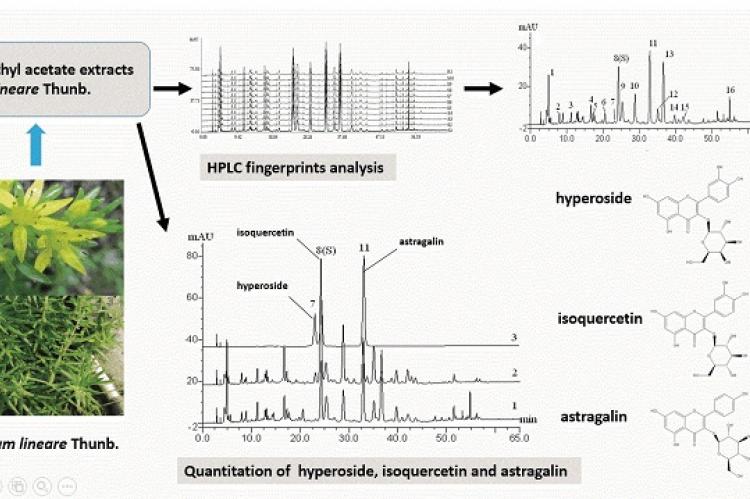
Whole or minimally processed botanicals may retain morphology useful for identification, whereas concentrated extracts rely more on chemical methods such as TLC, HPTLC or HPLC fingerprinting. A broader fingerprint captures information a single marker cannot; this peer-reviewed review of fingerprint analysis for herbal quality control explains why marker analysis and fingerprinting answer different questions, and our guide to HPLC fingerprinting goes further.
Why a Marker Assay Alone May Not Confirm Authenticity
Meeting a marker specification does not prove an authentic overall profile. An undeclared isolated compound, material from a different plant part or another source of the same marker can lift a headline assay without reproducing the expected composition. For higher-risk botanicals, chromatographic fingerprinting or complementary techniques give a broader view of constituent patterns, which is why identity, fingerprint and quantitative assay are related but distinct quality questions.
Marker, Contaminant and Physical Testing
Where a marker specification applies, a suitable method quantifies it. Safety testing may cover microbiological limits, heavy metals, pesticide residues and residual solvents, and physical parameters such as moisture, particle size, bulk density, water activity or solubility may matter for the application. WHO’s Quality Control Methods for Herbal Materials addresses identity and quality alongside pesticide residues, toxic metals, microorganisms and other contaminants, and our Quality & Testing page distinguishes identity, assay, physical parameters, contaminant review, microbiological limits and batch release according to the ingredient and agreed specification.
What Should a Batch COA Show?
The specification defines what the ingredient must meet; the batch COA reports a lot’s results against those criteria as evidence of conformity. Keeping the two apart matters in supplier qualification and repeat purchasing — see How to Read a Botanical Extract COA.
Release Testing vs Stability
A passing COA shows a batch met its specification when tested, not how long it will stay within it. Where shelf life or a retest period matters, stability evidence may cover marker retention, moisture or water activity, appearance, physical behavior and microbiological quality under defined storage. Release testing supports batch release; stability testing supports continued conformity over time.
Quality Control Happens Throughout the Process
Finished-product testing cannot make up for uncontrolled raw materials or processing.
| Manufacturing Stage | Typical Control Point |
|---|---|
| Incoming Botanical | Identity, moisture, foreign matter and relevant risk factors |
| Preparation | Drying condition and particle-size control |
| Extraction | Solvent system, time, temperature and extraction parameters |
| Concentration | Solids level and process temperature |
| Standardization | Marker assay or relevant chemical profile |
| Drying | Moisture / water activity where relevant and powder characteristics |
| Finished Batch | Identity, assay, contaminants and physical specifications |
For naturally variable materials, this is a more useful quality model than treating the final COA as the whole system: consistency is built into the process and then confirmed by testing.
Commercial Botanical Extraction vs Laboratory Extraction
A lab experiment shows that compounds can be extracted; production has to reproduce a comparable material repeatedly at scale. Heat and mass transfer, mixing, filtration, concentration and drying behave differently as batches grow, so a gram-scale process may need significant adjustment. Scale-up succeeds when the process reproduces the required chemical and physical characteristics, which using the same solvent and nominal temperature does not guarantee.
Why Extracts From the Same Plant Can Still Be Different
| Variable | What Can Change | What Buyers Should Verify |
|---|---|---|
| Species | Botanical and chemical identity | Scientific name |
| Plant Part | Constituent profile | Root, leaf, fruit, bark, seed, etc. |
| Origin | Starting phytochemical profile | Source region where relevant |
| Raw-Material Handling | Stability and processing behavior | Upstream controls |
| Solvent | Extracted chemical profile | Extraction solvent |
| Process Conditions | Recovery and thermal exposure | Relevant process controls |
| Purification | Relative concentration of fractions | Degree of enrichment |
| Extract Ratio | Starting-material-to-extract relationship | Ratio basis / DER |
| Standardization | Marker concentration | Assay and analytical method |
| Carrier | Native extract proportion and powder behavior | Carrier type and level |
| Drying | Moisture, flow and stability | Physical specifications |
A botanical name alone does not define a finished extract, so two specifications with the same plant name — or even the same nominal ratio — may not be technically equivalent. Our Specification & Grade Matching service therefore compares plant part, ratio, marker, assay method, carrier, particle characteristics and formulation requirements rather than relying on the product name.
How Manufacturing Choices Affect Finished-Product Performance
Assay is only part of performance. In capsules and tablets, particle size, bulk density, flowability, moisture and hygroscopicity affect blending, filling and compression; in gummies and flavored powders, taste, color, moisture sensitivity and compatibility come to the fore; in liquids, solubility, dispersibility, sedimentation, pH response, flavor and physical stability decide whether a grade is practical. Our Functional Beverages page separates true solubility, dispersibility, clarity, sedimentation, sensory behavior and processing stability — none of which can be predicted from marker assay alone. The best grade is the one whose chemical and physical characteristics match the application, which may not be the one with the highest ratio or assay.
What Buyers Should Confirm Before Sourcing a Botanical Extract
Before comparing quotations or approving an ingredient, establish a common technical basis:
- Botanical species, plant part and relevant source information
- Extraction solvent or process
- Extract ratio or DER and its basis
- Marker specification and analytical method
- Carrier identity and approximate level where applicable
- Relevant physical requirements such as particle size or solubility
- Microbiological and contaminant criteria
- Batch-specific COA
- Stability or retest information where relevant
- Traceability and supporting documentation
These points separate ingredients that look similar in a catalogue but follow different routes or specifications. Documentation should match the material actually purchased; our Compliance & Documentation page separates general product documents such as specifications, TDS and SDS from batch-specific records such as the COA.
From Raw Plant to a Defined Botanical Ingredient
A finished extract is defined by its botanical source, processing route, composition, physical properties, testing and documentation together, and those elements decide whether similar-looking ingredients are comparable and whether a grade suits the formulation. The plant name is a starting point; the fuller question for buyers and formulators is what combination of source, processing, specification and quality evidence defines the ingredient. Answering it gives a stronger basis for comparing extracts, choosing a grade and keeping consistency from evaluation to commercial production.
Request a Specification or Sample
Browse our Botanical Extracts and Standardized Extracts, then contact Essencefield Botanicals to request a specification, process information, representative COA or sample.