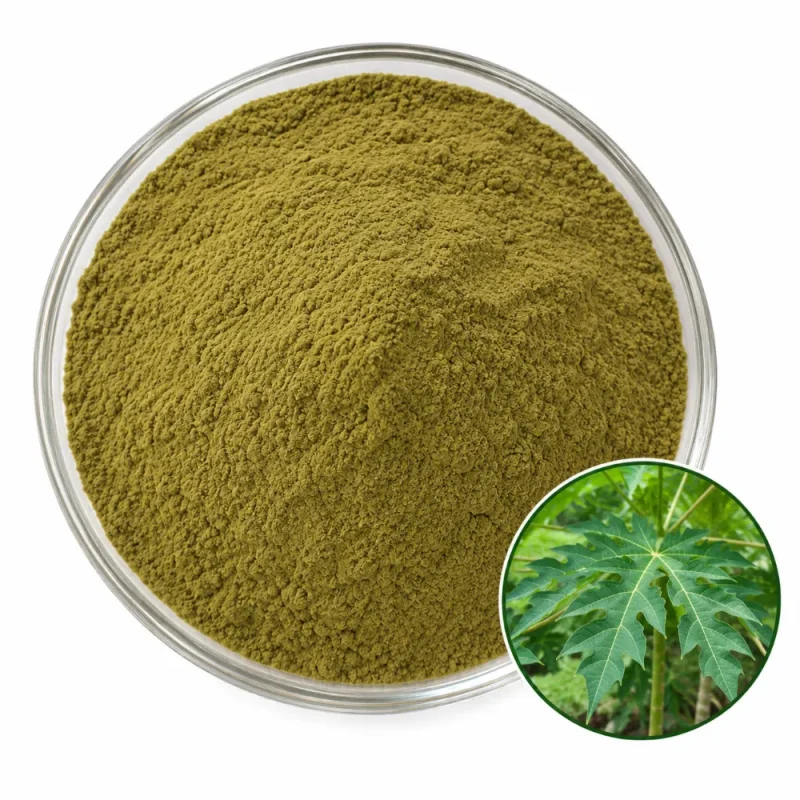
Carica Papaya Leaf Extract Powder

The large, deeply lobed leaves of Carica papaya, the papaya tree, supply this papaya leaf extract, and the fruit, seed and latex are treated as separate materials. Water extraction concentrates the soluble leaf fraction, and the liquor is dried into a green powder that disperses in water.

Supplied as a 10:1 ratio extract with no marker percentage, it is milled to 80 mesh. A glycoside-defined papaya leaf extract is a separate standardized product, and papaya extract powder and papaya powder cover the fruit. This leaf extract carries no declared alkaloid or glycoside figure.

Carica papaya Leaf Source & Identity

The botanical entity is Carica papaya L., the papaya, a fast-growing tree-like herb of the Caricaceae family, native to tropical America. The part used is the leaf, the palmate blade on a long hollow stalk. Fruit, seed, root and the milky latex are not part of this ingredient.

Papaya is best known for its fruit, so the part is the main identity point here. Ripe papaya fruit is sweet and rich in carotenoids, while unripe fruit and the plant’s latex are the main source of the protease enzyme papain. The leaf is a different tissue that is bitter and rich in alkaloids, including carpaine, together with flavonoids such as rutin and kaempferol glycosides and phenolic compounds.

A leaf extract and a fruit extract of papaya therefore have almost nothing in common apart from the species.

Papaya Leaf Extract vs Fruit and Powder

FormWhat It IsChoose It When
10:1 Leaf ExtractWater-extracted, concentrated and dried papaya leafA dispersible whole-leaf extract is wanted without a marker
Papaya Leaf Extract 20–40% GlycosidesStandardized leaf extract with a defined glycoside rangeThe specification names a glycoside figure
Papaya Extract PowderRatio extract of the papaya fruit instead of the leafThe fruit, not the leaf, is the target
Papaya PowderFruit powder of papaya with no extractionA fruit powder is wanted instead of a leaf extract

The 10:1 ratio records how much Carica papaya leaf went into the Carica papaya leaf extract. It states no alkaloid or glycoside figure, so a labelled content belongs to the standardized grade and cannot be read from the ratio. Alkaloids such as carpaine dissolve better in acidic water than in neutral water, which is one reason extraction conditions shape the dried leaf powder.

The three siblings change the basis of the specification. The standardized extract adds a glycoside figure, while the fruit extract and the fruit powder move to a sweet, carotenoid-bearing tissue. A formula that wants a plain dispersible Carica papaya leaf extract starts here.

Carica papaya leaf is also sold as cut dried leaf for infusions, a coarse leaf cut that is not a dispersible extract.

Typical Specifications

Specification ItemProduct Information
Latin NameCarica papaya
Plant PartLeaf & Herb
ProcessingWater Extraction
Common NamePapaya Leaf
Ingredient TypeRatio Extract
Extract Ratio10:1
AppearanceGreen powder
Solubility / DispersibilityWater Dispersible
Quality Parameters
Moisture (LOD)≤5.0%
Total Ash≤5.0%
Particle Size80 mesh
Heavy MetalsLead ≤2 ppm · Arsenic ≤1 ppm · Cadmium ≤1 ppm · Mercury ≤0.1 ppm
MicrobiologyTPC ≤1,000 cfu/g · Yeast & Mold ≤100 cfu/g · E. coli Negative · Salmonella Negative/25 g
Shelf Life24 months in unopened original packaging, cool and dry storage

Application Areas

Herbal Leaf Tea-Style Mixes

Papaya leaf is a familiar infusion in tropical regions, so tea-style instant mixes suit the extract. It disperses to a hazy olive-green cup with a pronounced bitterness that honey, lemon or ginger flavors soften. Dissolving the extract in warm, not boiling, water keeps the green tone from browning.

Two-Piece Capsule Lots

Two-piece capsules take papaya leaf extract once a flow aid has been mixed through it. Capsules keep the bitter taste off the tongue, and disintegration on the finished fill is worth testing since the green powder disperses without dissolving.

Film-Coated Tablet Cores

For papaya leaf extract, microcrystalline cellulose and a disintegrant form the tablet base. A film coat hides the green core and its bitter taste, and desiccated packs protect the alkaloid- and glycoside-bearing powder from moisture. A coating also limits moisture uptake, so the green core stays firm and the bitterness stays inside.

Sweetened Sachet Blends

Sachets pair the extract with sweeteners and a dispersible carrier. A matched particle size keeps the dense green powder from sinking in a lighter base, and a dry filling room prevents lumping before the seal closes.

Formulation Notes

The powder is green with a faint herbal, hay-like aroma and a strongly bitter taste. In water it disperses to a hazy olive liquid, and a little fine material settles on standing.

Bitterness is the first formulation constraint, so mask it with sweeteners or flavors and keep doses within the capsule or tablet format. The green tone browns under heat and alkaline conditions, so add the extract late in warm steps. A short premix with a flowing carrier stops bridging at the hopper, and a damp leaf extract cakes. Carica papaya leaf extract is judged on bitterness first, so a taste panel on the finished dosage form is more informative than appearance or flow tests.

Packaging & Commercial Supply

Essencefield supports product evaluation, formulation trials, commercial orders, and ongoing ingredient supply. Packaging, storage, and shipping arrangements are determined by product characteristics, order quantity, stability requirements, and destination-market needs.

Supply ItemGeneral Information
SampleAvailable upon request for formulation, testing, and supplier evaluation
Order Quantities100 g · 1 kg · 5 kg · 25 kg · 100 kg · 500 kg · Bulk
Sample Lead TimeTypically 5–7 days after sample confirmation
Production Lead TimeTypically 15–30 days after order and specification confirmation
PackagingSuitable protective inner packaging with bags, cartons, drums, or other appropriate outer packaging
StorageStore in tightly sealed, suitable protective packaging in a cool, dry environment. Protect from moisture, heat, and direct sunlight. Specific storage conditions follow the approved product specification.
DocumentationCOA · Product Specification · TDS · SDS · Applicable declarations (as applicable)

Final order quantities, lead times, packaging, documentation, and shipping arrangements are confirmed according to the selected product and commercial requirements.

Request Ingredient Specifications & Quote

Share your target specification, application, quantity, and documentation needs. We’ll help confirm suitable options, samples, and commercial supply details.