Eucommia ulmoides Polysaccharide Powder

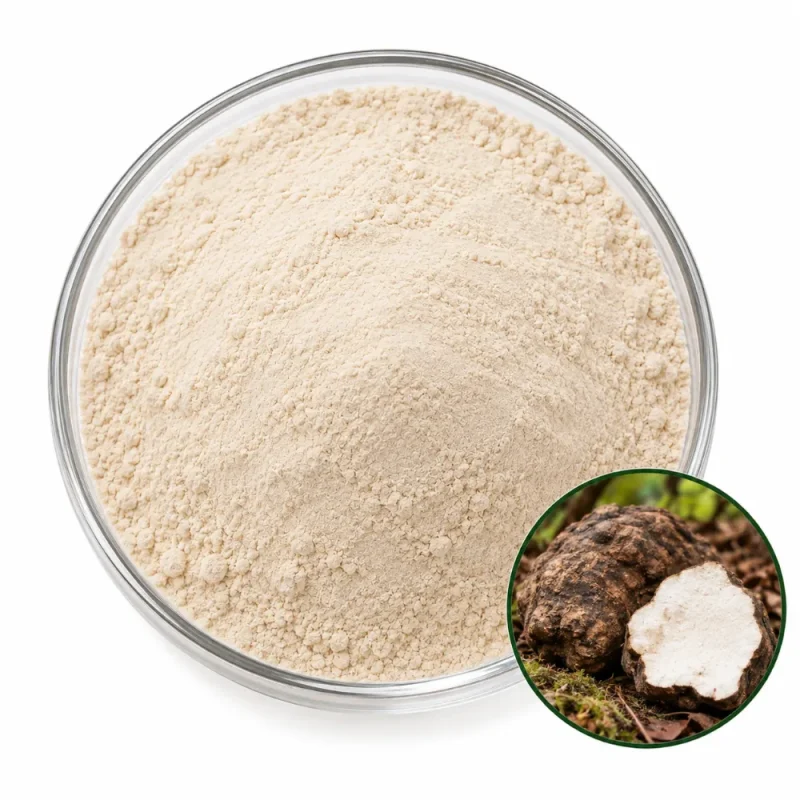
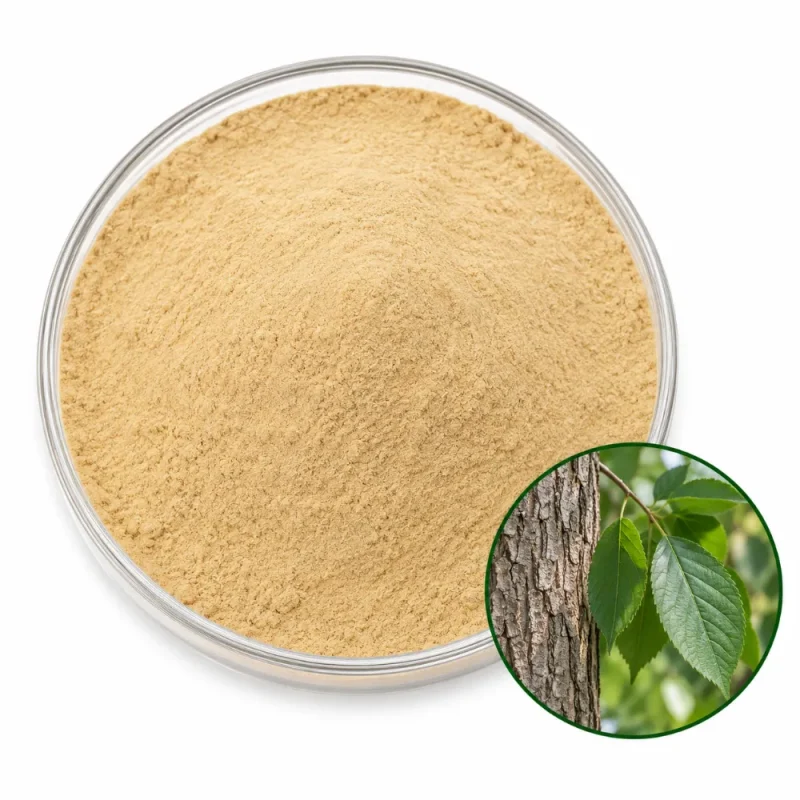
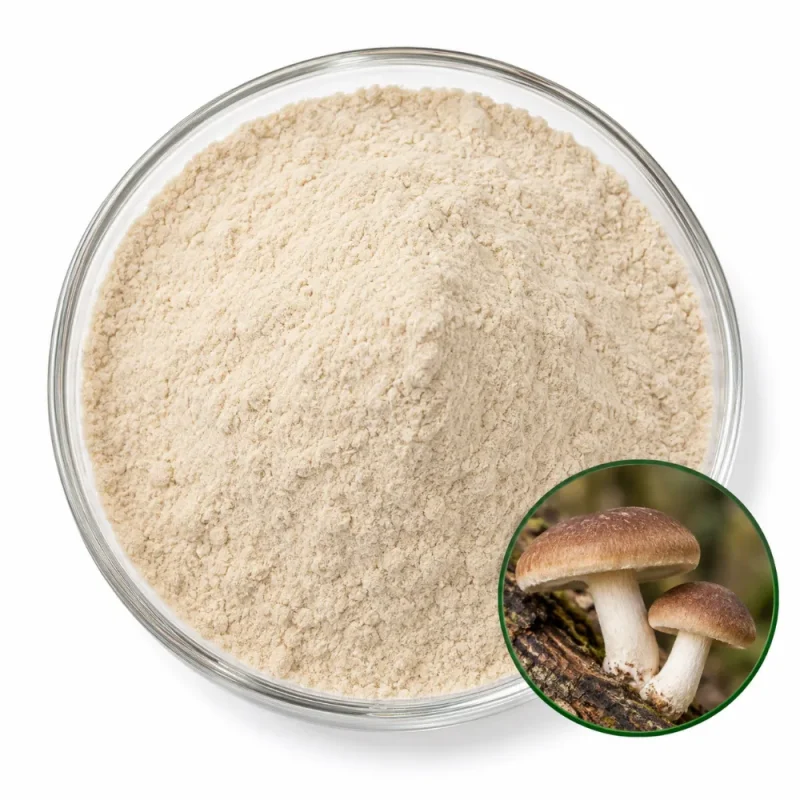
Hot-water extraction of the bark of Eucommia ulmoides Oliv., followed by ethanol precipitation, yields the carbohydrate fraction that is dried and milled into this Eucommia ulmoides polysaccharide powder. The light yellow powder dissolves in water and leaves behind the rubber-like resin, lignans and fiber of the bark.

Polysaccharide content is ≥30% by UV-Vis (phenol–sulfuric, as glucose), moisture and total ash are each ≤5.0%, and particle size is 80 mesh. The percentage is always stated beside its method, and the powder is a purified fraction and not a ground bark.

Eucommia ulmoides Polysaccharide Identity

The source is the bark of Eucommia ulmoides Oliv., the hardy rubber tree, the only living species of the family Eucommiaceae. The bark is the plant part used here, and the leaf, the fruit and the male flowers of the tree are separate raw materials with their own profiles. Bark and leaf are both harvested for Chinese herbal use, but their markers differ: the bark is known for lignans, while the leaf carries more chlorogenic acid.

All parts of the tree contain gutta-percha, a hard, rubber-like polymer of isoprene that forms white threads when the bark or a leaf is torn. Gutta-percha is insoluble in both the extraction liquid and the precipitation step, so it stays with the residue and does not appear in this fraction. That separation is why the powder is a clean, soluble carbohydrate and not a sticky, rubbery extract.

Hot water brings out the polar matter of the bark: polysaccharides, iridoids, lignan glycosides, phenolic acids and some protein. Ethanol precipitation keeps the large polymers and leaves the small glycosides in solution. Eucommia ulmoides polysaccharide is described as a heteropolysaccharide with arabinose, galactose, rhamnose and glucose among its main residues, plus a minor uronic acid share.

For related materials, Eucommia Bark Extract Powder is the whole water extract, Eucommia Bark Powder is the milled bark, and Pinoresinol Diglucoside 98% is the isolated lignan marker.

Polysaccharide Content & Test Method

The phrase polysaccharides ≥30% by UV-Vis refers to an acid-driven colorimetric test. Sugars released from the polymer by hot acid react with phenol to form a colored product, and the absorbance is read against glucose. In Eucommia bark, the test counts every carbohydrate that the acid can free, not only the large polymers.

Bark adds two points of caution. The first is phenolic carry-over: tannins, lignans and phenolic acids absorb in the same visible range as the reaction product and can raise the signal if the sample blank is not careful. Ethanol precipitation removes most of the small phenolics before drying, but a bark fraction can still carry a faint tan color that reflects some residual phenolic matter.

The second is protein, which co-precipitates with polysaccharides in ethanol and can add weight in a gravimetric method without adding any phenol–sulfuric color. For that reason, a gravimetric yield and a UV-Vis percentage on Eucommia ulmoides polysaccharide are not interchangeable.

Where Eucommia ulmoides is concerned, compare the value only with other UV-Vis results that use glucose as the reference. It cannot be set against the pinoresinol diglucoside percentage of a lignan standard, which describes a different molecule in a different fraction.

Bark fractions deserve one more reminder for Eucommia ulmoides polysaccharide: the percentage reflects what the finished powder contains after the precipitate has been washed, and the washing intensity changes the tan tint more than the sugar reading. Eucommia ulmoides polysaccharide lots are therefore judged by the percentage together with the clarity and color of a standard solution.

Typical Specifications

Specification ItemProduct Information
Latin NameEucommia ulmoides
Plant PartBark & Stem
ProcessingWater Extraction & Purification
Common NameEucommia (hardy rubber tree)
Ingredient TypePolysaccharide Extract
Polysaccharide TypeHeteropolysaccharides
ContentPolysaccharides ≥30% (UV-Vis, as glucose)
AppearanceLight Yellow powder
Solubility / DispersibilityWater Soluble
Quality Parameters
Moisture≤5.0% (LOD)
Total Ash≤5.0%
Particle Size80 mesh
Heavy MetalsLead ≤2 ppm · Arsenic ≤1 ppm · Cadmium ≤1 ppm · Mercury ≤0.1 ppm
MicrobiologyTPC ≤1,000 cfu/g · Yeast & Mold ≤100 cfu/g · E. coli Negative · Salmonella Negative/25 g
Shelf Life24 months in unopened original packaging, cool and dry storage

Eucommia ulmoides Polysaccharide Solution Behavior

During Eucommia ulmoides trials, the powder dissolves in cold or warm water into a pale yellow to light tan solution that is clear to slightly hazy. Eucommia ulmoides polysaccharide is a branched heteropolysaccharide, so viscosity stays low to moderate at normal use levels and rises gradually with concentration. Warm water shortens dissolution, and sifting the powder into a stirred vortex prevents lumps.

In Eucommia ulmoides work, the solution is stable through ordinary pasteurization and across the mildly acidic to neutral pH range of beverages. Prolonged boiling at low pH can cleave glycosidic bonds and thin the liquid, and heating with amino compounds drives Maillard browning. Tan tones deepen with heat and with trace iron, which reacts with any residual phenolics to form darker complexes.

The aroma is faint, slightly woody and earthy, and a mild bitter or astringent edge can appear at higher concentrations. Demineralized water gives the cleanest solution, and a fine filtration step removes undissolved flecks. Divalent cations can bridge the uronic acid groups and cloud the liquid at higher levels, so mineral-fortified bases need a trial.

For Eucommia ulmoides, the dry powder is hygroscopic and cakes in open air, so drums are resealed after each draw. Viscosity is left unspecified for this grade.

Eucommia ulmoides polysaccharide also behaves differently from the leaf-derived fractions of the same tree. Without the chlorogenic acid of the leaf, the solution is less prone to greening in the presence of iron, although a tan tone still develops with heat. Trial batches of Eucommia ulmoides polysaccharide are held for a week at the planned storage temperature and rechecked for color and clarity.

Taken together, Eucommia ulmoides polysaccharide is a soluble, mild-tasting fraction whose lots are released on assay, clarity and color.

Application Areas

Herbal Tea-Style Instant Mixes

Eucommia ulmoides polysaccharide dissolves into a tan solution that suits tea-style instant mixes and stick packs. The mild woody note blends with roasted grain and ginger flavors, and hot holding is kept short because browning deepens the color.

Capsules and Tablet Cores

The purified powder fills capsules cleanly and is far less sticky than milled bark. Tablets need dry granulation or a controlled drying endpoint because the polysaccharide surface turns tacky when wetted, and fill weight is checked at both ends of a run.

Syrups and Small-Volume Shots

In syrups and shots, the polysaccharide adds soluble solids with gentle viscosity. Iron-containing waters darken the liquid, so the batch uses demineralized water and stainless steel vessels, and color is compared with a control after storage. Sensory checks on Eucommia ulmoides are repeated at the end of shelf life.

Herbal Soup and Broth Seasoning Mixes

Dry herbal soup mixes take the powder for body and a smooth feel. It dissolves in hot liquid with stirring and its mild earthy taste fits with mushroom, goji and root-vegetable flavors, while a long simmer deepens the color.

Soft Candy and Jelly Formats

As Eucommia ulmoides is processed, soft candies and jellies tolerate the fraction at moderate inclusion because it dissolves into the cooking syrup. In the Eucommia ulmoides case, acid is added late to protect color, and batch pH is recorded since pectin and gelatin sets respond to it.

Packaging & Commercial Supply

Essencefield supports product evaluation, formulation trials, commercial orders, and ongoing ingredient supply. Packaging, storage, and shipping arrangements are determined by product characteristics, order quantity, stability requirements, and destination-market needs.

Supply ItemGeneral Information
SampleAvailable upon request for formulation, testing, and supplier evaluation
Order Quantities100 g · 1 kg · 5 kg · 25 kg · 100 kg · 500 kg · Bulk
Sample Lead TimeTypically 5–7 days after sample confirmation
Production Lead TimeTypically 15–30 days after order and specification confirmation
PackagingSuitable protective inner packaging with bags, cartons, drums, or other appropriate outer packaging
StorageStore in tightly sealed, suitable protective packaging in a cool, dry environment. Protect from moisture, heat, and direct sunlight. Specific storage conditions follow the approved product specification.
DocumentationCOA · Product Specification · TDS · SDS · Applicable declarations (as applicable)

Final order quantities, lead times, packaging, documentation, and shipping arrangements are confirmed according to the selected product and commercial requirements.

Request Ingredient Specifications & Quote

Share your target specification, application, quantity, and documentation needs. We’ll help confirm suitable options, samples, and commercial supply details.