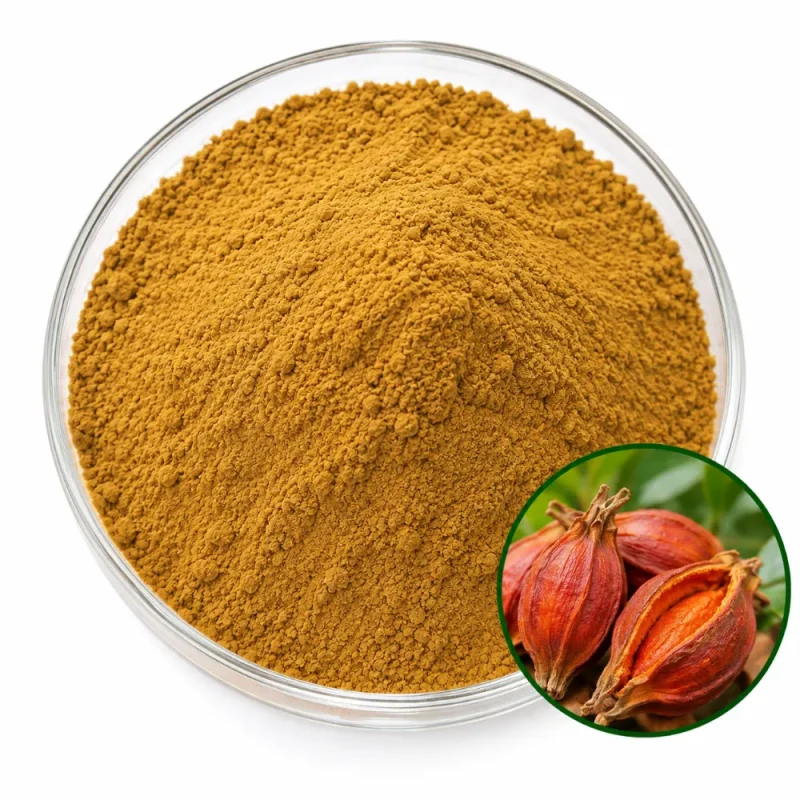
Gardenia Fruit Powder

Gardenia fruit, the ripe dried fruit of Gardenia jasminoides, is cleaned and milled into a yellow-orange powder that carries the water-soluble pigments of the fruit. Only the fruit is used, so the fragrant white flower and the leaf of the gardenia shrub are not part of the material.

Gardenia fruit powder is supplied at 80 mesh, with 40, 60 and 100 mesh optional, and has a faint, grassy and slightly sweet odor with a bitter taste. It is raw milled fruit rather than an extract, so inclusion rates are higher and the fibrous fruit character is stronger than in the extract forms.

Gardenia jasminoides Raw Material & Plant Part

The botanical name is Gardenia jasminoides J.Ellis, family Rubiaceae, known as gardenia, cape jasmine or by its herbal name zhi zi. The raw material is the dried ripe fruit, a small orange-red berry with ridges and a crown of persistent calyx lobes, picked when ripe, steamed or dried and milled. Flowers, leaves and roots are not included.

Two points avoid confusion. First, the plant has a variety with a smaller fruit, Gardenia jasminoides var. radicans, which is a dwarf form grown as an ornamental, and it is not the source of this fruit. Second, gardenia yellow and gardenia blue are purified natural colors made from the fruit and sold as colorants. They are different ingredients from the whole milled fruit.

The fruit is known for iridoid glycosides, mainly geniposide, geniposidic acid and gardenoside, for water-soluble carotenoid pigments, crocin and crocetin, which are yellow-orange, and for chlorogenic acids.

The orange tone of the powder reflects the crocin pigment in the pericarp and the seeds, while the fruit pulp adds fiber and a sticky, resin-like character. Drying conditions affect the color, because light and heat shift the carotenoid hue toward brown.
Gardenia Fruit Powder vs Extract

FormWhat It IsChoose It When
Gardenia Fruit PowderMilled dried whole fruit with its fiber and pigmentWhole-fruit material and color in dry blends
Gardenia Fruit Extract PowderWater-extracted fruit with the fiber removedA soluble format at a lower inclusion rate
Gardenia Jasminoides Extract 10–50% GeniposideFruit extract standardized to a geniposide rangeA defined iridoid content is required
Geniposide 98%Purified single iridoid glycoside reference gradeAn isolated compound is needed

The fruit powder keeps the fiber, the pigments and the iridoid glycosides together at their natural, lower concentration. Inclusion rates are higher than for an extract, the color is a warm yellow-orange, and the powder only disperses in liquids because of the fiber.

The extract powder removes the insoluble pulp, so it is more soluble and gives a clearer yellow solution. The standardized extract is chosen for its geniposide level and not for its color, and the 98% grade is a chemical reference ingredient. Choose the fruit powder when the whole milled fruit and its natural yellow-orange tint are the specification.

One chemical behavior needs attention. Geniposide, when hydrolyzed by enzymes, forms genipin, which reacts with amino acids and proteins to give blue pigments. In a wet, protein-rich mix the yellow powder can therefore drift toward green or blue over time.

Gardenia fruit powder is the form for recipes that want a natural, slightly bitter yellow-orange tint from the whole fruit. The extract powder gives a clearer yellow solution, while the purified colors sold for beverages are a separate class of ingredient, so the whole fruit powder is not chosen for color strength alone.

Typical Specifications

Specification ItemProduct Information
Latin NameGardenia jasminoides
Plant PartFruit & Berry
ProcessingMilled
Common NameGardenia, cape jasmine, zhi zi
Raw MaterialDried fruit
Ingredient TypeMilled Powder
AppearanceYellow-Orange powder (natural color of the dried material)
Odor & TasteFaint grassy, slightly sweet odor; bitter taste
Solubility / DispersibilityWater Dispersible
Quality Parameters
Moisture (LOD)≤8.0%
Particle Size80 mesh (40 / 60 / 100 mesh optional)
Heavy MetalsLead ≤2 ppm · Arsenic ≤1 ppm · Cadmium ≤1 ppm · Mercury ≤0.1 ppm
MicrobiologyTPC ≤10,000 cfu/g · Yeast & Mold ≤1,000 cfu/g · E. coli Negative · Salmonella Negative/25 g
Shelf Life24 months in unopened original packaging, cool and dry storage

Application Areas

Yellow noodle and rice colorants

Gardenia fruit powder gives noodles, rice and dough a warm yellow tint with a mild, slightly bitter background. The pigment dissolves into the cooking water, so a small amount is enough, and the color is checked after boiling or steaming.

Dry herbal decoction mixes

Herbal decoction mixes use the powder as one component of a multi-herb base. The bitter taste is balanced with sweet partners, and the pigment colors the liquid golden, which is a visual check on the dosage. Strained decoctions leave the fruit fiber behind.

Capsule and tablet blends

Fills use the powder as a colored, fibrous material. The pigment stains capsule walls and equipment, so cleaning between products is part of the plan, and clear capsules show the orange tone. Opaque shells hide the color completely.

Natural-tint dry seasoning mixes

Seasoning mixes for rice dishes and soups use the powder for a natural yellow-orange tone. Acidity and iron or protein in the mix can shift the hue, so a trial with the finished recipe and its storage conditions confirms stability. A small dose already gives a visible tint.

Handling & Blending Notes

Pigments make gardenia fruit powder a staining material. The yellow-orange color transfers to hoppers, scoops, hands, plastic and cloth, and it is hard to remove. Dedicated equipment, a defined cleaning sequence and a color-sensitive production schedule prevent carry-over into pale products.

The fruit pulp is sticky and resin-like, so the powder cakes in damp conditions and builds up on hopper walls. Barrier packaging, dry weighing areas and quick resealing preserve the flow, and clumped material is screened out and not reground. Fine dust is mildly irritating when airborne, and local extraction at the scoop keeps it out of the room.

The carotenoid pigments are sensitive to light, heat and oxidation, so opaque packs, a cool store and short working periods after opening protect the color. The hue is also pH-dependent in the finished product, and trials at the real pH and temperature are advised. Mesh follows the format, with 80 mesh for capsules and dry blends and a finer grade for even coloring.

Gardenia fruit powder keeps its color best in a sealed, light-proof pack stored cool and dry. Open packs lose brightness over weeks, and a half-used pack that sits near a window fades visibly, so working containers are kept closed and out of direct light.

Packaging & Commercial Supply

Essencefield supports product evaluation, formulation trials, commercial orders, and ongoing ingredient supply. Packaging, storage, and shipping arrangements are determined by product characteristics, order quantity, stability requirements, and destination-market needs.

Supply ItemGeneral Information
SampleAvailable upon request for formulation, testing, and supplier evaluation
Order Quantities100 g · 1 kg · 5 kg · 25 kg · 100 kg · 500 kg · Bulk
Sample Lead TimeTypically 5–7 days after sample confirmation
Production Lead TimeTypically 15–30 days after order and specification confirmation
PackagingSuitable protective inner packaging with bags, cartons, drums, or other appropriate outer packaging
StorageStore in tightly sealed, suitable protective packaging in a cool, dry environment. Protect from moisture, heat, and direct sunlight. Specific storage conditions follow the approved product specification.
DocumentationCOA · Product Specification · TDS · SDS · Applicable declarations (as applicable)

Final order quantities, lead times, packaging, documentation, and shipping arrangements are confirmed according to the selected product and commercial requirements.

Request Ingredient Specifications & Quote

Share your target specification, application, quantity, and documentation needs. We’ll help confirm suitable options, samples, and commercial supply details.