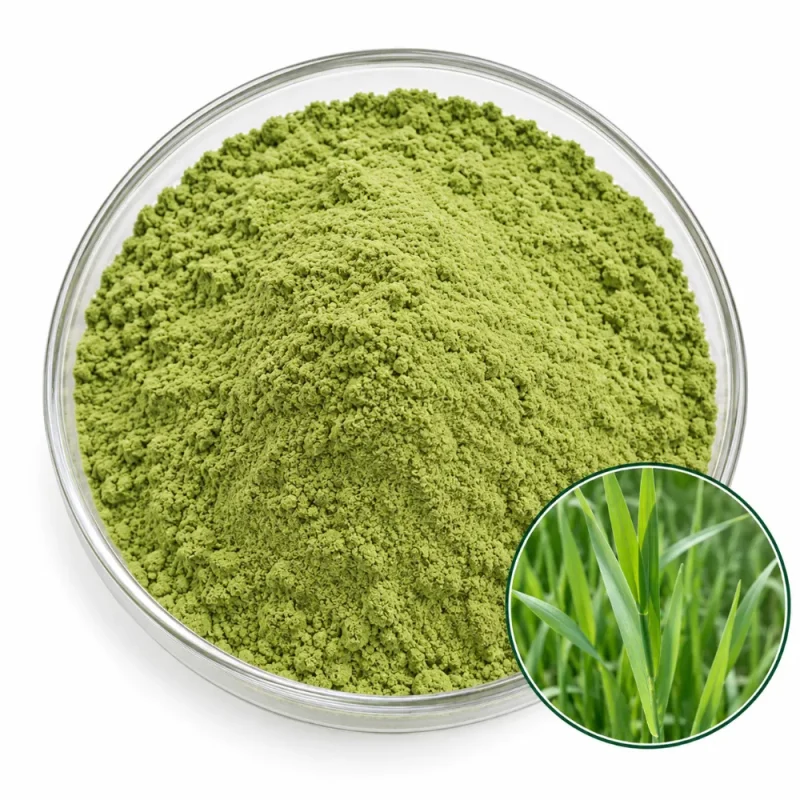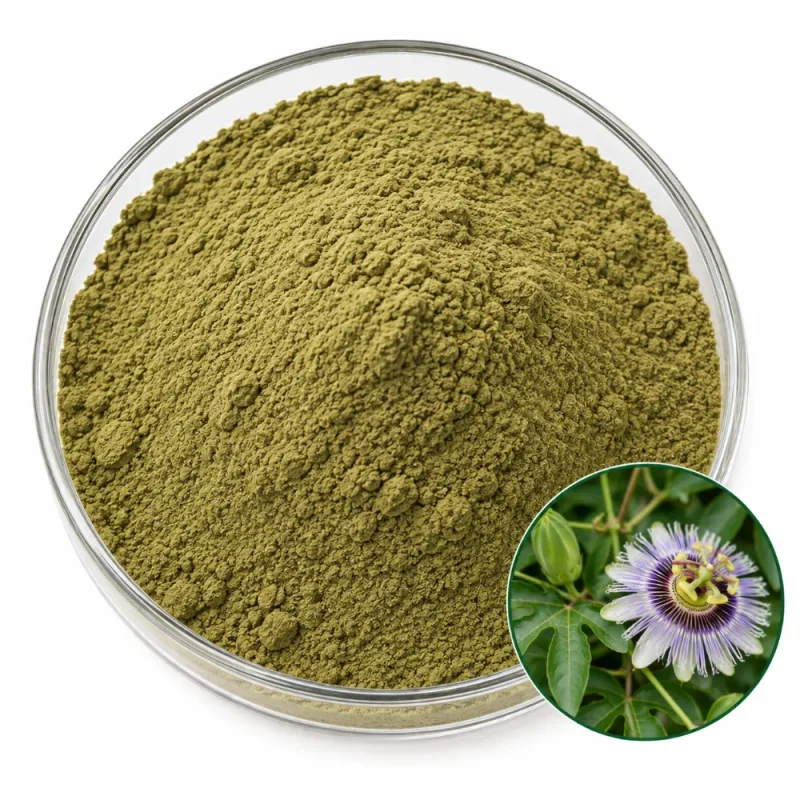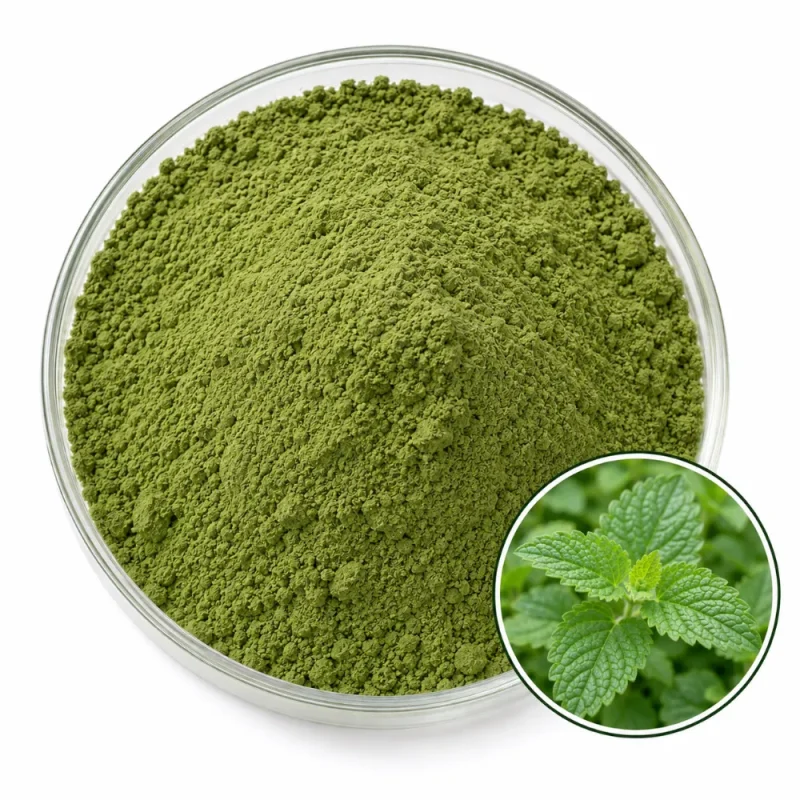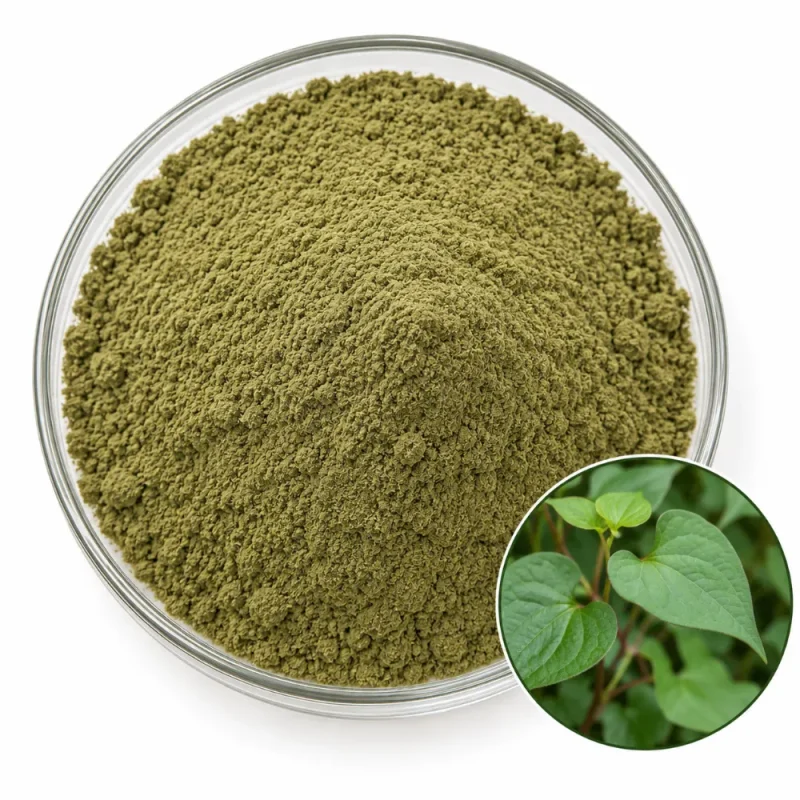
Houttuynia (Fish Mint) Powder

Fish mint, the creeping herb Houttuynia cordata, is cut above ground, dried and milled into this green powder, which has lost the sharp fishy smell of the fresh plant and keeps a mild, herbal character. The aerial parts are used, so the underground stems that are eaten as a vegetable are not in the material.

Houttuynia powder is supplied at 80 mesh, with 40, 60 and 100 mesh optional, and has a faint, grassy and slightly fishy odor with a mild, bitter-green taste. It is raw milled herb rather than an extract, so inclusion rates are higher and the leaf character is stronger than in the extract forms.

Houttuynia cordata Raw Material & Plant Part

The botanical name is Houttuynia cordata Thunb., family Saururaceae, known as fish mint, heartleaf, chameleon plant or by its herbal name yu xing cao. The raw material is the dried aerial part of the plant, meaning the heart-shaped leaf and the slender stem, cut during the growing season, dried and milled. The underground stems, which are a food in parts of Asia, are not included.

The common name causes confusion. Fish mint is not a true mint, since it does not belong to the mint family, Lamiaceae. The plant gets the name from the strong fishy smell of the fresh leaf, which comes from aldehyde compounds that are released when the leaf is crushed. Drying greatly weakens that smell, which is why the dried herb and the powder are much easier to use than the fresh plant.

Houttuynia is known for flavonoid glycosides such as quercitrin and rutin, for phenolic acids and for a small amount of essential oil. Afzelin, a kaempferol rhamnoside, is one of the characteristic flavonoids.

The dried herb keeps its green color when dried quickly and carefully. The leaf is thin, with heart-shaped blades, and it mills to a green powder with fine fibers from the stems. Slow drying or damp storage turn the powder brownish and bring back the fishy note.
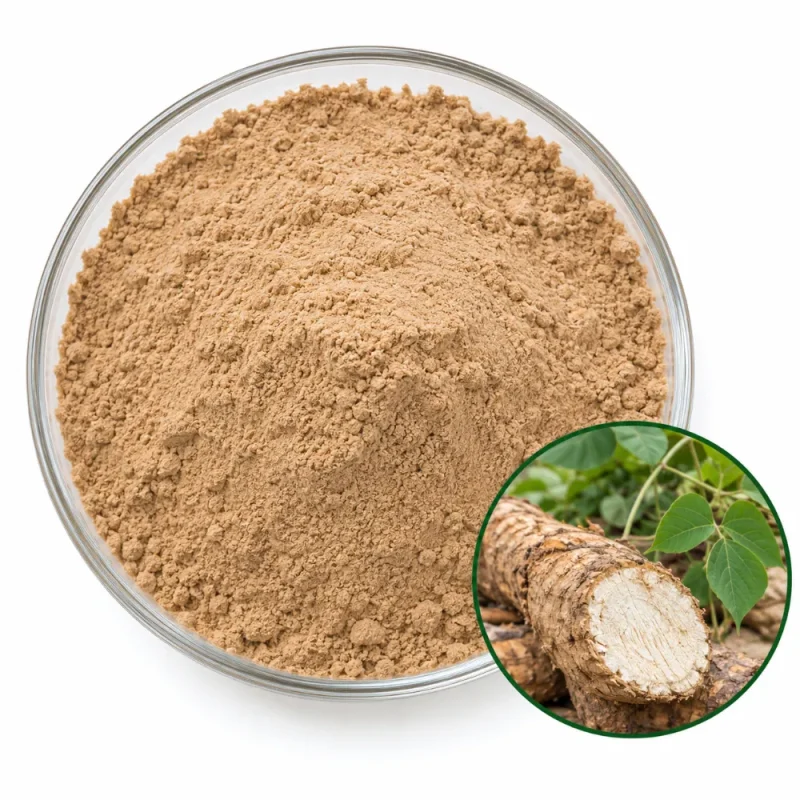
Houttuynia (Fish Mint) Powder vs Extract

FormWhat It IsChoose It When
Houttuynia PowderMilled dried aerial parts with their fiberWhole-herb inclusion in teas and dry blends
Houttuynia Extract PowderWater-extracted herb with the fiber removedA soluble format at a lower inclusion rate
Houttuynia Cordata Extract 5–30% Total FlavonoidsHerb extract standardized to a flavonoid rangeA defined flavonoid content is required
Afzelin 98%Purified single flavonol glycoside reference gradeAn isolated compound is needed

The herb powder keeps the fiber, the chlorophyll and the full set of constituents at their natural, lower concentration. Inclusion rates are higher than for an extract, the color is a clear green, and the powder only disperses in liquids.

The extract powder is paler and dissolves more cleanly, and it carries little of the fishy character. The standardized extract is chosen for its flavonoid level, and afzelin 98% is a chemical reference ingredient. Choose houttuynia powder when the whole dried herb, with its green color, is the specification.

In sensory terms, houttuynia powder is a quiet green herb with a hint of fishy note that fades with dilution, whereas the extract is almost flavor-neutral. Teas and dry blends use the powder, and soluble drink bases use the extract.

Because the fishy note of the fresh plant is largely gone in the dried herb, houttuynia powder suits dry formats far better than fresh material, and it gives a repeatable color and flavor from lot to lot. That makes houttuynia a practical botanical for dry mixes and teas.

Typical Specifications

Specification ItemProduct Information
Latin NameHouttuynia cordata
Plant PartLeaf & Herb
ProcessingMilled
Common NameFish mint, heartleaf, chameleon plant, yu xing cao
Raw MaterialDried aerial parts
Ingredient TypeMilled Powder
AppearanceGreen powder (natural color of the dried material)
Odor & TasteFaint grassy odor with a slight fishy note; mild, bitter-green taste
Solubility / DispersibilityWater Dispersible
Quality Parameters
Moisture (LOD)≤8.0%
Particle Size80 mesh (40 / 60 / 100 mesh optional)
Heavy MetalsLead ≤2 ppm · Arsenic ≤1 ppm · Cadmium ≤1 ppm · Mercury ≤0.1 ppm
MicrobiologyTPC ≤10,000 cfu/g · Yeast & Mold ≤1,000 cfu/g · E. coli Negative · Salmonella Negative/25 g
Shelf Life24 months in unopened original packaging, cool and dry storage

Application Areas

Herbal tea and infusion blends

Houttuynia powder goes into tea bags and infusion blends with licorice, chrysanthemum or mint. A coarse 40 or 60 mesh grade stays in the bag, and the grassy note is softened by sweet and floral partners, while a fine powder clouds the cup.

Green herb dry mixes

Dry green mixes with other herbs use the powder for a leafy flavor and color. The mild fish-like note disappears in strong blends, so houttuynia is paired with ginger, citrus peel or spices that cover it in cooking and drinks.

Capsule and tablet fills

Fills use the powder as a bulky green material with moderate flow. The low density limits the weight per shell, and a pilot fill sets the real figure, while tablets need a binder because the fiber compresses poorly.

Noodle and dough colorants

Noodles, flatbreads and steamed doughs take small amounts of the powder for a natural green tint and a mild herbal taste. The color dulls toward olive in long cooking, so inclusion is fixed after a cooking trial.

Handling & Blending Notes

Houttuynia powder is a light, fibrous herb powder. It dusts at open scoops and hoppers, and static charge in dry rooms makes the fine fraction cling to plastic. Closed hoppers, extraction at the scoop and anti-static tools hold the green dust back and protect equipment from staining.

The fishy note is the sensory control. It returns when the powder is stored damp, warm or for a long time, and it is stronger in humid air, so barrier bags, dry rooms and cool storage are standard. A fresh pack should smell mildly grassy, and a pronounced fishy odor points to poor drying or storage.

Moisture uptake is moderate, and lumps form in open bags. Chlorophyll fades under light and acid, so the powder is kept in opaque packs and tested at the pH of the finished product. Mesh follows the format, with 80 mesh for capsules and dry blends, 40 and 60 mesh for infusion bags and 100 mesh for drink mixes. Opened containers are resealed at once.

Packaging for houttuynia powder is a sealed liner inside a carton, since the powder takes up humidity and odors from neighbors. Opened liners are folded tightly, kept in a cool cabinet and dated, and powder from an old open pack is not blended into fresh lots.

Packaging & Commercial Supply

Essencefield supports product evaluation, formulation trials, commercial orders, and ongoing ingredient supply. Packaging, storage, and shipping arrangements are determined by product characteristics, order quantity, stability requirements, and destination-market needs.

Supply ItemGeneral Information
SampleAvailable upon request for formulation, testing, and supplier evaluation
Order Quantities100 g · 1 kg · 5 kg · 25 kg · 100 kg · 500 kg · Bulk
Sample Lead TimeTypically 5–7 days after sample confirmation
Production Lead TimeTypically 15–30 days after order and specification confirmation
PackagingSuitable protective inner packaging with bags, cartons, drums, or other appropriate outer packaging
StorageStore in tightly sealed, suitable protective packaging in a cool, dry environment. Protect from moisture, heat, and direct sunlight. Specific storage conditions follow the approved product specification.
DocumentationCOA · Product Specification · TDS · SDS · Applicable declarations (as applicable)

Final order quantities, lead times, packaging, documentation, and shipping arrangements are confirmed according to the selected product and commercial requirements.

Request Ingredient Specifications & Quote

Share your target specification, application, quantity, and documentation needs. We’ll help confirm suitable options, samples, and commercial supply details.