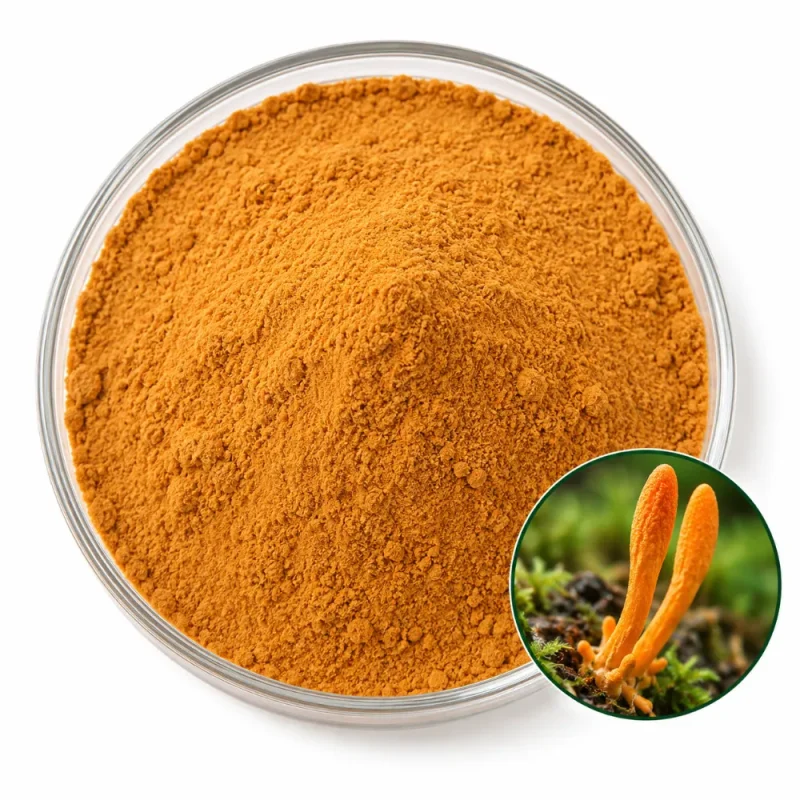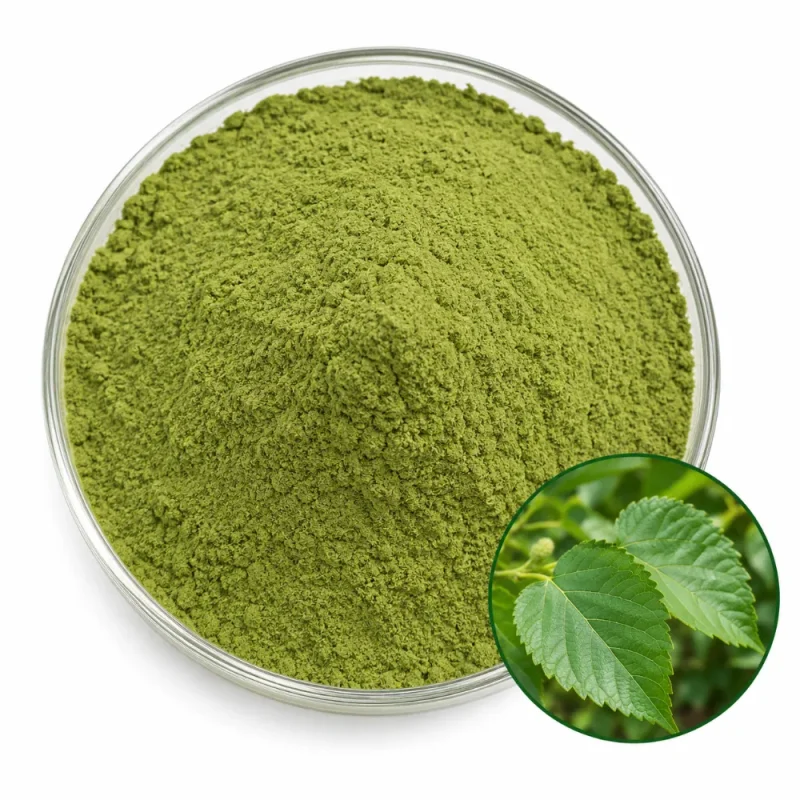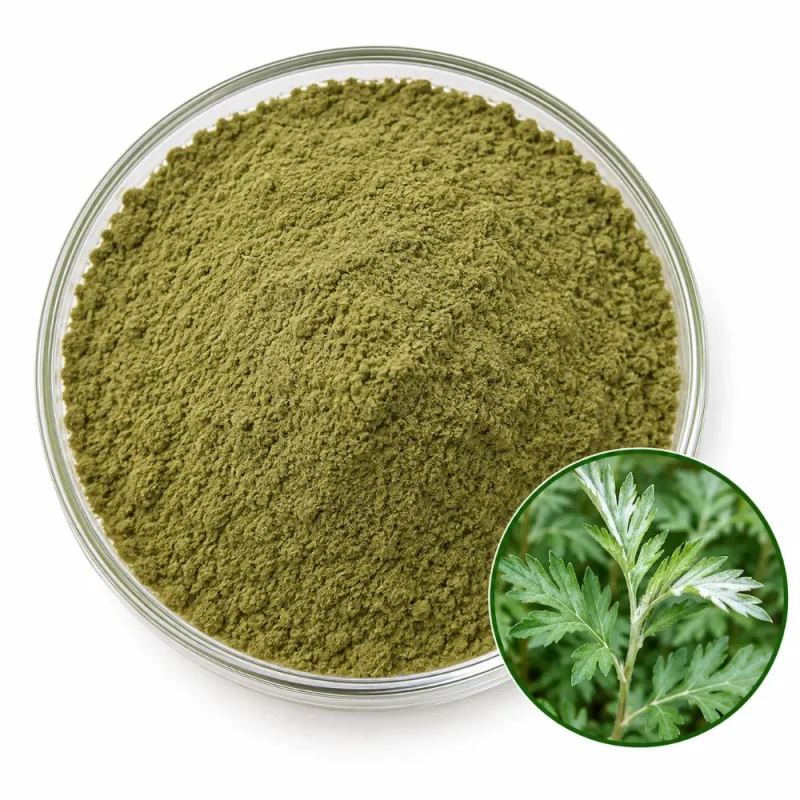
Mugwort Leaf Powder

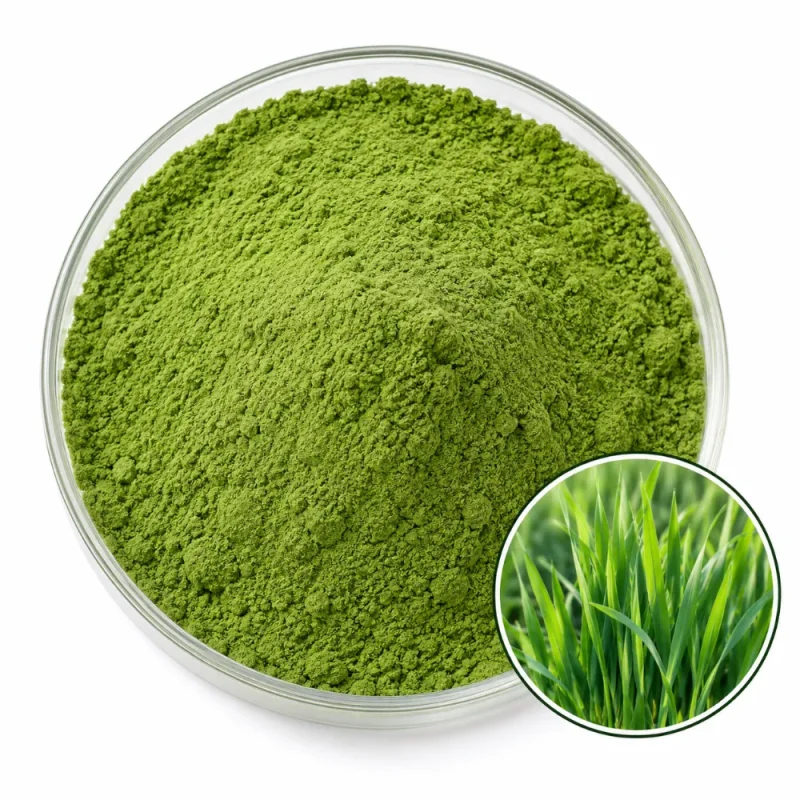
Mugwort leaf from Artemisia argyi, the Chinese mugwort called ai ye, is dried and milled into this green powder with a camphor-like, herbal aroma and a bitter taste. Only the leaf is used, so the stem and the flowering tops of the plant are kept out of the material.

Mugwort leaf powder is supplied at 80 mesh, with 40, 60 and 100 mesh optional, and has a fresh, camphoraceous and herbal odor with a bitter, slightly pungent taste. It is raw milled leaf rather than an extract, so inclusion rates are higher and the aromatic oil is stronger than in the extract form.

Artemisia argyi Raw Material & Plant Part

The botanical name is Artemisia argyi H.Lév. & Vaniot, family Asteraceae, known as Chinese mugwort, silvery wormwood or ai ye. The raw material is the dried leaf, harvested from the plant in late spring or summer, dried and milled. Roots, stems and flower heads are not included.

The genus Artemisia is large, and several of its members share a common name. Artemisia vulgaris is the European common mugwort, Artemisia annua is sweet wormwood, and Artemisia absinthium is wormwood, which is higher in thujone and has a different regulatory status. They are separate plants, and the species name decides what the powder is. The Japanese yomogi, Artemisia princeps, is a close relative used in the same way as ai ye in spring rice cakes.

Chinese mugwort leaves are known for volatile oil with cineole, for polymethoxylated flavones such as eupatilin and jaceosidin, and for chlorogenic-type phenolic acids. The underside of the leaf carries a dense layer of silvery-white hairs, which gives the fresh leaf its two-tone look and also keeps fine fibers in the milled powder.

In Chinese cooking the leaf is used as a natural green colorant and aroma in seasonal rice cakes and dumplings, which is the flavor and color profile this powder serves in dry form.

Leaves are harvested in late spring when the plant is lush and the aroma is high, then dried quickly in shade or low heat to hold the green color. Later cuts give a coarser, more bitter leaf, so harvest time influences the aroma and bitterness of the mugwort leaf powder.
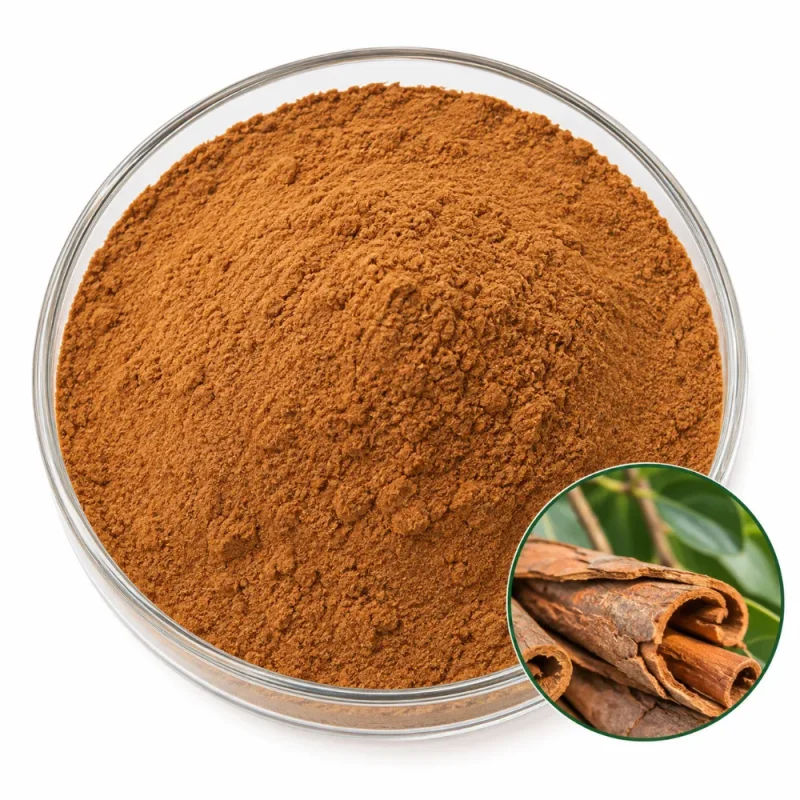
Mugwort Leaf Powder vs Extract

FormWhat It IsChoose It When
Mugwort Leaf PowderMilled dried leaf with its hairs, oil and fiberWhole-leaf aroma and green color in dry blends
Mugwort Extract PowderWater-extracted leaf with the fiber removedA soluble format with a milder aroma
Eupatilin 98%Purified single flavone reference gradeAn isolated compound is needed

The leaf powder keeps the volatile oil, the chlorophyll and the hairy fiber together, so it brings both the aroma and the green color of mugwort to dry blends. Inclusion rates are higher than for an extract, and the powder only disperses in liquids, leaving fine green fibers.

The extract powder keeps the water-soluble fraction and loses most of the volatile oil, so it is milder in smell and lighter in color. Eupatilin 98% is a purified compound and belongs to a different class of ingredient. Choose mugwort leaf powder when the leaf, its color and its aroma are the specification.

Appearance is the clearest sign. The leaf powder is green with a grayish cast from the white hairs, whereas the extract is brown and smooth, and the difference carries into doughs and dry mixes.

The decision between the forms is about aroma and color. Mugwort leaf powder gives a vivid green tint and a camphor-like note, whereas mugwort extract powder gives a brown, bitter solid with less smell, and the extract cannot color a dough green.

Typical Specifications

Specification ItemProduct Information
Latin NameArtemisia argyi
Plant PartLeaf & Herb
ProcessingMilled
Common NameChinese mugwort, silvery wormwood, ai ye
Raw MaterialDried leaf
Ingredient TypeMilled Powder
AppearanceGreen powder (natural color of the dried material)
Odor & TasteFresh, camphoraceous herbal odor; bitter, slightly pungent taste
Solubility / DispersibilityWater Dispersible
Quality Parameters
Moisture (LOD)≤8.0%
Particle Size80 mesh (40 / 60 / 100 mesh optional)
Heavy MetalsLead ≤2 ppm · Arsenic ≤1 ppm · Cadmium ≤1 ppm · Mercury ≤0.1 ppm
MicrobiologyTPC ≤10,000 cfu/g · Yeast & Mold ≤1,000 cfu/g · E. coli Negative · Salmonella Negative/25 g
Shelf Life24 months in unopened original packaging, cool and dry storage

Application Areas

Green rice cake and dumpling doughs

Mugwort leaf powder is the traditional green colorant and flavor for spring rice cakes, dumplings and sweet buns. It is mixed with glutinous rice flour, the color holds through steaming, and the bitter herbal note is balanced with sweet fillings such as red bean.

Noodle and flatbread colorants

Noodles and flatbreads use the powder for a green tint with a herbal background. Its fibers add speckled texture, and the strong aroma means that the inclusion rate is kept low, with the finished product tasted after cooking. A fine mesh gives the most even green.

Herbal tea and infusion blends

Tea-style blends use coarse 40 and 60 mesh mugwort with mint, licorice or chrysanthemum. The infusion is greenish-yellow with a bitter, aromatic taste, and a little sweetener rounds off the cup. A short steep limits the bitterness.

Capsule and dry-mix blends

Fills use the powder as a light, fibrous green material with a strong aroma. The fine hairs make the powder fluffy and slow-flowing, so the weight per shell is checked in a pilot fill. A coated tablet or a sealed bottle holds back the strong aroma.

Handling & Blending Notes

The hairs on the underside of the leaf make mugwort powder fluffy and cohesive. It has a low bulk density, traps air, and bridges in narrow hoppers, so wide outlets, gentle vibration and slow fill speeds improve flow. Fine dust floats at open scoops and irritates the nose, and covered transfer with local extraction is the standard control.

The camphoraceous aroma travels. It passes to neighboring materials and packaging and lingers in rooms and on equipment, so dedicated scoops, separate storage and closed hoppers are used. The volatile oil also fades with warmth, light and air, so a fresh pack smells strongly camphoraceous, and a flat odor points to age.

Chlorophyll fades under light and acid, so opaque packs and a cool store protect the green tone, and trials at the finished pH confirm color stability. Mesh follows the format, with 80 mesh for dry blends and capsules and 100 mesh for smooth doughs. Opened containers are resealed at once and kept dry.

Mugwort leaf powder is divided into small working containers, and the main pack is opened only in a dry room. Dating each opening helps to keep older powder from being used after its aroma has faded.

Packaging & Commercial Supply

Essencefield supports product evaluation, formulation trials, commercial orders, and ongoing ingredient supply. Packaging, storage, and shipping arrangements are determined by product characteristics, order quantity, stability requirements, and destination-market needs.

Supply ItemGeneral Information
SampleAvailable upon request for formulation, testing, and supplier evaluation
Order Quantities100 g · 1 kg · 5 kg · 25 kg · 100 kg · 500 kg · Bulk
Sample Lead TimeTypically 5–7 days after sample confirmation
Production Lead TimeTypically 15–30 days after order and specification confirmation
PackagingSuitable protective inner packaging with bags, cartons, drums, or other appropriate outer packaging
StorageStore in tightly sealed, suitable protective packaging in a cool, dry environment. Protect from moisture, heat, and direct sunlight. Specific storage conditions follow the approved product specification.
DocumentationCOA · Product Specification · TDS · SDS · Applicable declarations (as applicable)

Final order quantities, lead times, packaging, documentation, and shipping arrangements are confirmed according to the selected product and commercial requirements.

Request Ingredient Specifications & Quote

Share your target specification, application, quantity, and documentation needs. We’ll help confirm suitable options, samples, and commercial supply details.