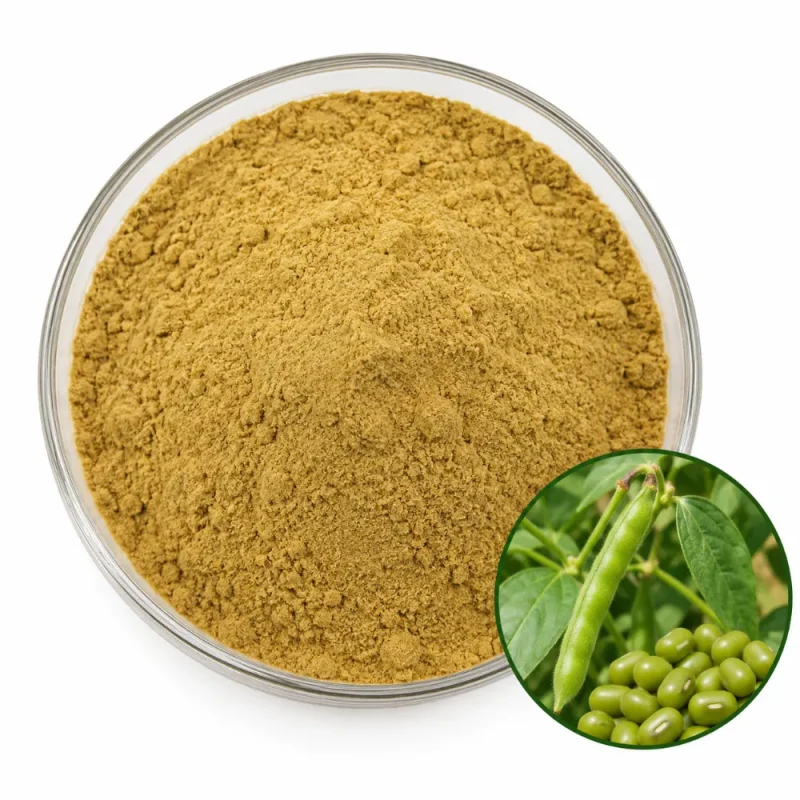
Mung Bean Extract Powder

Mung bean seeds, the small green-coated pulse from Vigna radiata that is also called green gram, are the starting material for this mung bean extract. Water extraction concentrates the soluble seed fraction, and the liquor is dried into a light yellow powder that disperses in water.

Supplied as a 10:1 ratio extract with no marker percentage, it is milled to 80 mesh. Milled mung bean flour and a mung bean peptide are separate products on their own pages. This ratio extract carries no declared protein, starch or flavonoid figure.

Vigna radiata Identity & Plant Part

The botanical entity is Vigna radiata (L.) R.Wilczek, an annual legume of the Fabaceae family cultivated across South and Southeast Asia and sold as mung bean or green gram. The part used is the dry seed. Pods, leaves, roots and the sprouts grown from the seed are not part of this ingredient.

Name confusion is common in the pulse trade. Older literature calls the same plant Phaseolus aureus, and black gram, Vigna mungo, is a related but different species that is also sold as urad. A mung bean extract is therefore fixed by its Latin name and by the seed.

The seed holds storage proteins, starch and polyphenols, and the thin seed coat is the main carrier of flavone C-glycosides such as vitexin and isovitexin.

Mung Bean Extract vs Powder & Peptide

FormWhat It IsChoose It When
10:1 Seed ExtractWater-extracted, concentrated and dried mung bean seedA dispersible concentrated seed extract is wanted
Mung Bean PowderMilled mung bean seed with no extractionWhole-seed flour with starch and fiber is wanted
Mung Bean Peptide PowderHydrolyzed mung bean protein fraction as a peptideA protein-derived peptide, not a seed extract, is needed

The 10:1 ratio records how much mung bean seed went into the extract. It says nothing about protein, starch or vitexin content, and no such figure is attached to it. Starch gelatinizes in hot water, so a water extract of a pulse carries soluble starch and protein along with the small phenolics, and the dried powder is a mixed matrix.

The two siblings change the basis of the specification. The seed flour keeps every insoluble component, while the peptide powder is a protein hydrolysate and is defined by its protein fraction and molecular weight. A formula that needs a soluble, concentrated mung bean ingredient with no peptide claim sits here.

Typical Specifications

Specification ItemProduct Information
Latin NameVigna radiata
Plant PartSeed & Grain
ProcessingWater Extraction
Common NameMung Bean
Ingredient TypeRatio Extract
Extract Ratio10:1
AppearanceLight Yellow powder
Solubility / DispersibilityWater Dispersible
Quality Parameters
Moisture (LOD)≤5.0%
Total Ash≤5.0%
Particle Size80 mesh
Heavy MetalsLead ≤2 ppm · Arsenic ≤1 ppm · Cadmium ≤1 ppm · Mercury ≤0.1 ppm
MicrobiologyTPC ≤1,000 cfu/g · Yeast & Mold ≤100 cfu/g · E. coli Negative · Salmonella Negative/25 g
Shelf Life24 months in unopened original packaging, cool and dry storage

Application Areas

Pulse Extract Capsules

Mung bean extract can be filled into hard capsules after a flow aid is mixed in. The pale yellow powder disperses and does not dissolve, so disintegration is worth testing on the finished fill. Starch in the extract can make the powder pack unevenly, which makes an early fill-weight check useful.

Light-Colored Drink Mixes

The pale color suits cream-colored and fruit-flavored dry drink mixes, where it adds almost no tint. Soluble starch gives the cup slightly more body than a leaf extract does, and legume notes are covered by vanilla or grain flavors.

Powder Sachets

Sachets carry the extract on a dispersible carrier or beside other pulse and grain powders. A matched particle size keeps the fine extract from sifting to the bottom of the pack during transport, and a dry filling room avoids early lumping.

Nutrition Bar Dry Blends

In dry blends for bars, mung bean extract mixes in ahead of the binder syrup. It adds little bulk and almost no color to oat or rice-crisp bases, though its legume flavor is easiest to hide under cocoa or nut notes.

Formulation Notes

The powder is light yellow with a mild beany aroma and a plain, faintly sweet taste. In water it disperses to a cloudy pale liquid, and the suspended starch and protein settle slowly when left standing.

Starch-bearing extracts take up humidity quickly and set into hard lumps, so weigh and blend them in a dry room. Heat above the gelatinization point thickens a hot dispersion, which matters for instant beverages mixed with boiling water. Seal the liner after each draw, and use the contents in order, because lumps are the first sign that a pack has absorbed moisture.

Packaging & Commercial Supply

Essencefield supports product evaluation, formulation trials, commercial orders, and ongoing ingredient supply. Packaging, storage, and shipping arrangements are determined by product characteristics, order quantity, stability requirements, and destination-market needs.

Supply ItemGeneral Information
SampleAvailable upon request for formulation, testing, and supplier evaluation
Order Quantities100 g · 1 kg · 5 kg · 25 kg · 100 kg · 500 kg · Bulk
Sample Lead TimeTypically 5–7 days after sample confirmation
Production Lead TimeTypically 15–30 days after order and specification confirmation
PackagingSuitable protective inner packaging with bags, cartons, drums, or other appropriate outer packaging
StorageStore in tightly sealed, suitable protective packaging in a cool, dry environment. Protect from moisture, heat, and direct sunlight. Specific storage conditions follow the approved product specification.
DocumentationCOA · Product Specification · TDS · SDS · Applicable declarations (as applicable)

Final order quantities, lead times, packaging, documentation, and shipping arrangements are confirmed according to the selected product and commercial requirements.

Request Ingredient Specifications & Quote

Share your target specification, application, quantity, and documentation needs. We’ll help confirm suitable options, samples, and commercial supply details.