Pyropia yezoensis Raw Material & Plant Part
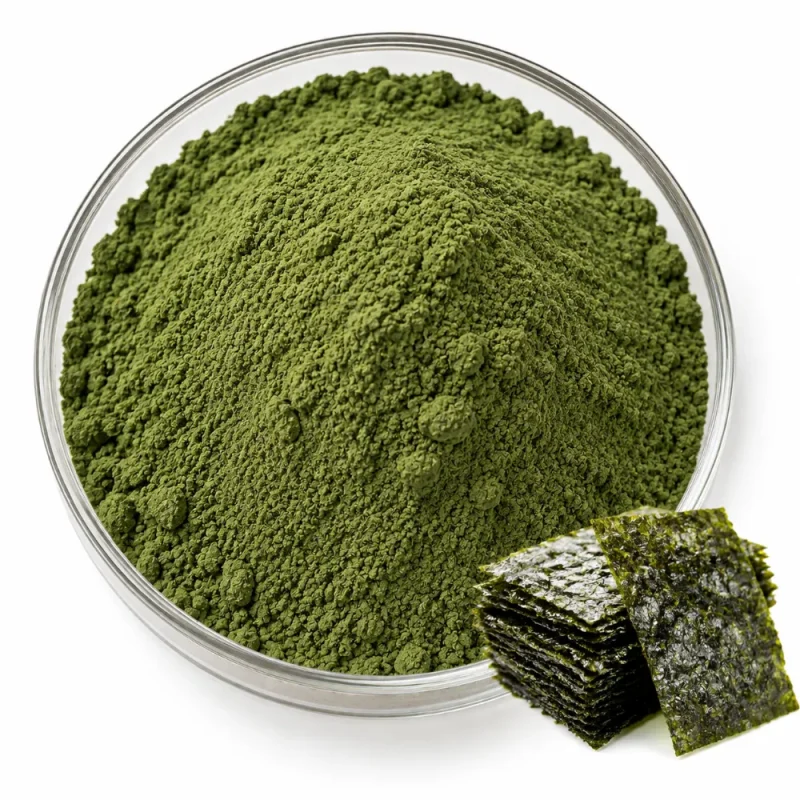
The botanical name is Pyropia yezoensis (Ueda) M.S.Hwang & H.G.Choi, family Bangiaceae, known as nori, laver or gim. The raw material is the dried thallus, the thin, flat, leaf-like body of the red alga, which is harvested, washed, dried and milled. As a seaweed it has no true roots, stems or leaves, so the term plant part refers to the thallus.
Taxonomy changed in 2011. Nori species formerly placed in Porphyra were moved to Pyropia, so the same seaweed can appear in older sources under the genus name Porphyra yezoensis. Nori is also confused with other seaweeds: kombu and kelp are brown algae from the Laminaria group, wakame comes from Undaria, and spirulina is not a seaweed at all but a cyanobacterium.
Nori is known for its protein-rich composition, for taste-active free amino acids that give the umami flavor, for the sulfated galactan porphyran, for pigments including chlorophyll, phycoerythrin and carotenoids, and for minerals. Its dark green-purple color is the sum of these pigments.
Processing influences the color and smell. Light roasting gives a toasted aroma and a more green tone, while plain dried thallus is darker and more marine. The master color of this powder is dark green.