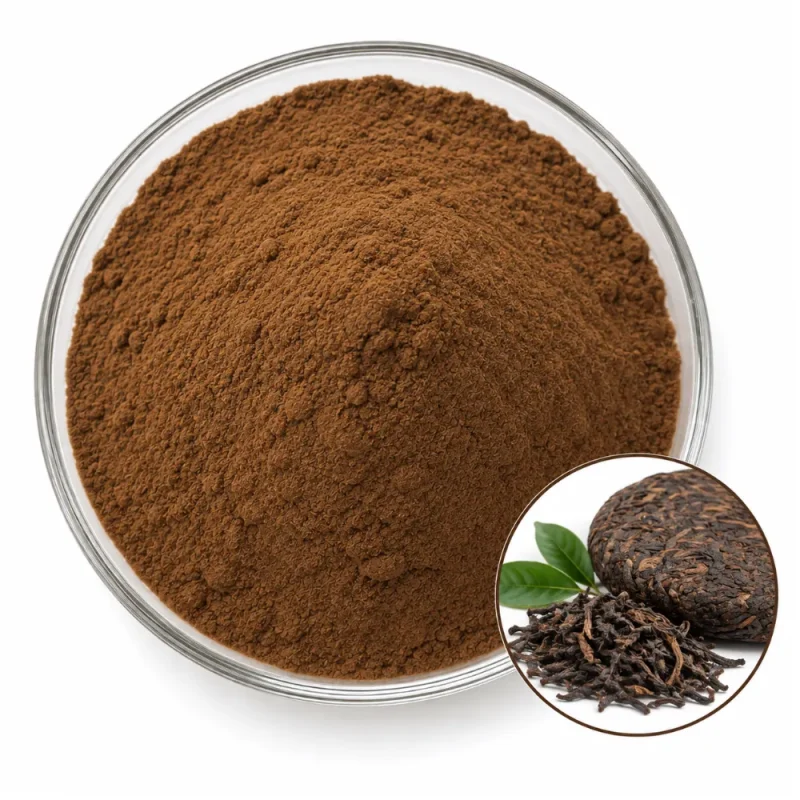
Pu-erh Tea Extract Powder

Pu-erh tea extract powder starts from the leaf of Camellia sinensis, the species behind green, black and white tea, after the leaf has gone through the microbial post-fermentation that defines pu-erh. The liquor is extracted with water, concentrated and dried to a light brown powder.

The product is a 10:1 ratio extract with no marker percentage attached. It is water dispersible and milled to 80 mesh. Green, black and white tea extracts of the same species are separate products, and buyers choose between them by processing route rather than by botany.

Camellia sinensis Identity & Plant Part

The botanical entity is Camellia sinensis (L.) Kuntze, family Theaceae. The part used is the leaf; stems, flowers and seeds are not part of this pu-erh tea extract. Pu-erh names a processing route, not a separate species: the dried leaf is aged or piled so that microorganisms transform its polyphenols, which gives a darker, rounder liquor than green tea. Raw pu-erh matures slowly with age, while ripe pu-erh is produced by accelerated piling of moistened leaf. Pu-erh is traditionally tied to Yunnan large-leaf tea plants.

Buyers should not confuse pu-erh tea with black tea, which is oxidized by the leaf’s own enzymes rather than by microbial fermentation. A pu-erh tea extract is also not a green tea extract with a different label, because the fermentation step changes the polyphenol profile before extraction begins.

Pu-erh Tea Extract vs Other Tea Extracts

FormWhat It IsChoose It When
10:1 Leaf ExtractWater-extracted, concentrated and dried leaf of post-fermented teaA fermented-tea character is wanted in a ratio extract
Green Tea Extract PowderExtract of leaf heat-treated early to stop oxidationA green tea profile is wanted
Black Tea Extract PowderExtract of fully oxidized leafAn oxidized black tea profile is wanted
White Tea Extract PowderExtract of lightly withered, minimally processed leafA white tea profile is wanted

The 10:1 figure expresses how much starting leaf was concentrated into the powder. It is a concentration ratio, not an active-content figure, so it says nothing about catechin, caffeine or theabrownin levels. All four tea extracts share one species, which means the real differences are processing history and the polyphenol pattern that follows from it.

In pu-erh, microbial fermentation moves the catechins that dominate green tea toward darker oxidation products. A buyer picks this ratio extract when a mellow, dark tea character matters and a labelled marker is not needed. Where a defined catechin or theaflavin content must appear on the label, a standardized tea extract of the matching tea type is the correct specification.

Typical Specifications

Specification ItemProduct Information
Latin NameCamellia sinensis
Plant PartLeaf & Herb
ProcessingWater Extraction
Common NamePu-erh Tea, Pu’er Tea
Ingredient TypeRatio Extract
Extract Ratio10:1
AppearanceLight Brown powder
Solubility / DispersibilityWater Dispersible
Quality Parameters
Moisture (LOD)≤5.0%
Total Ash≤5.0%
Particle Size80 mesh
Heavy MetalsLead ≤2 ppm · Arsenic ≤1 ppm · Cadmium ≤1 ppm · Mercury ≤0.1 ppm
MicrobiologyTPC ≤1,000 cfu/g · Yeast & Mold ≤100 cfu/g · E. coli Negative · Salmonella Negative/25 g
Shelf Life24 months in unopened original packaging, cool and dry storage

Application Areas

Tea-Style Instant Sticks

Pu-erh extract dissolves into a dark amber cup, so powder sticks can offer a tea-style drink without brewing. The earthy, mellow flavor needs less sweetener than green tea bases. Judge cup clarity after cooling, because tea cream can cloud a cold drink.

Opaque Capsules for Brown Fills

Capsules hide both the brown color and the fermented aroma of pu-erh tea extract. The powder picks up moisture from air, so fill in a dry room and check weight variation across the run. Shell color matters little here; the check that counts is flow from the hopper.

Gummies with Tea Notes

In gummies the extract adds a brown tint and a rounded tea flavor that pairs with citrus or honey notes. Add the powder late in the cooked mass, since prolonged heat can deepen the color, and test gel set after the addition.

Fermented-Tea Blend Sachets

Sachets can pair pu-erh tea extract with chrysanthemum or goji-style extracts for a tea-house style blend. The dark powder dominates color, so screen both components first and compare sachets from the start and end of a run to catch brown streaking.

Formulation Notes

The pu-erh tea extract is a light brown powder with an earthy, slightly sweet aroma typical of aged tea, and it disperses in water to a clear or slightly hazy brown liquid. A strong liquor cooled to room temperature can form tea cream, a haze built from caffeine and polyphenol complexes, so judge clarity in the cooled drink and not only in the hot cup.

For dry blends, premix the extract with part of the filler and screen it before the main mix. Polyphenols form dark complexes with iron, so keep iron-containing fillers and tools away from the wet powder. Caffeine is naturally present in tea leaf, so a finished product with other caffeine sources needs its total checked. Reseal the container after each use, because the powder takes up moisture and clumps.

Packaging & Commercial Supply

Essencefield supports product evaluation, formulation trials, commercial orders, and ongoing ingredient supply. Packaging, storage, and shipping arrangements are determined by product characteristics, order quantity, stability requirements, and destination-market needs.

Supply ItemGeneral Information
SampleAvailable upon request for formulation, testing, and supplier evaluation
Order Quantities100 g · 1 kg · 5 kg · 25 kg · 100 kg · 500 kg · Bulk
Sample Lead TimeTypically 5–7 days after sample confirmation
Production Lead TimeTypically 15–30 days after order and specification confirmation
PackagingSuitable protective inner packaging with bags, cartons, drums, or other appropriate outer packaging
StorageStore in tightly sealed, suitable protective packaging in a cool, dry environment. Protect from moisture, heat, and direct sunlight. Specific storage conditions follow the approved product specification.
DocumentationCOA · Product Specification · TDS · SDS · Applicable declarations (as applicable)

Final order quantities, lead times, packaging, documentation, and shipping arrangements are confirmed according to the selected product and commercial requirements.

Request Ingredient Specifications & Quote

Share your target specification, application, quantity, and documentation needs. We’ll help confirm suitable options, samples, and commercial supply details.