Reishi Mushroom Powder

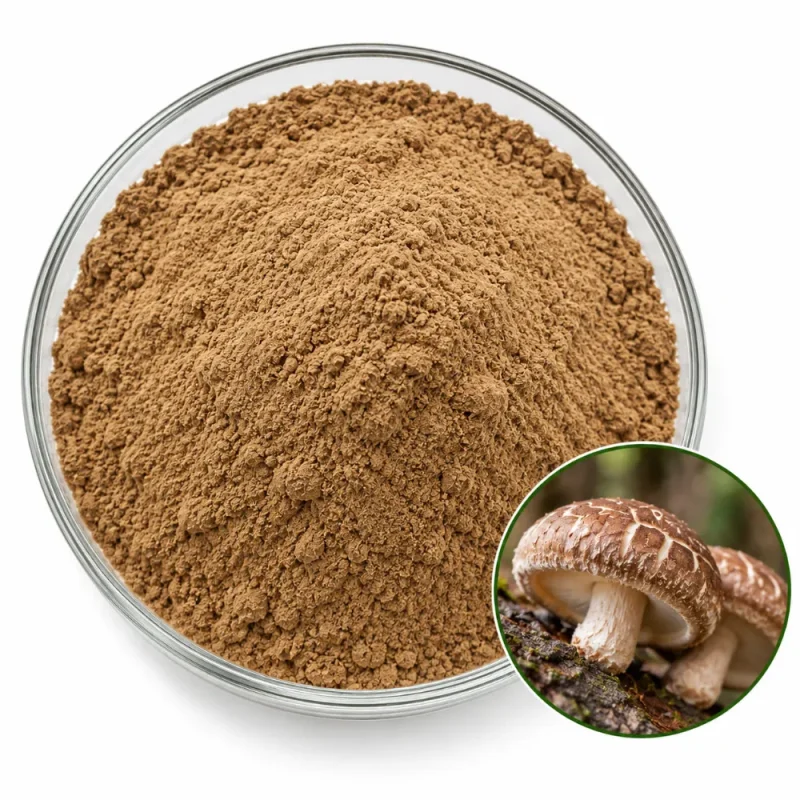
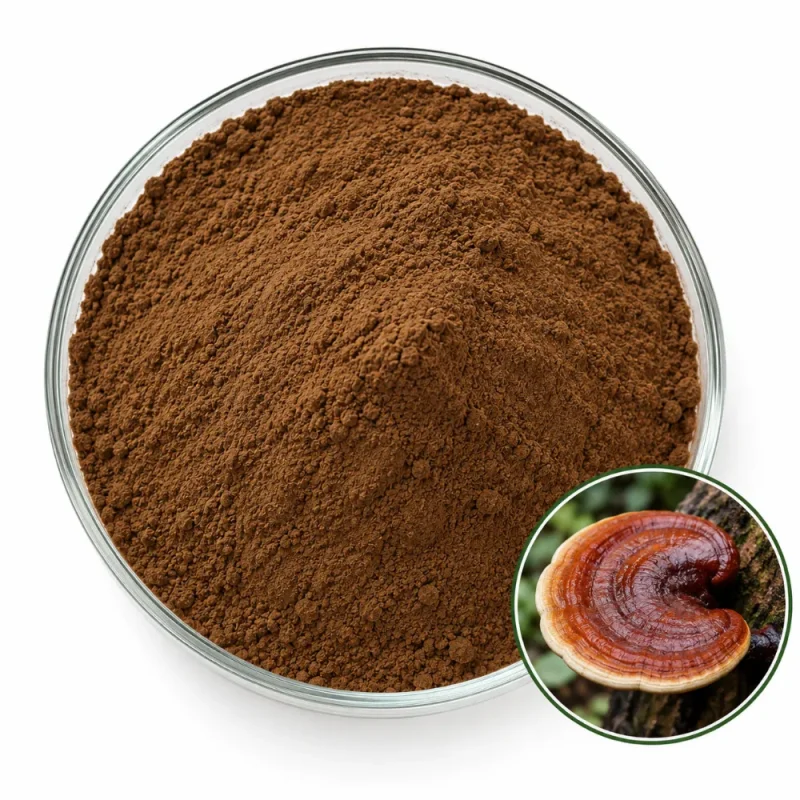
Milling the dried fruiting body of Ganoderma lucidum, the glossy, woody bracket fungus known as reishi, gives reishi mushroom powder. The powder is made from the fruiting body only and contains no spores collected separately, mycelium or grain substrate.

It is supplied at 80 mesh, with 40, 60 and 100 mesh optional, as a brown powder with a woody, earthy odor and a pronounced bitter taste. Unlike reishi extract powder or reishi spore powder, it is milled raw fruiting body, so fiber content, flavor and inclusion rate are those of the whole cap.

Ganoderma lucidum Raw Material & Plant Part

The species is Ganoderma lucidum (Curtis) P.Karst., of the family Polyporaceae. The part used is the fruiting body, the kidney-shaped, lacquered cap with its stem, which is cultivated on wood-based media and dried. Mycelium, grain substrate and the separately collected spores are not part of this raw material.

Reishi is known as lingzhi in Chinese trade. Several species are sold under these names, including G. sinense (purple reishi) and G. tsugae (hemlock reishi). Taxonomic work has also separated East Asian cultivated lingzhi as G. lingzhi, and the naming of commercial material is under discussion.

The dried fruiting body is hard, woody and difficult to mill, so the powder is coarser and more fibrous than that of soft mushrooms. It contains triterpenoid acids with a strongly bitter character and fiber-rich cell walls, and it takes time to disperse or extract.

The bitterness is a defining trait of reishi and is not removed by milling.

In a specification, reishi mushroom powder should state in words that the raw material is the dried fruiting body. Reishi is sold as fruiting body, spore, mycelium and extract, and all of them carry the same species name. The words dried fruiting body, the species name and the mesh make the raw material unambiguous.

Ganoderma lucidum Reishi Powder vs Extract

FormWhat It IsChoose It When
Reishi Fruiting Body PowderMilled dried fruiting body with its fiberWhole-material inclusion in capsules and blends
Ganoderma lucidum Spore PowderMilled spore materialSpores are specifically wanted
Reishi Mushroom Extract PowderWater-extracted fruiting body powder with the insoluble fiber removedA lower inclusion rate or a more soluble format
Ganoderma lucidum Polysaccharide PowderPolysaccharide powder from the same fungusA polysaccharide-defined ingredient is required

The fruiting body powder keeps the woody fiber and the whole range of constituents at their natural, lower concentration. Inclusion rates are higher than for an extract, the bitter flavor is stronger and the powder only disperses in liquids. The water extract removes much of the fiber and mainly recovers the water-soluble fraction, while triterpenoid acids dissolve in ethanol and not in water. The spore powder and the polysaccharide powder are other raw materials or fractions. Choose the fruiting body powder where the whole cap is wanted, and an extract where concentration or solubility is the goal.

Bitterness and texture separate the forms in practice. Reishi mushroom powder is woody and strongly bitter, so formulators dose it in capsules and masked drinks, while an extract powder is more soluble and a spore powder is finer and milder.

Typical Specifications

Specification ItemProduct Information
Latin NameGanoderma lucidum
Plant PartMushroom & Fungi
ProcessingMilled
Common NameReishi, lingzhi
Raw MaterialDried fruiting body
Ingredient TypeMilled Powder
AppearanceBrown powder (natural color of the dried material)
Odor & TasteWoody, earthy odor, pronounced bitter taste
Solubility / DispersibilityWater Dispersible
Quality Parameters
Moisture (LOD)≤8.0%
Particle Size80 mesh (40 / 60 / 100 mesh optional)
Heavy MetalsLead ≤2 ppm · Arsenic ≤1 ppm · Cadmium ≤1 ppm · Mercury ≤0.1 ppm
MicrobiologyTPC ≤10,000 cfu/g · Yeast & Mold ≤1,000 cfu/g · E. coli Negative · Salmonella Negative/25 g
Shelf Life24 months in unopened original packaging, cool and dry storage

Application Areas

Hard capsules and tablets

Reishi mushroom powder is fibrous and low in bulk density, so capsules are volume-limited and tablets need a compressible binder. Doses are by weight in milligrams, and the strong bitterness is contained by the shell or the tablet coating.

Powder sticks and drink mixes

Dry mixes blend the powder with coffee, cocoa or malt bases that cover the bitterness. The fiber does not dissolve, so the drink is cloudy, and a stirring step or a suspension aid keeps particles up.

Tea-style infusions

The traditional use is brewing, and coarser mesh grades suit tea bags. The infusion is dark and bitter, so ginger, cinnamon or sweeteners are common partners, and a longer steeping time gives a stronger brew. Steeping time is set by taste.

Bars and chocolate blends

In bars and chocolate-based snacks the bitterness blends into the cocoa base. Fine milling avoids a gritty feel, and taste panels set the practical inclusion limit. Fine milling avoids a gritty feel in the bar, and the cocoa level can be raised if the bitterness is still noticeable in the finished snack.

Handling & Blending Notes

Milling and flow are the first points. The dried fruiting body is hard and woody, so the powder can be gritty at coarse mesh and the grind produces heat, which a cool process avoids to protect aroma. The powder is cohesive and takes up moisture, so it cakes in open packs.

Moisture-barrier bags, dry weighing rooms and quick resealing keep the powder free-flowing. The 80 mesh grade suits capsules and most dry blends, 40 and 60 mesh stay in a tea bag, and 100 mesh disperses more smoothly in a drink. Finer powder dusts more, so dust extraction at the weighing station is useful.

Bitterness needs a plan in liquids. Cocoa, coffee, cinnamon, ginger and malt cover it, and a small test series shows the threshold. Opened containers are used promptly, and the powder is stored in a cool, dry area away from strong aromas, because a raw fungal powder is more exposed to humidity and odors than a dense extract.

Storage after opening matters. Reishi mushroom powder is clipped shut in the barrier bag and kept in a cool, dry store room. It absorbs moisture and odors quickly, and a separate shelf away from spices and strong flavors keeps the powder clean.

Packaging & Commercial Supply

Essencefield supports product evaluation, formulation trials, commercial orders, and ongoing ingredient supply. Packaging, storage, and shipping arrangements are determined by product characteristics, order quantity, stability requirements, and destination-market needs.

Supply ItemGeneral Information
SampleAvailable upon request for formulation, testing, and supplier evaluation
Order Quantities100 g · 1 kg · 5 kg · 25 kg · 100 kg · 500 kg · Bulk
Sample Lead TimeTypically 5–7 days after sample confirmation
Production Lead TimeTypically 15–30 days after order and specification confirmation
PackagingSuitable protective inner packaging with bags, cartons, drums, or other appropriate outer packaging
StorageStore in tightly sealed, suitable protective packaging in a cool, dry environment. Protect from moisture, heat, and direct sunlight. Specific storage conditions follow the approved product specification.
DocumentationCOA · Product Specification · TDS · SDS · Applicable declarations (as applicable)

Final order quantities, lead times, packaging, documentation, and shipping arrangements are confirmed according to the selected product and commercial requirements.

Request Ingredient Specifications & Quote

Share your target specification, application, quantity, and documentation needs. We’ll help confirm suitable options, samples, and commercial supply details.