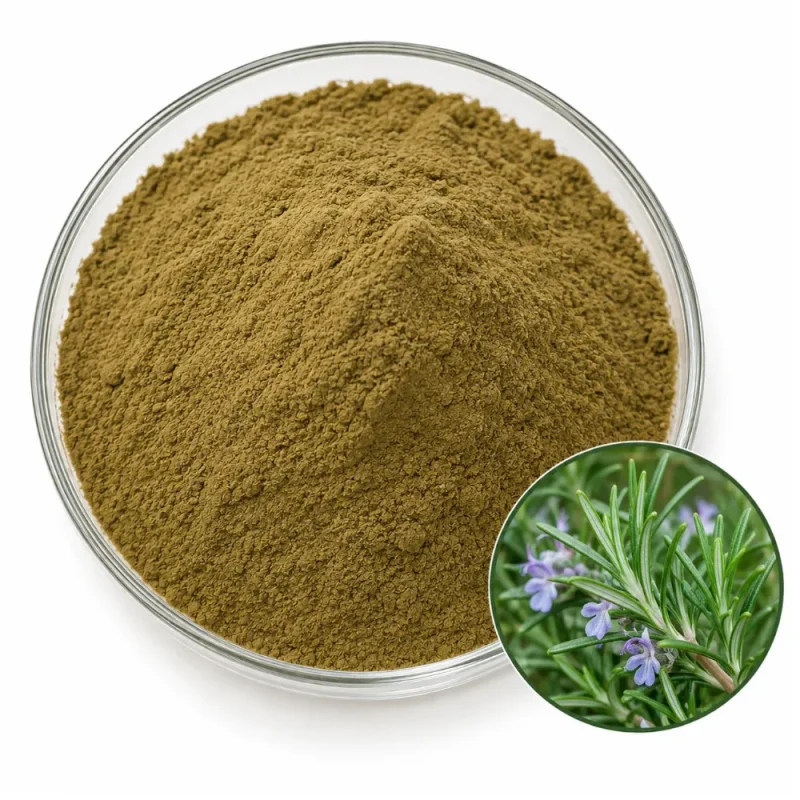
Rosemary Extract Powder

Ethanol, not water, is the solvent behind this rosemary extract: leaves of Salvia rosmarinus are extracted with ethanol, the solvent is removed, and the concentrate is dried to a light brown powder at a 10:1 ratio. Stems, flowers and distilled oil are left out of the extract.

The 10:1 ratio carries no carnosic acid percentage. The powder is light brown, ground to 80 mesh and water dispersible. A carnosic-acid-graded rosemary extract, the plain leaf powder and the single-compound references are separate products, and rosemary extract here is not a preservative grade.

Salvia rosmarinus Leaf Identity & Plant Part

The botanical entity is Salvia rosmarinus Spenn., formerly named Rosmarinus officinalis, an evergreen shrub of the mint family, Lamiaceae. The part used is the dried needle-like leaf. Stems, flowering tops and the steam-distilled oil are not added to this rosemary extract.

The older name Rosmarinus officinalis still appears in many specifications, so both names point to the same plant. Rosemary leaf contains phenolic diterpenes such as carnosic acid and carnosol, phenolic acids such as rosmarinic acid and a volatile oil. Ethanol extraction carries more of the diterpenes than water does, which is why the solvent is stated in the specification.

Rosemary Extract vs Powder & Standardized Grades

FormWhat It IsChoose It When
10:1 Rosemary Leaf ExtractEthanol-extracted, concentrated and dried S. rosmarinus leafA dispersible leaf extract without a marker is wanted
Rosemary Extract 5–20% Carnosic AcidExtract with a defined carnosic acid rangeThe specification names a carnosic acid figure
Rosemary PowderDried, milled leafLeaf fiber and the natural aroma are wanted
Rosmarinic Acid 98%Single purified phenolic acidA pure compound is required, not a plant extract

For rosemary extract, 10:1 is a count of leaf input, ten parts for every part of the dried ethanol extract. It does not state a carnosic acid or rosmarinic acid figure, and it is not a statement of antioxidant grade for use in oils or meats.

A label that must carry a carnosic acid figure needs the graded extract. The ratio extract suits capsule and tablet blends that want rosemary identity in an ethanol-extracted, dispersible form. The milled leaf keeps its aroma and fiber, and the pure compound is a chemical reference rather than a leaf extract.

Typical Specifications

Specification ItemProduct Information
Latin NameSalvia rosmarinus
Plant PartLeaf & Herb
ProcessingEthanol Extraction
Common NameRosemary
Ingredient TypeRatio Extract
Extract Ratio10:1
AppearanceLight Brown powder
Solubility / DispersibilityWater Dispersible
Quality Parameters
Moisture (LOD)≤5.0%
Total Ash≤5.0%
Particle Size80 mesh
Heavy MetalsLead ≤2 ppm · Arsenic ≤1 ppm · Cadmium ≤1 ppm · Mercury ≤0.1 ppm
MicrobiologyTPC ≤1,000 cfu/g · Yeast & Mold ≤100 cfu/g · E. coli Negative · Salmonella Negative/25 g
Shelf Life24 months in unopened original packaging, cool and dry storage

Application Areas

Resin-Tinged Capsule Fills

Capsule fills use rosemary extract in blends with other herb extracts. The ethanol-extracted material is somewhat resinous and can cling to hoppers, so a flow aid is considered and humidity is kept low. Rosemary extract also shows through a clear shell as brown flecks, so opaque shells are the usual choice.

Compressed Herbal Tablets

Tablets take the extract as a dry brown component. Resinous diterpenes can cause sticking to punch faces, so a lubricant level is set by trial, and the tablet is film-coated to hide the herbal smell. Tablet makers also check ejection force, because resinous extracts can increase it.

Herb-Flavored Drink Sticks

Drink sticks combine rosemary extract with citrus, apple or mint flavors that suit its pine-like aroma. The powder wets slowly in cold water, so a premix with sweetener is used, and the dose is limited by its pronounced herbal taste. A sensory panel on the plain stick shows the limit faster than a lab dispersion test does.

Gummy Premixes

Gummy premixes accept the extract after cooking, once the mass has cooled. The brown tint suits lemon, honey or herbal profiles, and the resinous bitterness limits how much can be added to a mild base without a masking flavor. The resinous taste lingers, so lemon or honey flavors that finish cleanly are chosen over long-lasting spice notes.

Formulation Notes

The powder is light brown with a strong pine-like, camphoraceous aroma and a bitter, pungent taste. In water it disperses to a pale brown, slightly cloudy liquid, since ethanol-extracted material wets less readily than water-extracted powders. Wetting is improved by premixing with sugar or a dispersing carrier.

Premix the powder into part of the dry base before the main blend to avoid lumps. The extract attracts moisture and cakes in an open pack. After opening, press out the air, close the liner tightly and store the drum in a cool, dry place away from heat and light.

Phenolic diterpenes oxidize on air exposure, so rosemary extract is not left open on the line. A sensory trial at the planned dose shows whether the aroma needs a masking flavor.

Packaging & Commercial Supply

Essencefield supports product evaluation, formulation trials, commercial orders, and ongoing ingredient supply. Packaging, storage, and shipping arrangements are determined by product characteristics, order quantity, stability requirements, and destination-market needs.

Supply ItemGeneral Information
SampleAvailable upon request for formulation, testing, and supplier evaluation
Order Quantities100 g · 1 kg · 5 kg · 25 kg · 100 kg · 500 kg · Bulk
Sample Lead TimeTypically 5–7 days after sample confirmation
Production Lead TimeTypically 15–30 days after order and specification confirmation
PackagingSuitable protective inner packaging with bags, cartons, drums, or other appropriate outer packaging
StorageStore in tightly sealed, suitable protective packaging in a cool, dry environment. Protect from moisture, heat, and direct sunlight. Specific storage conditions follow the approved product specification.
DocumentationCOA · Product Specification · TDS · SDS · Applicable declarations (as applicable)

Final order quantities, lead times, packaging, documentation, and shipping arrangements are confirmed according to the selected product and commercial requirements.

Request Ingredient Specifications & Quote

Share your target specification, application, quantity, and documentation needs. We’ll help confirm suitable options, samples, and commercial supply details.