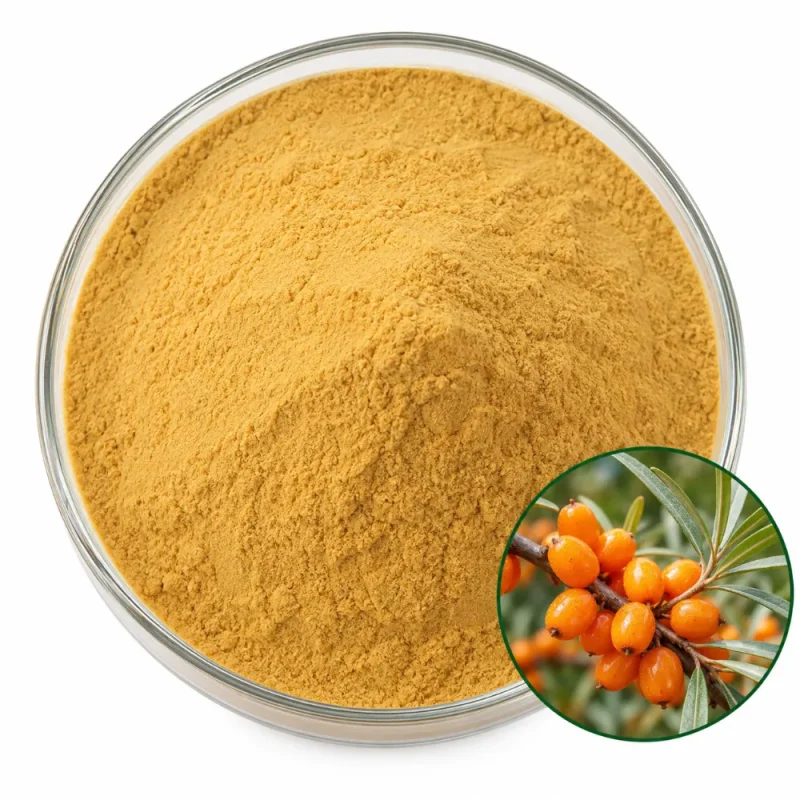
Sea Buckthorn Polysaccharide Identity
The source is the berry of Hippophae rhamnoides L., a thorny shrub of the family Elaeagnaceae that grows in cold, dry and coastal regions. The fruit is a small orange drupe-like berry, sour and aromatic. The part used is the whole berry, and the leaf and seed are not part of this powder. The seed oil and the pulp oil are separate raw materials that belong to other product lines.
Sea buckthorn berries are rich in organic acids, mainly malic and quinic acid, together with sugars, carotenoids, flavonols such as isorhamnetin glycosides and a lipid fraction rich in palmitoleic acid. Hot-water extraction brings out the polar part of this mix, and ethanol precipitation keeps the large polymers while the acids and small sugars stay in the supernatant. Sea buckthorn polysaccharide is described as a heteropolysaccharide fraction with pectic character.
The lipid and carotenoid fractions are fat-soluble, so they are left in the pomace and do not appear in the powder. That separation is why sea buckthorn polysaccharide is lighter and more soluble than the pulp products.
Berries are small, fragile and acidic, and fruit that is stored warm ferments quickly. Raw material handling therefore starts with prompt drying or freezing after harvest, and the resulting extract is clearer when the fruit is processed fresh. Cultivars of the species differ in sugar and acid levels, and none is named for this product.
Related sea buckthorn materials are different in nature. Sea Buckthorn Berry Extract Powder and Sea Buckthorn Extract Powder are whole water extracts, and Sea Buckthorn Powder is a fruit powder.