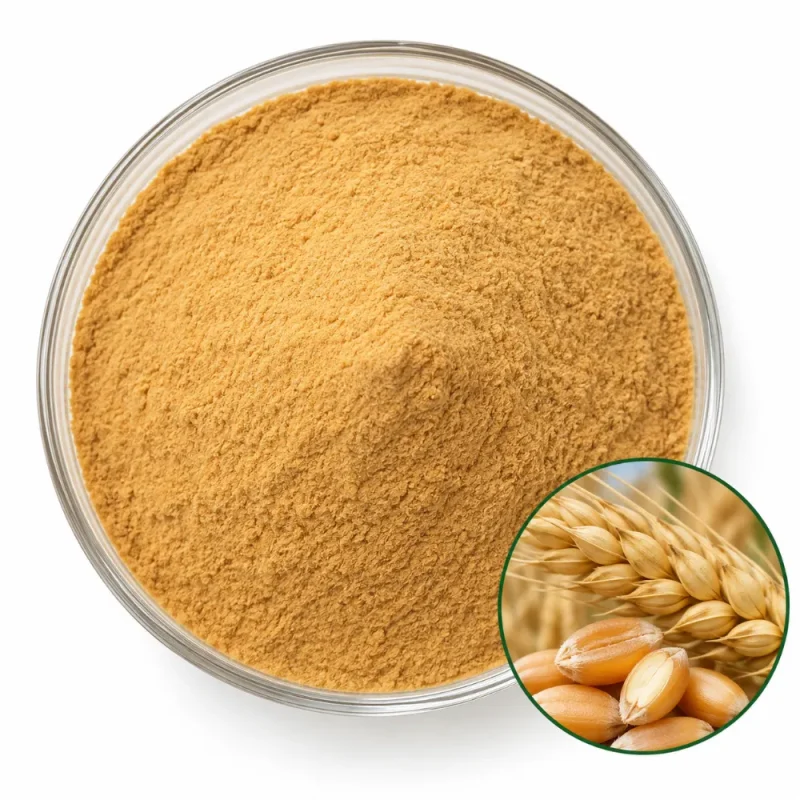
Wheat Germ Extract Powder

Wheat germ extract is made from the germ of Triticum aestivum, the embryo of the wheat kernel, and not from the bran, the starchy endosperm or the young leaves. Water extraction concentrates the soluble germ fraction, and drying the liquor gives a light yellow powder.

The concentration ratio is 10:1, milled to 80 mesh and dispersible in water. This wheat germ extract carries no spermidine or vitamin figure, and the spermidine-standardized extract and the purified compound of the same grain are separate products.

Triticum aestivum Germ Identity & Plant Part

The botanical entity is Triticum aestivum L., bread wheat, a grass of the Poaceae family. The part used is the germ, the small embryo at the base of the kernel that is separated from the endosperm and bran during milling. Bran, endosperm flour, young wheat leaves and straw are not included in this wheat germ extract. Wheat germ, wheatgrass and whole wheat flour are three different raw materials with different compositions, so a quote must name the germ. The germ is rich in lipid and protein and carries polyamines, spermidine among them, together with vitamin E and sugars, and the water extract keeps the soluble members of that list.

Germ makes up only a small share of the kernel, so wheat germ is a by-product stream of milling, and its freshness depends on how quickly it is stabilized after separation.

Wheat Germ Extract vs Spermidine & Wheatgrass

FormWhat It IsChoose It When
10:1 Wheat Germ ExtractWater-extracted, concentrated and dried germA plain germ extract without a marker is needed
Wheat Germ Extract 0.1–1% SpermidineStandardized extract with a spermidine rangeThe specification names a spermidine figure
Wheatgrass Extract Powder10:1 extract of the young wheat leafA leaf-based, green-toned extract is the brief
SpermidinePurified single polyamineA defined compound at a stated purity is required

The 10:1 ratio shows how much germ goes into the extract and is not a spermidine figure. Water takes up sugars, small proteins and polyamines from the germ and leaves most of the oil behind, so this powder is a light, dispersible solid and not a fatty meal. The four rows answer different questions, namely which organ, whether a marker is declared and whether a single molecule is wanted.

Typical Specifications

Specification ItemProduct Information
Latin NameTriticum aestivum
Plant PartSeed & Grain
ProcessingWater Extraction
Common NameWheat Germ, Wheat Embryo
Ingredient TypeRatio Extract
Extract Ratio10:1
AppearanceLight Yellow powder
Solubility / DispersibilityWater Dispersible
Quality Parameters
Moisture (LOD)≤5.0%
Total Ash≤5.0%
Particle Size80 mesh
Heavy MetalsLead ≤2 ppm · Arsenic ≤1 ppm · Cadmium ≤1 ppm · Mercury ≤0.1 ppm
MicrobiologyTPC ≤1,000 cfu/g · Yeast & Mold ≤100 cfu/g · E. coli Negative · Salmonella Negative/25 g
Shelf Life24 months in unopened original packaging, cool and dry storage

Application Areas

Low-Fat Capsules

Because most lipid stays behind in a water extraction, the wheat germ extract flows better than raw germ and goes rancid more slowly. A flow check is still advised, and capsules should be filled in a dry room, since the soluble sugars and amino compounds pull in moisture.

Cereal-Tone Drink Sticks

Single-serve sticks carry the extract with malt, honey, cocoa or vanilla flavors in a sweetened carrier. The cup is pale yellow to tan and slightly hazy, and weight-based dosing keeps the dispersed fraction consistent. Warm milk-style drinks suit the toasted-grain note best.

Grain-Style Bars

A bar premix takes the extract on the dry side before the syrup goes on. Cereal, oat and honey bases match the toasted-grain note of the germ, and the fine powder spreads more evenly than germ flakes, which add oily patches.

Pale-Base Gummies

Gummies take the extract after the main cook, because amino compounds and sugars brown under long heat. Its light tint suits yellow and orange gummies better than the darker herb extracts do. Pectin bases hold the pale color, and acid flavors keep the mild nutty note quiet.

Formulation Notes

The wheat germ extract is a light yellow powder with a mild, toasted-grain odor and a faintly sweet, nutty taste. In water it disperses into a pale, lightly hazy liquid, since protein fragments and fine solids stay partly suspended while sugars and polyamines dissolve. This solid is hygroscopic and picks up ambient moisture, which stiffens the powder and slows its flow.

Amino compounds and reducing sugars brown together under heat, so keep the wheat germ extract away from long hot holds and add it late in any cooking step. Premix the powder with a free-flowing carrier before it meets liquid. Residual lipid in germ products oxidizes with air and light, so close the liner after each draw, keep the drum cool and use the oldest drum first. Compare each lot with a retained sample for color and aroma. Wheat germ lipids are rich in unsaturated fatty acids, so the small residual lipid in a water extract still warrants cool, dark storage and a first-in, first-out rule.

Packaging & Commercial Supply

Essencefield supports product evaluation, formulation trials, commercial orders, and ongoing ingredient supply. Packaging, storage, and shipping arrangements are determined by product characteristics, order quantity, stability requirements, and destination-market needs.

Supply ItemGeneral Information
SampleAvailable upon request for formulation, testing, and supplier evaluation
Order Quantities100 g · 1 kg · 5 kg · 25 kg · 100 kg · 500 kg · Bulk
Sample Lead TimeTypically 5–7 days after sample confirmation
Production Lead TimeTypically 15–30 days after order and specification confirmation
PackagingSuitable protective inner packaging with bags, cartons, drums, or other appropriate outer packaging
StorageStore in tightly sealed, suitable protective packaging in a cool, dry environment. Protect from moisture, heat, and direct sunlight. Specific storage conditions follow the approved product specification.
DocumentationCOA · Product Specification · TDS · SDS · Applicable declarations (as applicable)

Final order quantities, lead times, packaging, documentation, and shipping arrangements are confirmed according to the selected product and commercial requirements.

Request Ingredient Specifications & Quote

Share your target specification, application, quantity, and documentation needs. We’ll help confirm suitable options, samples, and commercial supply details.