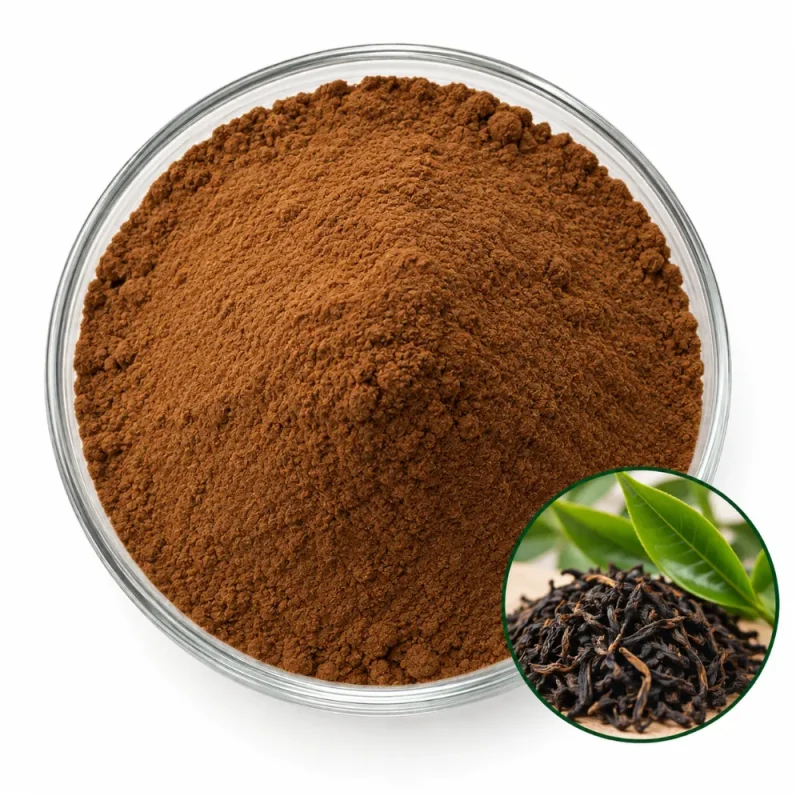
Black Tea Extract Powder

Fully oxidized leaves of Camellia sinensis are processed into this black tea extract. Water extraction concentrates the soluble leaf fraction, and the liquor is dried to a brown powder at a 10:1 ratio. Unoxidized green leaf, partly oxidized oolong and fermented pu-erh are separate teas with their own extracts.

The 10:1 ratio carries no theaflavin percentage. The powder is brown, ground to 80 mesh and water dispersible. A theaflavin-graded black tea extract and the plain black tea leaf powder are separate products, and tea seed and tea flower are other plant parts.

Camellia sinensis Black Tea Identity

The botanical entity is Camellia sinensis (L.) Kuntze, an evergreen shrub of the tea family, Theaceae. The part used is the young leaf and bud, which is withered, rolled, oxidized and dried to make black tea before it is extracted. Stems, seeds and flowers are not added to this black tea extract.

All true teas come from the same species, and the processing decides the type. In black tea the leaf enzymes oxidize the catechins to theaflavins and the larger thearubigins, which give the reddish-brown color and fuller taste. The leaf also carries caffeine, amino acids such as theanine and a small volatile fraction. Because processing defines the product, the word black in the name is part of the identity.

Black Tea vs Other Teas & Standardized

FormWhat It IsChoose It When
10:1 Black Tea ExtractWater-extracted, concentrated and dried black tea leafA dispersible black tea extract without a marker is wanted
Black Tea Extract 10–40% TheaflavinsExtract with a defined theaflavin rangeThe specification names a theaflavin figure
Green Tea Extract Powder10:1 water extract of unoxidized leafAn unoxidized catechin-rich tea is wanted
Pu-erh Tea Extract Powder10:1 water extract of fermented teaA fermented tea profile is required

The 10:1 for black tea extract counts ten parts of dried tea leaf against one part of powder. It gives no theaflavin figure, and the graded extract is the product for a label that must state one.

The ratio extract suits iced-tea style drink powders, sticks and capsule blends that want a black tea profile in an instantly dispersible form. The green and pu-erh extracts come from the same species but differ in processing, color and taste, so they are not interchangeable with black tea.

Typical Specifications

Specification ItemProduct Information
Latin NameCamellia sinensis
Plant PartLeaf & Herb
ProcessingWater Extraction
Common NameBlack Tea
Ingredient TypeRatio Extract
Extract Ratio10:1
AppearanceBrown powder
Solubility / DispersibilityWater Dispersible
Quality Parameters
Moisture (LOD)≤5.0%
Total Ash≤5.0%
Particle Size80 mesh
Heavy MetalsLead ≤2 ppm · Arsenic ≤1 ppm · Cadmium ≤1 ppm · Mercury ≤0.1 ppm
MicrobiologyTPC ≤1,000 cfu/g · Yeast & Mold ≤100 cfu/g · E. coli Negative · Salmonella Negative/25 g
Shelf Life24 months in unopened original packaging, cool and dry storage

Application Areas

Iced-Tea Style Drink Powders

Drink powders use black tea extract to give an amber-brown tea base that dissolves in cold water. Lemon, peach and mint flavors pair with it, and sweetener balances its astringency. The extract contains caffeine, which is stated wherever a formula requires it.

Instant Tea Sticks

Instant sticks combine the extract with sweetener and a carrier in a single-serve sachet. Hot water gives a full, brisk cup, and cold water gives a lighter but clear tea. Foil film protects the powder from moisture, which otherwise turns it into a sticky cake.

Capsule and Tablet Blends

Capsule and tablet blends take the extract as a dry brown component. Thearubigins and tannins make the powder tacky and astringent, so humidity is held low and a flow aid is considered. Coated tablets hide the dark core and its bitter taste.

Dark Chew and Gummy Mixes

Chew and gummy mixes accept the extract after cooking. The brown tint suits cola, caramel and spiced chai flavors, and its tannic edge needs a sweetener to soften it. Acid is dosed after dispersion, because strong acid sharpens the astringency.

Formulation Notes

The powder is brown with a malty, slightly smoky aroma and a brisk, astringent taste. In water it dissolves to a clear red-brown liquid that clouds as it cools, a normal tea behavior that results from tannin–caffeine complexes. Acid lightens the color and alkaline conditions deepen it toward dark brown.

Combine the powder with a share of the base first, so that tannic particles do not gum together. Tea tannins react with iron to give inky shades, so stainless equipment is used. Protein and dairy ingredients bind tannins and can produce haze or a flat taste, so milk-tea formulas are trialed.

Reseal opened drums promptly, since tea powder is quick to take on neighboring smells. Tea extract absorbs odors from neighboring ingredients, so it is stored apart from strong spices and flavors.

Packaging & Commercial Supply

Essencefield supports product evaluation, formulation trials, commercial orders, and ongoing ingredient supply. Packaging, storage, and shipping arrangements are determined by product characteristics, order quantity, stability requirements, and destination-market needs.

Supply ItemGeneral Information
SampleAvailable upon request for formulation, testing, and supplier evaluation
Order Quantities100 g · 1 kg · 5 kg · 25 kg · 100 kg · 500 kg · Bulk
Sample Lead TimeTypically 5–7 days after sample confirmation
Production Lead TimeTypically 15–30 days after order and specification confirmation
PackagingSuitable protective inner packaging with bags, cartons, drums, or other appropriate outer packaging
StorageStore in tightly sealed, suitable protective packaging in a cool, dry environment. Protect from moisture, heat, and direct sunlight. Specific storage conditions follow the approved product specification.
DocumentationCOA · Product Specification · TDS · SDS · Applicable declarations (as applicable)

Final order quantities, lead times, packaging, documentation, and shipping arrangements are confirmed according to the selected product and commercial requirements.

Request Ingredient Specifications & Quote

Share your target specification, application, quantity, and documentation needs. We’ll help confirm suitable options, samples, and commercial supply details.